Nationwide Sales & Service - 01536 802333

Our Range
Transform your training with our comprehensive selection of resistance bands, tubes, and power bands. From lightweight rehabilitation bands to heavy-duty powerlifting loops, we supply portable strength training solutions trusted by physiotherapists, personal trainers, CrossFit athletes, and home gym enthusiasts across the UK.


Viewing 15 out of 32 products
Load MoreSafety Features
Protective sleeves on resistance tubes prevent wear from outdoor use and equipment contact. Anti-snap technology and slow-deflate mechanisms reduce injury risk. Regular inspection protocols recommended—all bands subject to normal wear requiring periodic replacement.
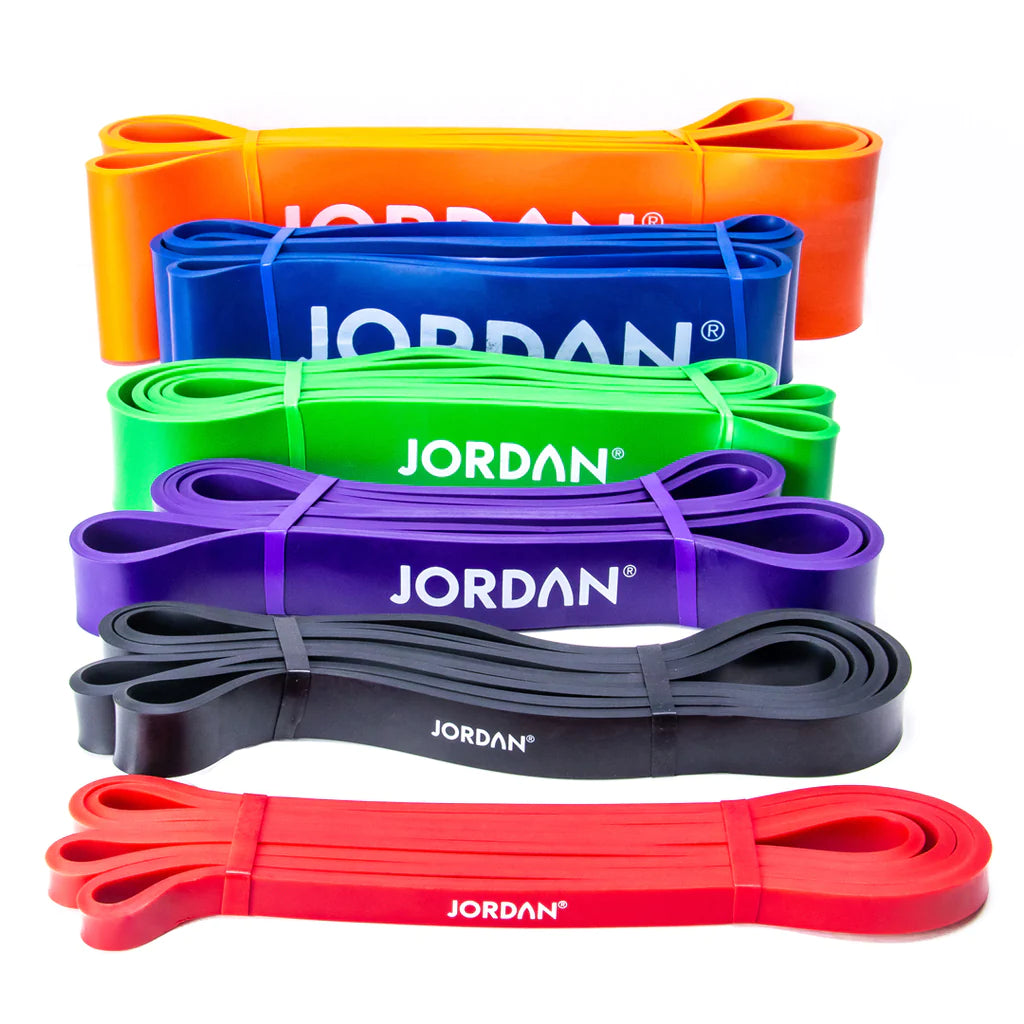
Power Bands (Loop Bands)
For: Barbell training, assisted pull-ups, mobility work, powerlifting speed training, CrossFit applications.
Sizes: 13mm (light) to 101mm (extra heavy).
Resistance: 2-79kg (5-175lbs) depending on width and extension.
Best for: Athletes integrating bands with barbells, racks, and bodyweight exercises.
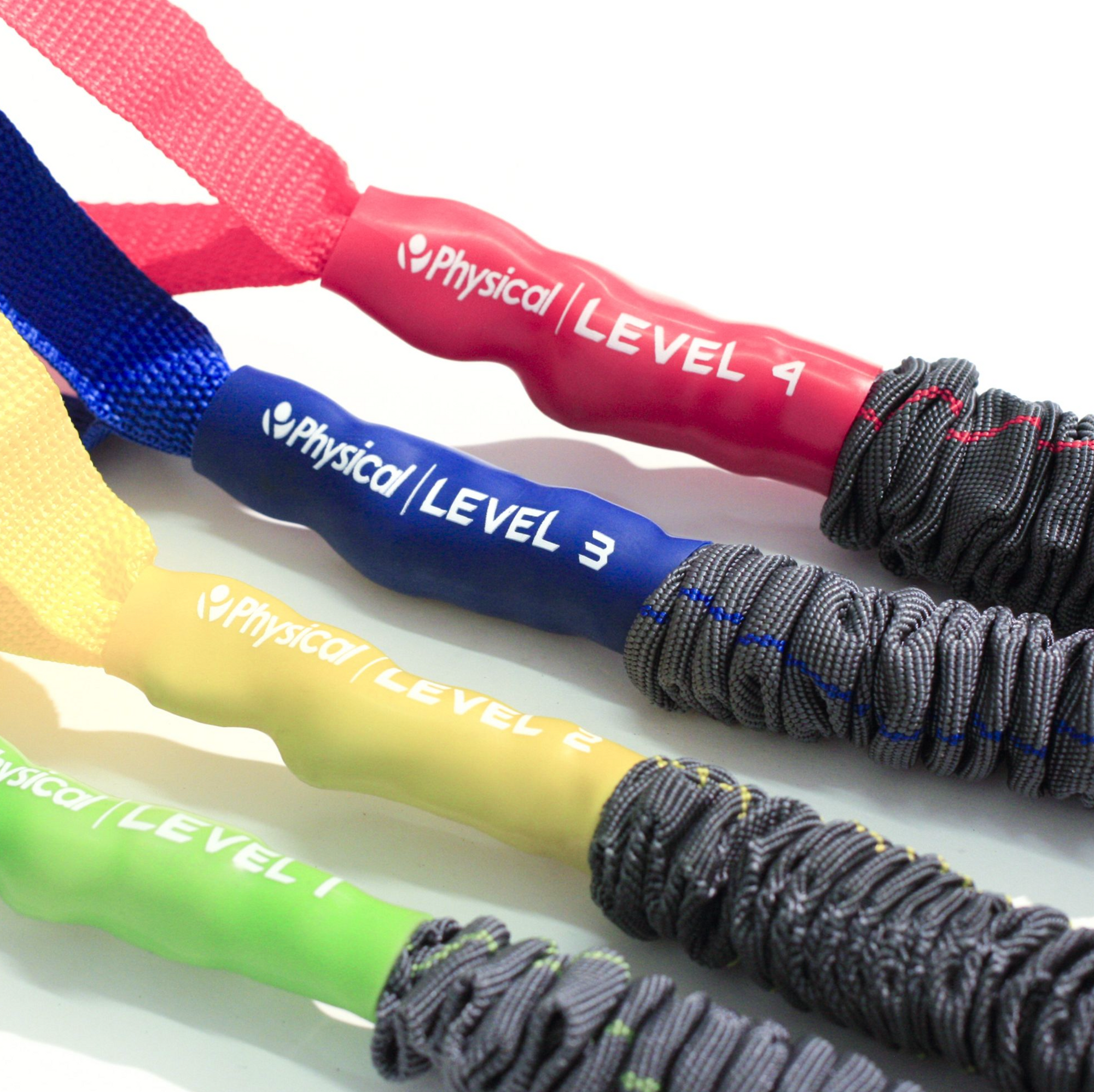
Resistance Tubes with Handles
For: General strength training, home workouts, rehabilitation, replacing dumbbells/kettlebells.
Levels: Four progressive resistances (light, medium, heavy, extra heavy).
Length: Typically 125cm with protective sleeves.
Best for: Beginners, home gym users, and those wanting handle comfort during exercises.
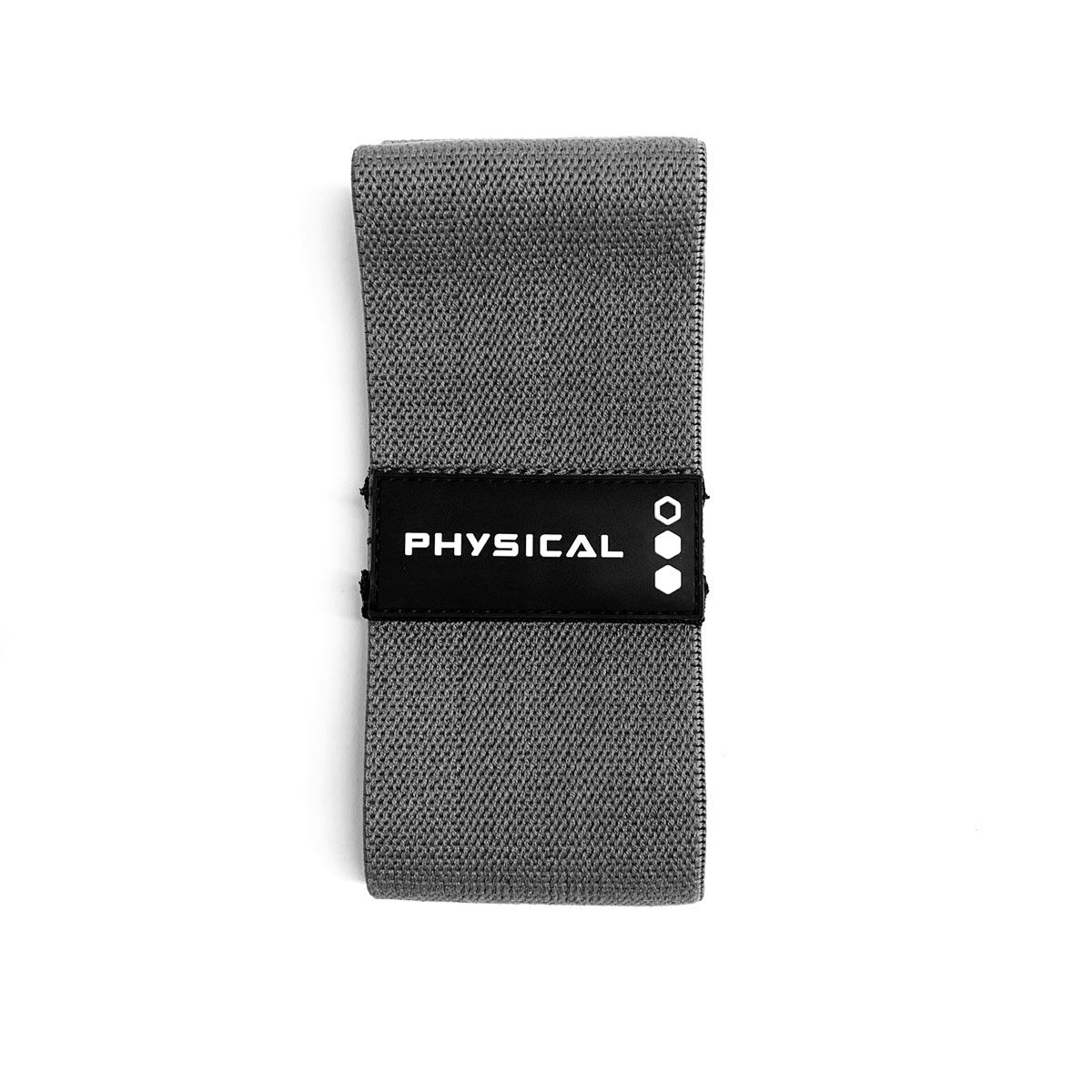
Fabric Glute Bands
For: Lower body activation, warm-ups, glute development, hip strengthening.
Sizes: Three levels—17" (light), 15" (medium), 13" (heavy).
Material: Cotton-elasticated fabric with non-slip latex strips.
Best for: Preventing band roll-up during squats, lunges, hip thrusts, and lateral movements.
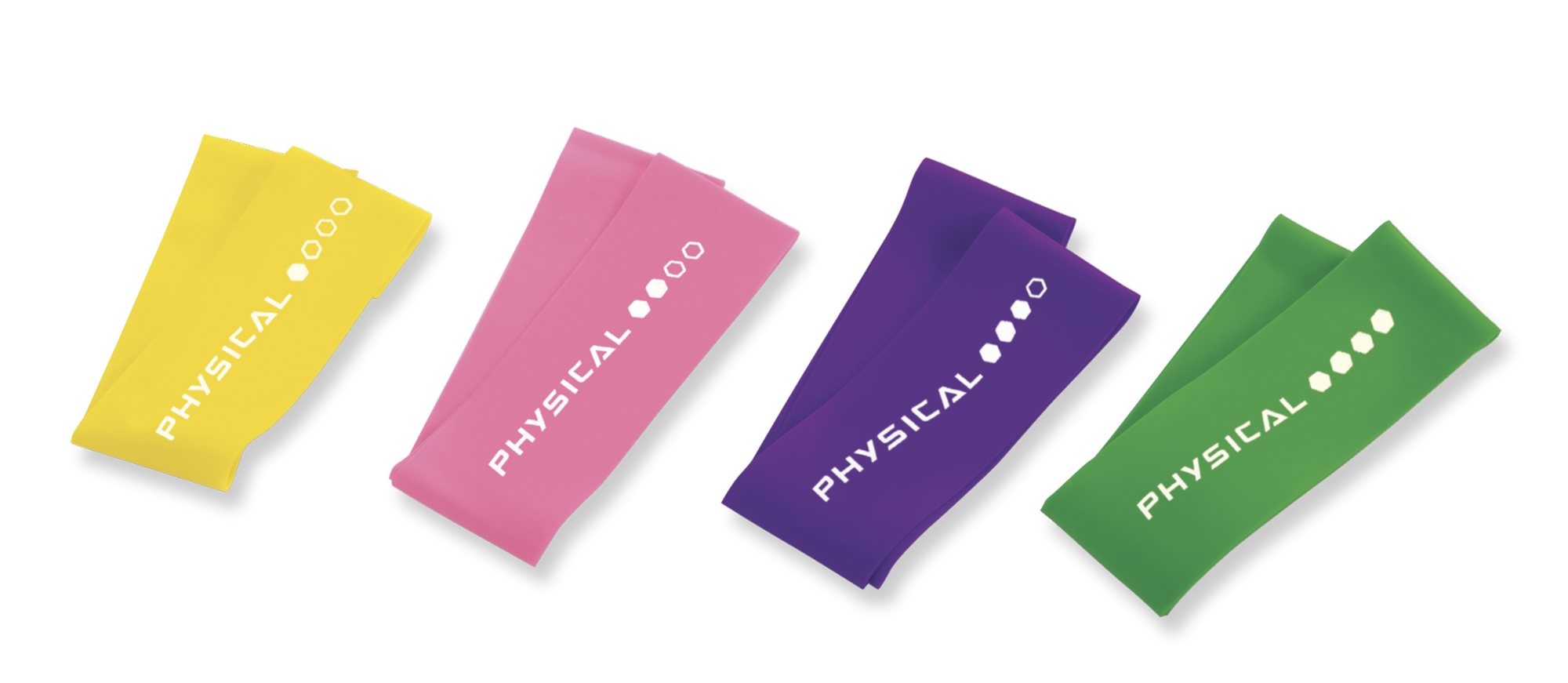
Mini Loop Bands
For: Hamstring injury prevention, warm-up activation, rehabilitation, sports-specific drills.
Size: 440mm loop × 50mm width.
Levels: Four colour-coded resistances (yellow, green, blue, red).
Best for: Athletes focused on injury prevention and targeted muscle activation.
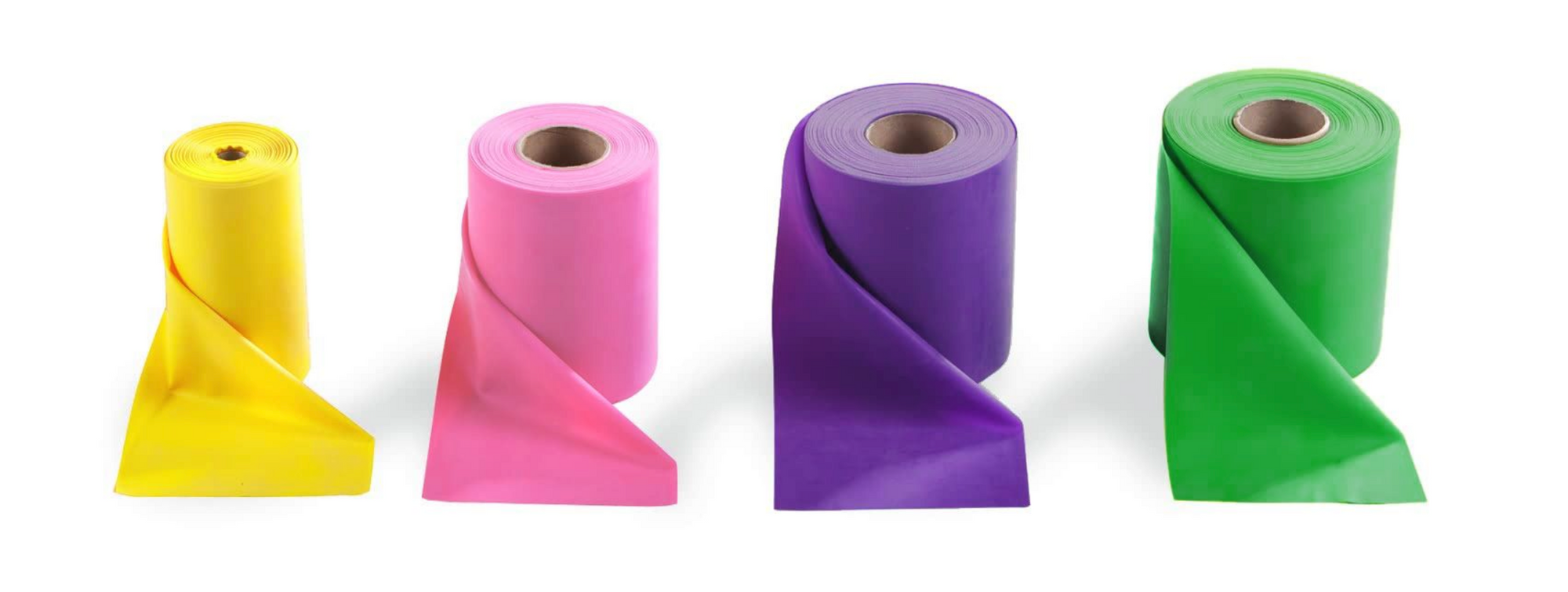
X-Bands & Pilates Bands
For: Pilates, rehabilitation, flexibility work, low-impact strength training.
Size: 40mm wide, 1.5m individual lengths or 25m rolls.
Options: Latex or latex-free synthetic polyisoprene.
Best for: Pilates practitioners, physiotherapy patients, and those with latex sensitivities.
Power Band Resistance by Width
13mm: 2-16kg (5-35lbs) – Light assistance, mobility, warm-ups
22mm: 4-23kg (10-50lbs) – Moderate assistance, single exercises
32mm: 11-36kg (25-80lbs) – Heavy assistance, overload training
44mm: 23-54kg (50-120lbs) – Very heavy, experienced athletes
64mm: 27-68kg (60-150lbs) – Extra heavy, powerlifting applications
83mm: 32-79kg (70-175lbs) – Maximum resistance, elite strength training
Resistance Progression
Resistance increases with extension—values represent slight extension to maximum stretch. Never overstretch beyond manufacturer specifications to prevent snapping and injury. Start with lighter bands and progress gradually as strength improves.
Tube Resistance Levels
Level 1 (Pink/Yellow): Beginners, rehabilitation, warm-ups
Level 2 (Yellow/Green): Intermediate, general fitness
Level 3 (Blue/Purple): Advanced, strength building
Level 4 (Red/Black): Elite, maximum resistance
Latex Rubber
Pros: Superior elasticity, excellent resistance profile, durable, cost-effective.
Cons: Latex allergies, degrades with UV exposure and oils.
Care: Store away from sunlight, clean regularly, inspect for wear.
Latex-Free Synthetic Polyisoprene
Pros: Zero protein content (allergy-safe), similar performance to latex.
Cons: Slightly different resistance feel, may be less elastic.
Best for: Individuals with latex sensitivities or allergies.
Kevlar-Reinforced (Vector Systems)
Pros: Incredibly strong, reduced snap-back risk, dial-adjustable resistance.
Cons: Higher cost, more complex system.
Best for: Commercial studios and serious athletes wanting premium safety and versatility.
Cotton-Elasticated Fabric (Glute Bands)
Pros: Non-slip, anti-roll, comfortable for extended wear, no latex contact with skin.
Cons: Not suitable for high-resistance applications.
Best for: Lower body activation and warm-up protocols.
What's the difference between power bands and resistance tubes?
Power bands are continuous loops without handles, ideal for barbell training, pull-up assistance, and mobility work. Resistance tubes feature handles and are better for exercises replicating dumbbell movements—rows, presses, curls. Power bands offer higher maximum resistance; tubes provide handle comfort and ease of use.
Which power band size do I need for assisted pull-ups?
Beginners: 64mm (27-68kg assistance) or 83mm (32-79kg assistance). Intermediate: 44mm (23-54kg assistance). Advanced: 32mm (11-36kg assistance) or 22mm (4-23kg assistance). Start with heavier assistance and progress to lighter bands as strength improves. Goal is eventually performing unassisted pull-ups.
Can I use resistance bands for building muscle?
Absolutely. Bands provide progressive resistance throughout the entire range of motion, increasing tension at peak contraction—excellent for muscle growth. Combine with barbells for accommodating resistance or use tubes alone for full-body workouts. Research shows bands produce similar hypertrophy to traditional weights when volume and intensity are matched.
How often should I replace resistance bands?
Inspect before each use for tears, discoloration, or loss of elasticity. Home use: replace every 1-2 years. Commercial use: replace every 6-12 months. Power bands under heavy loads: replace every 6-18 months. Replace immediately if any damage is visible—bands are consumable items requiring periodic replacement for safety.
What resistance level should beginners start with?
Resistance tubes: Start with Level 1 (light) or Level 2 (medium). Power bands: 13mm or 22mm for general training, 44-64mm for pull-up assistance. Glute bands: Light or medium. Progress to heavier resistances as strength and technique improve. Better to start light and progress than risk injury with excessive resistance.
Are latex-free bands as effective as latex bands?
Latex-free synthetic polyisoprene bands perform similarly to latex with slightly different resistance feel. They're essential for individuals with latex allergies and offer zero protein content. Effectiveness for strength training and rehabilitation is comparable. Choose based on allergy considerations rather than performance differences.
How do I prevent resistance bands from snapping?
Inspect before each use, never overstretch beyond specifications, avoid contact with sharp objects and rough surfaces, use protective sleeves when available, store away from UV and heat, replace proactively when wear is visible. Snapping risk increases with age and use—bands are consumable items requiring periodic replacement.
Can resistance bands replace free weights entirely?
Bands provide excellent resistance training and can build strength and muscle effectively. However, they offer different resistance profiles—increasing tension through range of motion versus constant load with free weights. Ideal approach combines both: bands for portability, variety, and accommodating resistance; free weights for progressive overload and traditional strength development.
How do I anchor resistance bands safely at home?
Use door anchors (included with many tube sets) secured in closed door jamb. Loop power bands around stable, immovable objects (squat rack, heavy furniture). Never anchor to unstable objects or at face/eye level. Test anchor security before applying full tension. Consider permanent wall-mounted anchor points for dedicated home gyms.