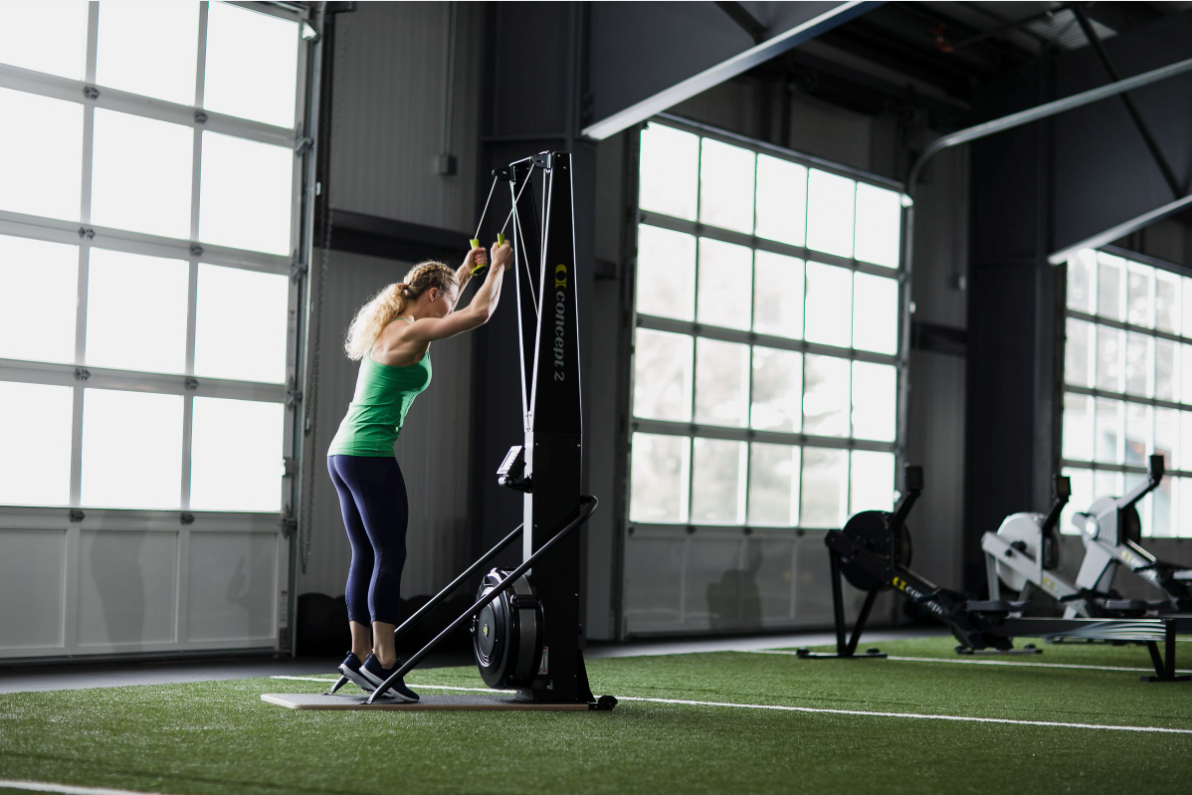
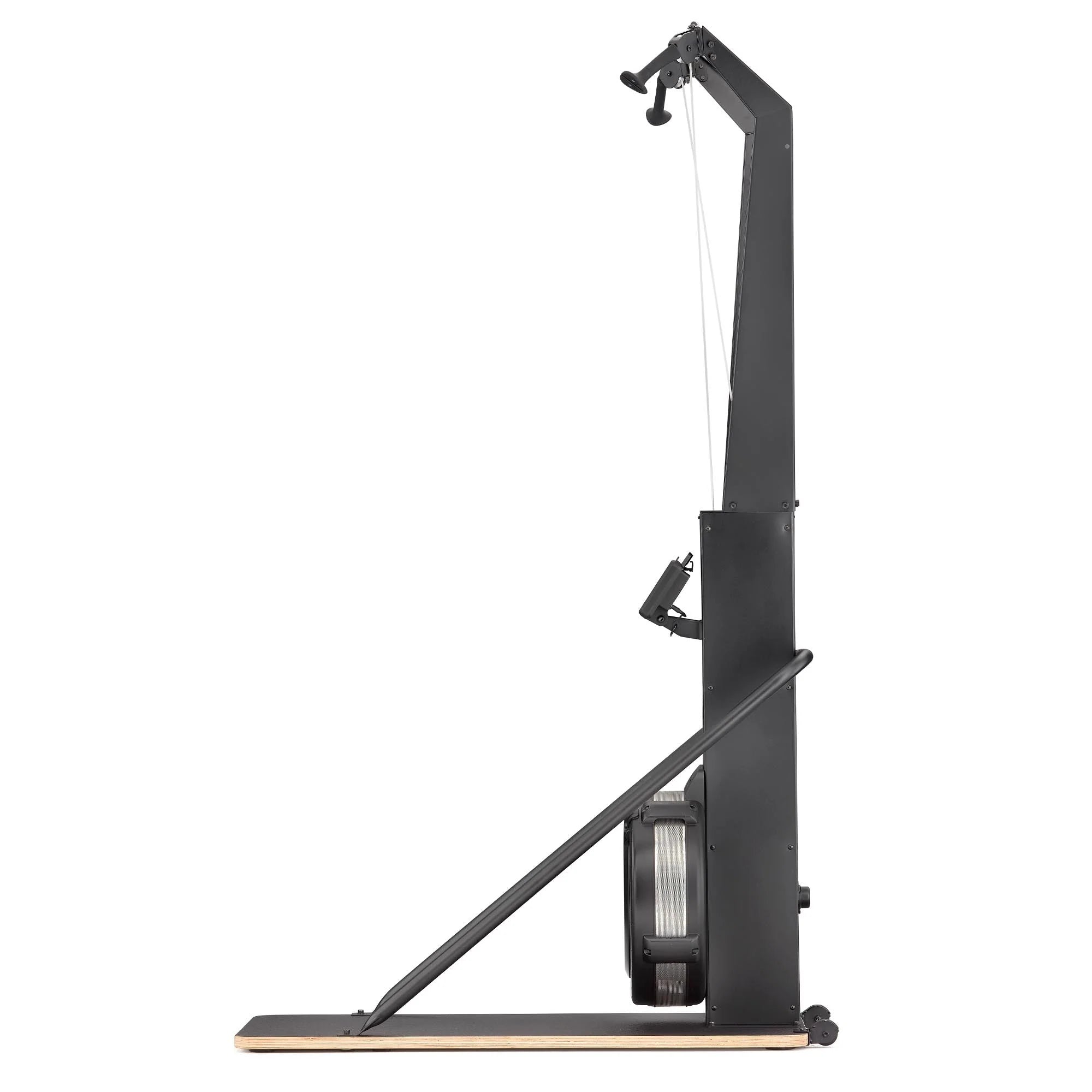
The SkiErg machine simulates Nordic skiing and delivers a low-impact, full-body workout, emphasizing cardio and muscular endurance. It is simple to use, heavily works the triceps, lats, core, and hip flexors, and is particularly appealing for those aiming for both fat loss and ski-specific conditioning.
How to Use the SkiErg Machine
- Stand with feet shoulder-width apart in front of the machine, gripping the handles above your head and slightly bent.
- Pull the handles down while hinging at the hips, flexing the core, and bending the knees (not a deep squat), driving the arms down past the thighs; avoid excessive knee bending.
- Return arms smoothly overhead to a fully extended position and repeat—keep a rhythmic, controlled pace, with core engaged and head stable.
- Avoid excessive squatting or rounding of the back; use hip hinge mechanics for best efficiency and safety.
Muscles Worked with SkiErg Machines
The SkiErg machine delivers a highly coordinated full-body workout involving nearly all major muscle groups, with emphasis shifting slightly during each phase of the movement.
Primary Muscles Used with the SkiErg Machine
- Latissimus dorsi (lats): Drive the downward pulling motion of the arms, central to both the power and coordination of each stroke.
- Triceps: Fully extend the elbows as handles are drawn down and beyond the hips, creating force and control.
- Rectus abdominis and obliques (core): Maintain trunk stability, provide power during the forward hinge, and protect the back during repeated flexion.
- Hip flexors (iliopsoas): Actively engage as the torso inclines and the hips flex, particularly when returning to the start position.
- Tibialis anterior and shins: Stabilize the lower legs, especially during the subtle toe lift and stance transition at the end and start of each repetition.
Secondary Muscles Involved with the SkiErg Machine
- Quadriceps: Provide knee flexion and extension to support the slight squat and return, especially during the hip hinge phase.
- Glutes: Engage as the hips extend to complete the downward pull and to stabilize the stance through the hip drive.
- Hamstrings: Assist in decelerating the hip flexion and stabilizing knee flexion within the hinging action.
- Back extensors (erector spinae): Maintain an upright, neutral spine and support safe trunk flexion/extension.
- Calves: Help maintain balance and allow a controlled push through the feet with repeated toe-lifting and lowering.
Motion Breakdown and Engagement of the SkiErg Machine
- During the downward pull, the lats, triceps, abs, and hip flexors engage forcefully, with glutes and quads supporting the movement by providing lower-body stability and drive.
- As the arms return overhead, muscles lengthen under control, the core stays active to protect the lower back, and hips and knees extend smoothly.
- Both arms, trunk, and legs must move in a synchronized, rhythmic manner, developing strength, stability, and endurance in the anterior and posterior chain together.
The SkiErg machine uniquely recruits both upper and lower body in tandem, with the primary stress on lats, triceps, abs, and hips, making it a highly effective machine for full-body conditioning
Buying Tips for SkiErg Machines
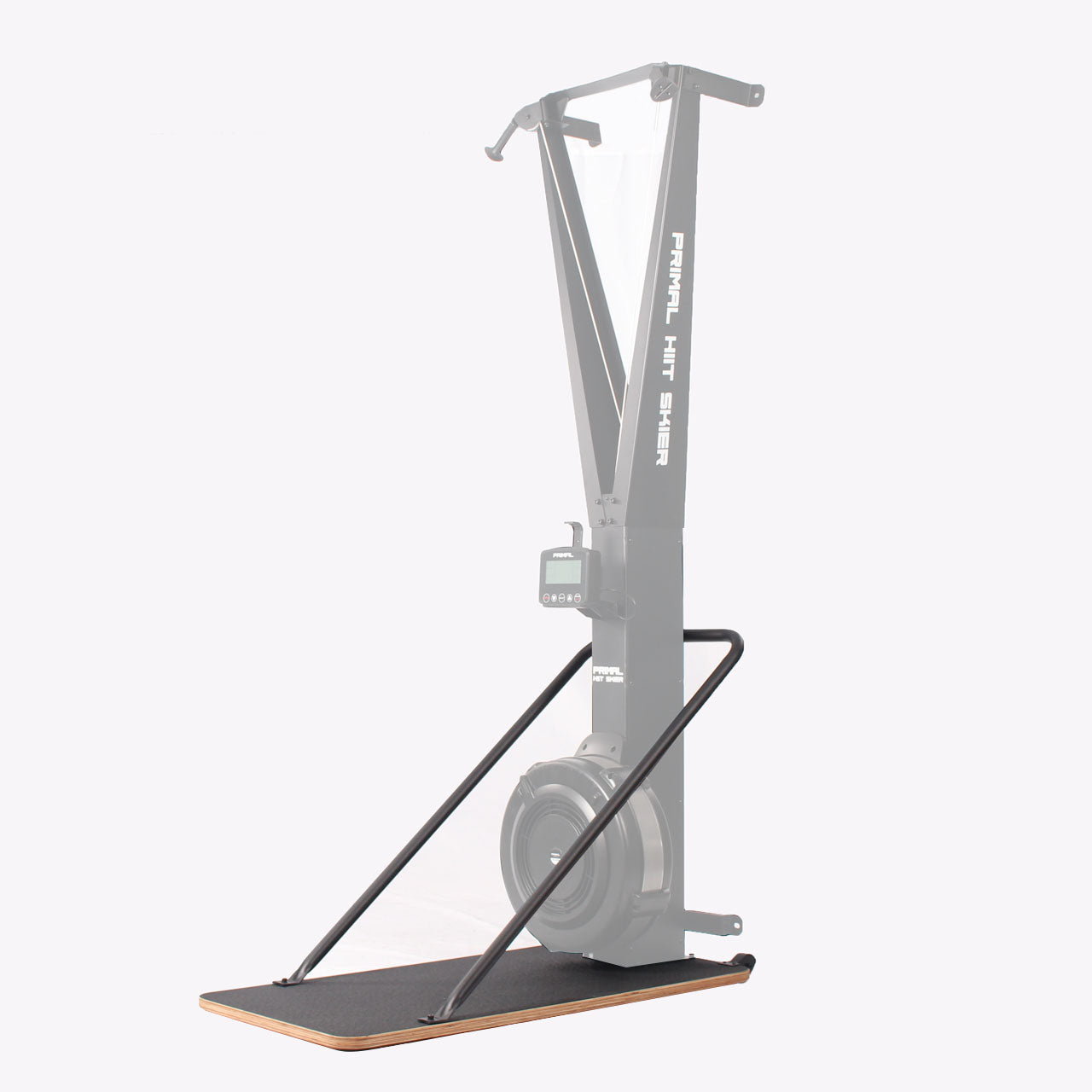
- The Concept2 SkiErg is widely regarded as the gold standard, appreciated for durability, realistic resistance (flywheel mimics ski drag), and easy maintenance however they are now other options to consider
- Choose floor stand or wall-mounted version based on space; wall mount is most compact, floor stand offers anti-skid stability for more flexible use.
- Used machines are often reliable due to few moving parts; clean flywheel area before use and inspect cables for wear.
- Maintenance is minimal; keep the machine clean and occasionally check the cords and flywheel for debris.
The SkiErg is a versatile solution for athletes and recreational users seeking an efficient full-body workout,