Nationwide Sales & Service - 01536 802333

Reformer pilates machines are sliding‑carriage beds that use springs or enclosed resistance, pulleys and adjustable bars to create smooth, full‑body resistance training. They support the body while challenging balance and control, helping users build strength, mobility and core stability with very precise load and range settings.
There are now various reformer pilates machines types, ranging from traditional studio frames to space‑saving folding designs and fully interactive, screen‑equipped systems. This variety means there is an option for everyone from for a compact home solution and through to dedicated boutique reformer Pilates machine studios to 24/7 gyms and physio clinics.
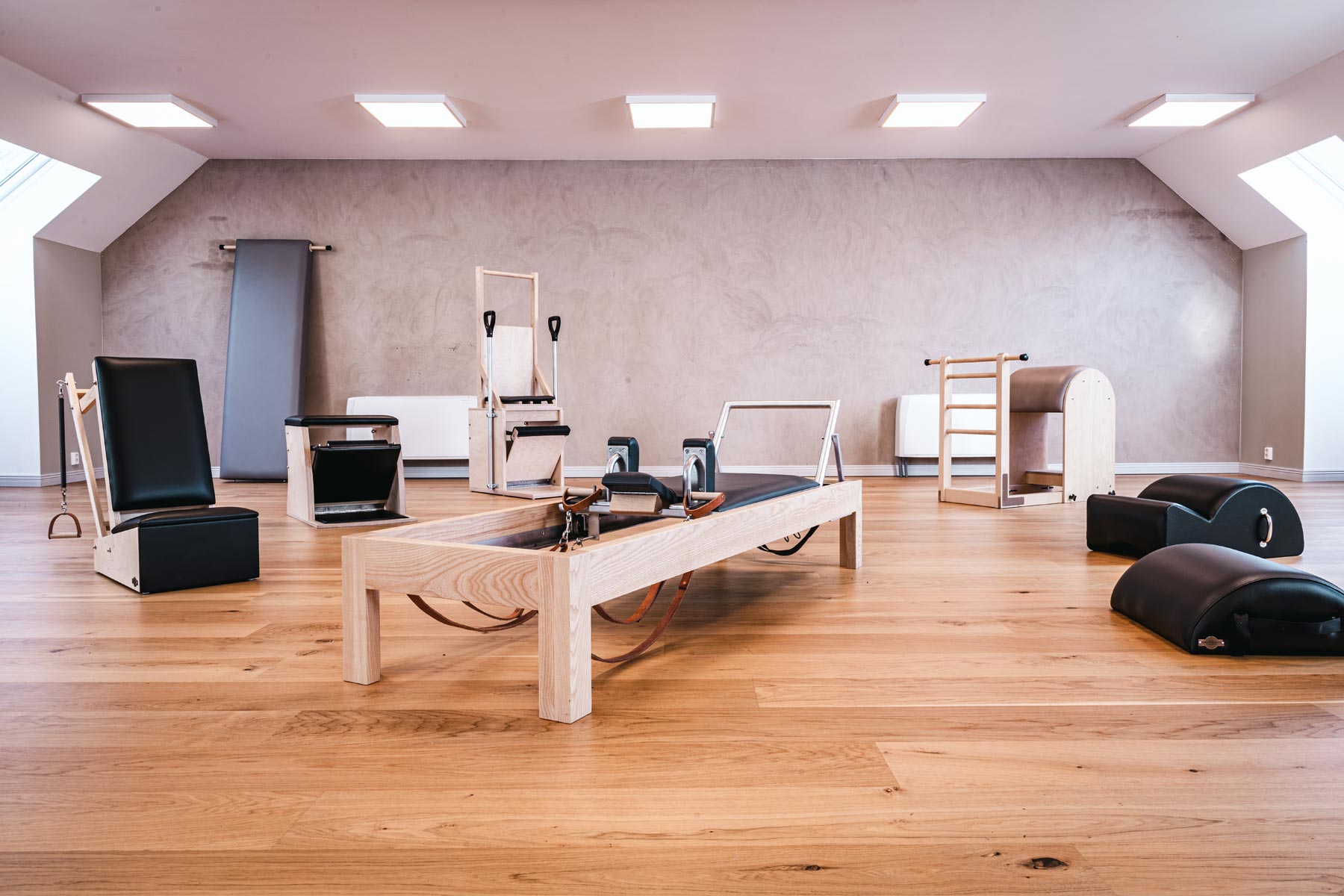
Classical reformer pilates machines follow Joseph Pilates’ original specifications with compact, 86‑inch carriages, fixed pulley positions and uniform spring sets, often combined with leather straps and a traditional footbar. A strong example is the NOHRD “Pilates Scandinavia” Reformer, engineered in Sweden to Joseph Pilates’ specifications, with four hand‑finished steel springs in three gear positions and leather strap sets supplied with short/long box, pole and extension straps. Built from solid hardwoods such as Oak, Cherry and Walnut‑stained finishes, it delivers a fluid, almost silent ride that feels unmistakably classical while suiting both studios and high‑end home gyms.
Contemporary reformer pilates machines keep the same basic layout but add greater adjustability, comfort and versatility for mixed‑ability clients. Common features include colour‑coded springs in multiple resistances, quick‑adjust ropes, movable or height‑adjustable pulleys and longer, wider carriages.
These machines often use refined roller systems for a smoother glide and multiple foot bar and spring bar settings to suit different body types and exercise demands. Contemporary reformer pilates machines work especially well in high‑throughput studios and clinics where instructors must switch quickly between clients, levels and exercise categories. For end users, they feel like modern, highly adaptable platforms that can grow with them.
Folding reformer pilates machines target people who need studio‑style training but lack a dedicated room. Many home‑oriented models use lighter frames, shorter carriages and integrated wheels so the unit can stand upright or fold flat for storage under a bed or in a cupboard.
Dedicated FOLD reformers and similar concepts highlight fast folding mechanisms, simple locking systems and easy manoeuvrability as key benefits. While maximum user weight and carriage travel may be lower than on full studio frames, well‑designed folding reformer pilates machines still use decent rails, bearings and upholstery to deliver a surprisingly “studio‑like” experience. They are ideal for home practitioners, mobile PTs and multi‑use spaces where equipment must be cleared away quickly.
Flatbed reformer pilates machines prioritise rigidity, long carriage travel and high load capacity over compact storage, using steel or heavy‑duty alloy frames with stable bases. The HEGREN TALMA 62 Reformer in black is a good example, combining a steel frame with premium upholstery, integrated standing platform and accessory set (box, straps, jump board and more) to deliver a smooth studio‑grade experience in both commercial and home settings. Its flatbed footprint and specification are aimed at modern studios that need durable hardware and a clean, contemporary look without folding mechanisms.

Interactive reformer pilates machines blend the mechanical platform of a reformer with screens, software and connected content. They aim to deliver instructor‑led guidance, structured programs and performance feedback without requiring a coach to be physically present.
The NordicTrack Ultra Reformer Series, including the Ultra 1 Reform RX and RX‑S, illustrates how interactive reformer pilates machines are evolving. These units pair a contemporary reformer platform with a large HD touchscreen that streams guided workouts and structured Pilates programs.
Instead of exposed springs, the design uses an enclosed resistance spine for a cleaner aesthetic and fewer pinch points. Resistance can be changed electronically in controlled increments when the carriage is safely docked, offering a precise and user‑friendly way to progress. The RX‑S variant targets more demanding use with higher resistance and a studio‑inspired look, making the Ultra series appealing both as a premium home solution and as a boutique‑style connected option.
Systems like Matrix Your Reformer with a kiosk show how interactivity can be added to existing or traditional reformer fleets. A mobile kiosk near the machines delivers an on‑screen library of classes, levels and session formats, often with headphones or audio to create an individual coaching feel.
For clubs and studios, this model can unlock off‑peak or even 24/7 access to reformer pilates machines without requiring a live instructor each hour. It also helps standardise programming and brand experience across multiple sites. In practice, interactive kiosk setups turn reformers into higher‑yield assets that can run structured sessions around the clock.

Discover everything you need to know about Reformer Pilates machines, including the different styles available—fixed, folding, classic, and interactive console models—plus answers to common questions about choosing and using a Reformer at home.
1. What is a reformer pilates machine and how is it different from mat Pilates?
A reformer pilates machine uses a sliding carriage, springs or enclosed resistance, pulleys and adjustable bars to create smooth, full‑body resistance, whereas mat Pilates relies mostly on bodyweight. The reformer allows more precise load progressions, support for beginners or rehab, and a wider variety of movement patterns in multiple planes.
2. Should I choose a classical or contemporary reformer?
A classical reformer is best if you value an authentic Joseph Pilates feel, fixed spring profiles and traditional choreography. A contemporary reformer is better if you want more adjustability, easier scaling for different body types and abilities, and broader exercise variety for mixed‑ability households or studios.
3. What's the difference between folding and flatbed reformer pilates machines?
Folding reformers are lighter, more compact and designed for homes or multipurpose spaces where equipment must be stored away between sessions. Flatbed reformers are heavier, more rigid and usually longer, giving a more "studio‑grade" feel suited to commercial studios, clinics and serious home users with a permanent space.
4. Are interactive reformer pilates machines worth it for home use?
Interactive reformers with built‑in screens or kiosks are ideal if you want structured classes, progression plans and coaching without travelling to a studio. They add subscription cost but can significantly boost motivation, consistency and correct technique, especially for beginners training alone.
5. How much space do I need for a reformer pilates machine?
As a rule of thumb, allow the full footprint of the reformer plus at least 60–90 cm clear space at each end and along one side. Flatbed and interactive models usually need a dedicated zone, while folding reformers can work in smaller rooms as long as you have enough space to unfold and move safely around the carriage.
6. Is a reformer suitable for beginners or people with injuries?
Yes—when correctly set up and programmed, reformer pilates machines are excellent for beginners and many rehab scenarios because the springs support and guide movement. New users and anyone with injuries should start with lighter resistance, slower tempos and, ideally, guidance from a qualified instructor in person or via interactive coaching.
7. How do I decide which reformer pilates machine to buy?
First, clarify your main use (home vs studio), available space, budget and whether you want classical feel, contemporary versatility or interactive coaching. Then compare frame style (folding vs flatbed), resistance system, carriage length, accessories and warranty, and, where possible, test models in a showroom or speak to a specialist who can match machines to your body, goals and room layout.
Choosing between classical, contemporary, folding, flatbed and interactive reformer pilates machines is much easier when you can see and feel the differences in person. Training Station has been selling reformers and wider Pilates equipment through its physical showrooms since 2012, helping both home users and professionals test products and refine their ideas before they buy. With two UK gym equipment stores in Beaconsfield (covering London and the South East) and Blisworth (supporting the Midlands and East Anglia), you can book a visit, try different reformer pilates machines and discuss layouts with a specialist on site.
Alongside equipment sales, we also offers a full luxury home gym design service, taking projects from initial concept through to 2D/3D planning and final installation. The team combines over 20 years of equipment and design experience with a strong focus on aesthetics, acoustics and finishes, including options such as wooden gym equipment, custom upholstery and integrated audio‑visual setups. Whether you want a single reformer in a dedicated Pilates space or a fully fitted mixed‑use space with cardio, strength and Pilates zones, you can arrange a free consultation in person, in‑store or virtually to explore ideas, budget and timelines.