

Double Garage Gym Layout & Ideas

March 21, 2026 7 min read

Double Garage Gym Layout & Ideas

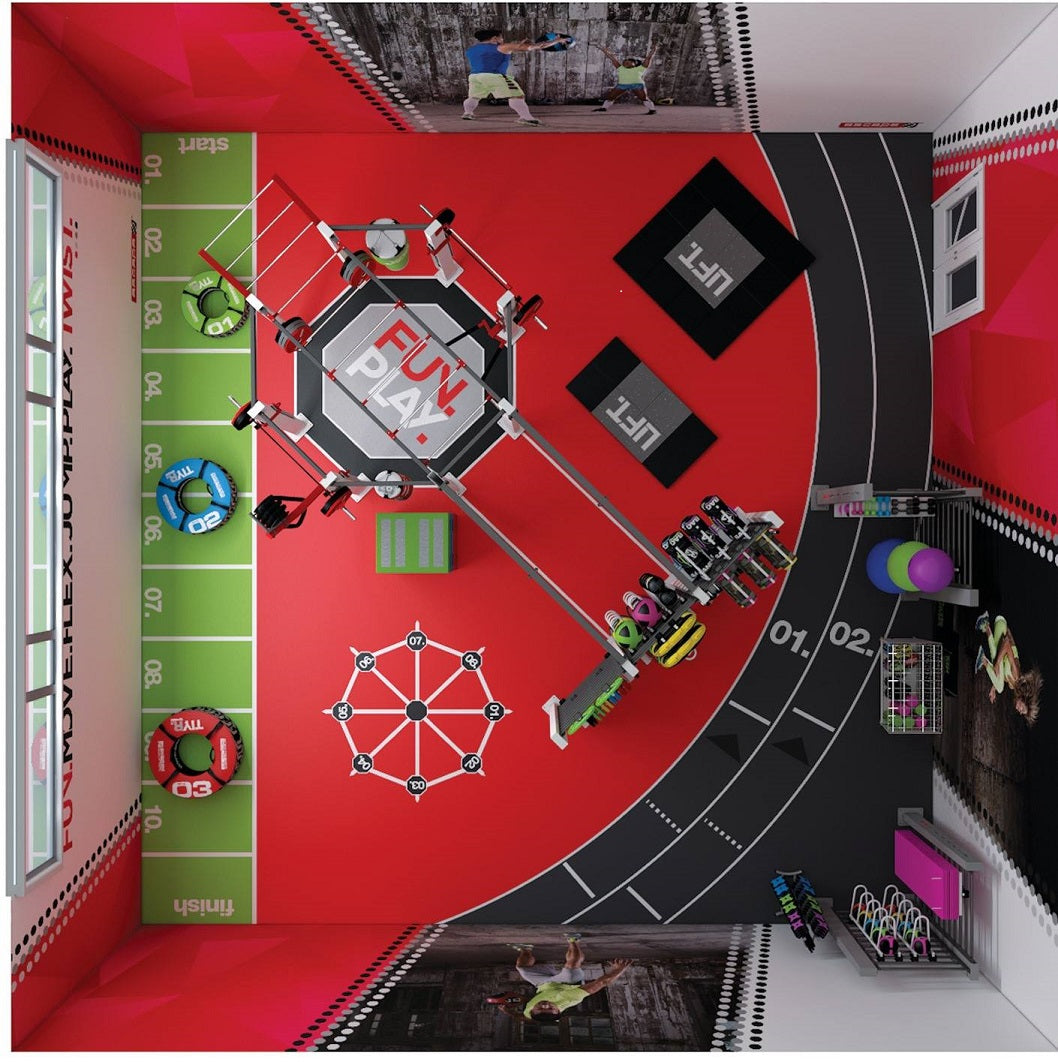
A double garage can become a brilliant home gym if you plan around real-world dimensions, ceiling height and clear training zones.  We have created  three popular double garage layout scenarios: Strength & Hyrox, Family Strength & Cardio, and Wellness with Infrared Sauna and Pilates reformer.

Double garage gym dimensions and height

Most UK double garages range from roughly 5 m x 5 m up to about 6 m x 6 m, giving around 25–36 m² of usable floor space. Many newer builds sit at the smaller end (around 5.5 m x 6 m or 18 ft x 18 ft), while older or detached garages can be closer to 6 m x 6 m. A common "average" double garage size quoted is around 6 m wide x 6 m deep, which is ideal when you're converting purely to a gym rather than parking.

Ceiling height is just as important as floor area when you introduce strength training, overhead lifting and Hyrox movements. You ideally want at least 2.3–2.4 m clear height for overhead presses and wall balls, and more if you plan to hang a pull-up bar or rings above head height. Bear in mind that flooring build-up (rubber tiles, lifting platform, sled track) can "steal" 20–40 mm of height, so factor that into your layout planning.

Zoning your double garage gym

Whatever layout you choose, think in terms of zones rather than random kit placement. In a 5.5–6 m wide double garage, you can comfortably run three primary zones from side to side:

  • Strength zone along one long wall (rack, barbell, bench, plates, dumbbells).
  • Cardio or conditioning lane along the opposite wall (treadmill, rower, SkiErg, bike, Hyrox work).
  • Open functional/wellness strip in the centre or at the rear (plyo work, Pilates, mobility, mat work).

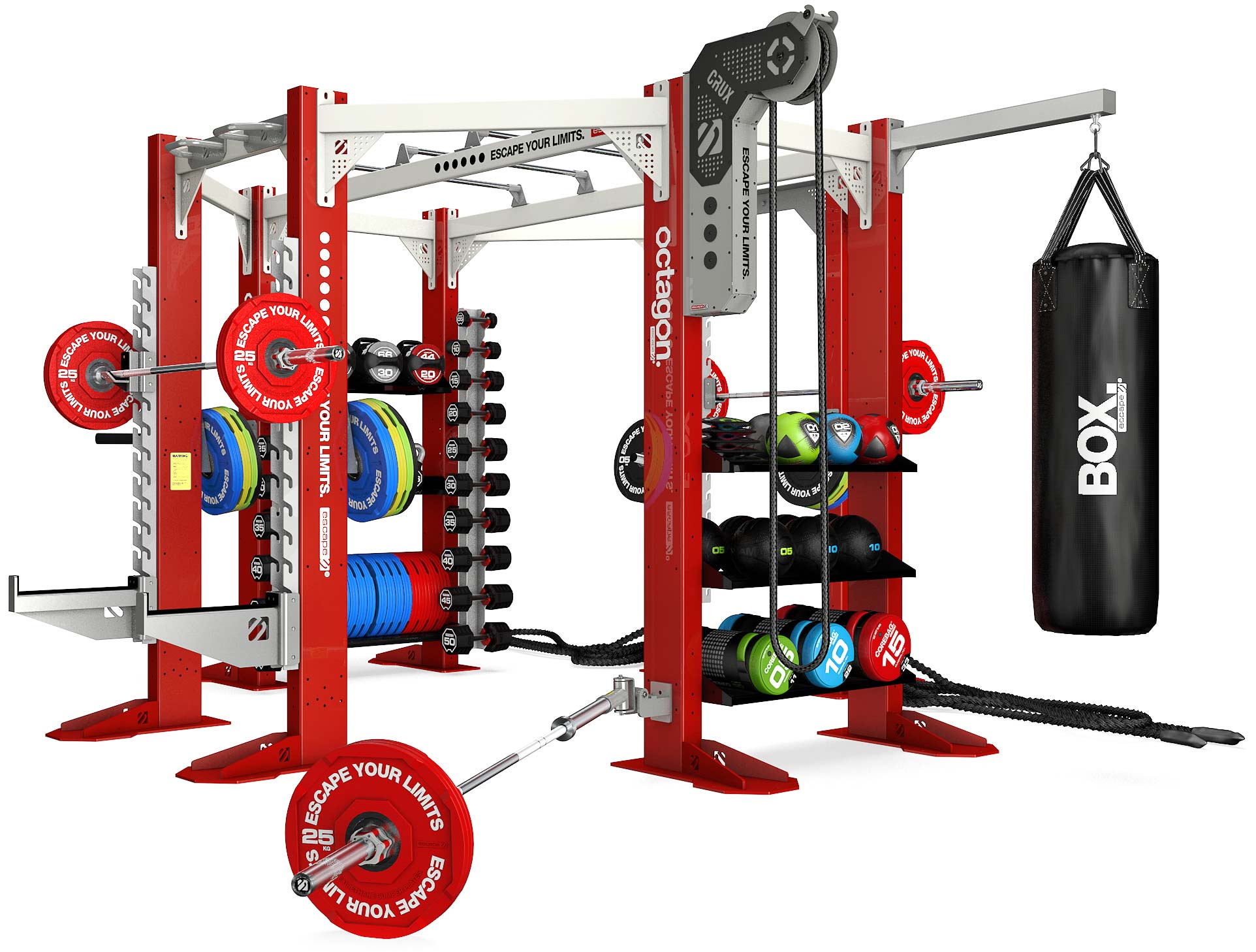
Storage systems and wall-mounted solutions keep the floor clear and make each layout scenario feel bigger. Use vertical plate storage trees, wall ball racks, wall-mounted shelving, and possibly a single bay storage system for kettlebells, sandbags and accessories.

Scenario 1 : Strength & Hyrox double garage layout

This layout treats the double garage as a hybrid strength and Hyrox training facility, ideal if you're prepping for races and want heavy lifting capability. Use 5.5–6 m x 6 m as the working footprint, with the garage door end acting as your "conditioning lane."

Key equipment for Strength & Hyrox

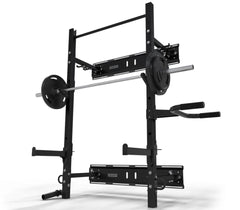
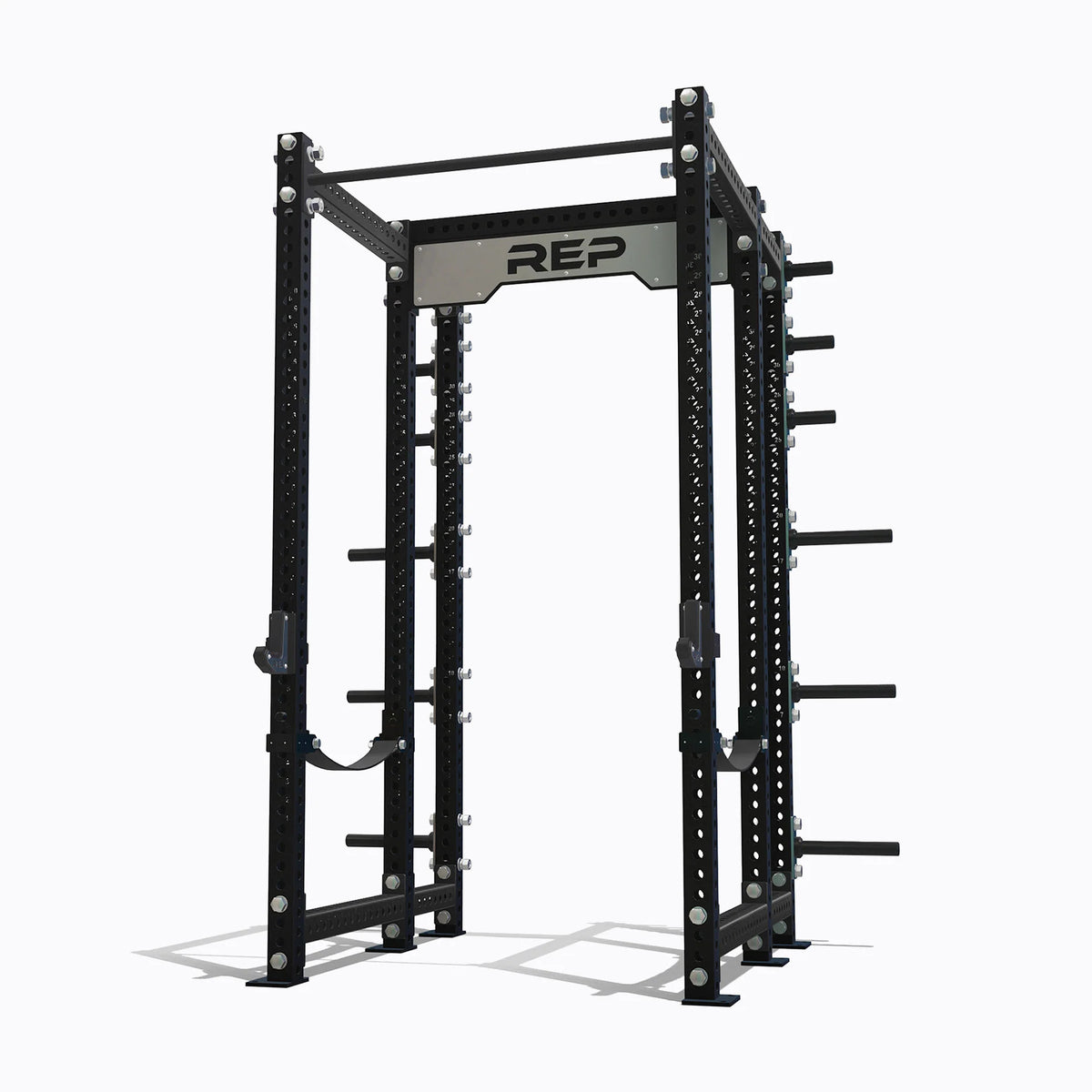
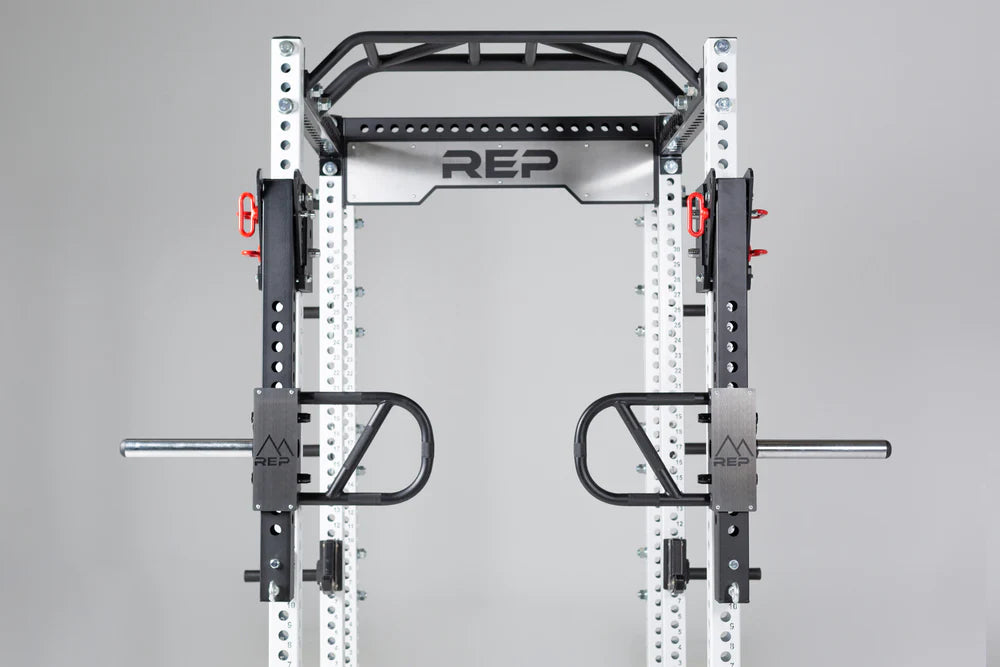
  • Half rack or full power rack with pull-up bar and safety arms.
  • 7 ft Olympic barbell, 100–150 kg bumper plates, plus plate storage.
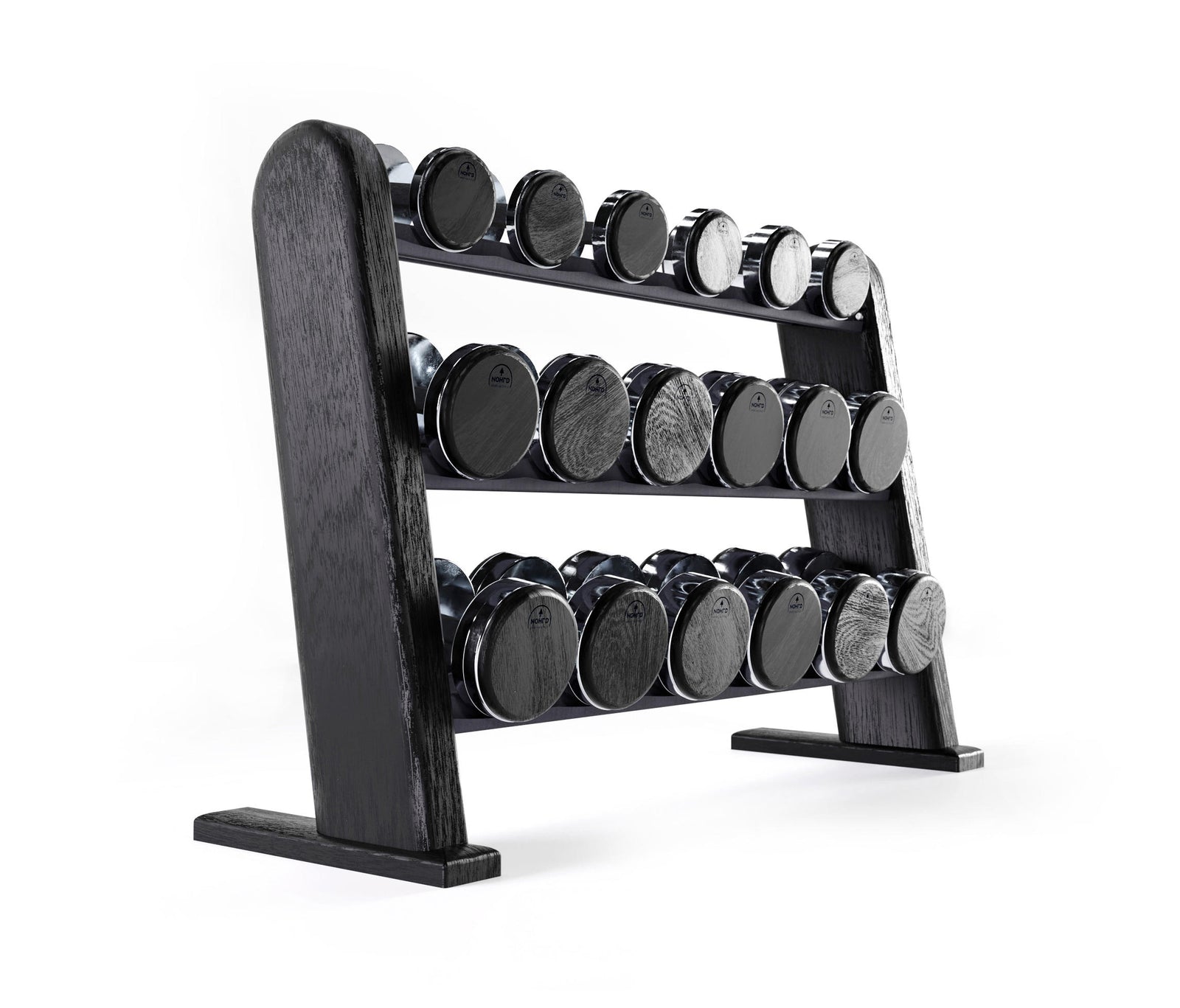
  • 5–30 kg (or 5–40 kg) dumbbell set and two or three kettlebell pairs (e.g. 16, 24, 32 kg).
  • Adjustable bench and a flat lifting platform zone in front of the rack.
  • Rower and SkiErg, plus either an air bike or compact treadmill to mimic Hyrox running volume.
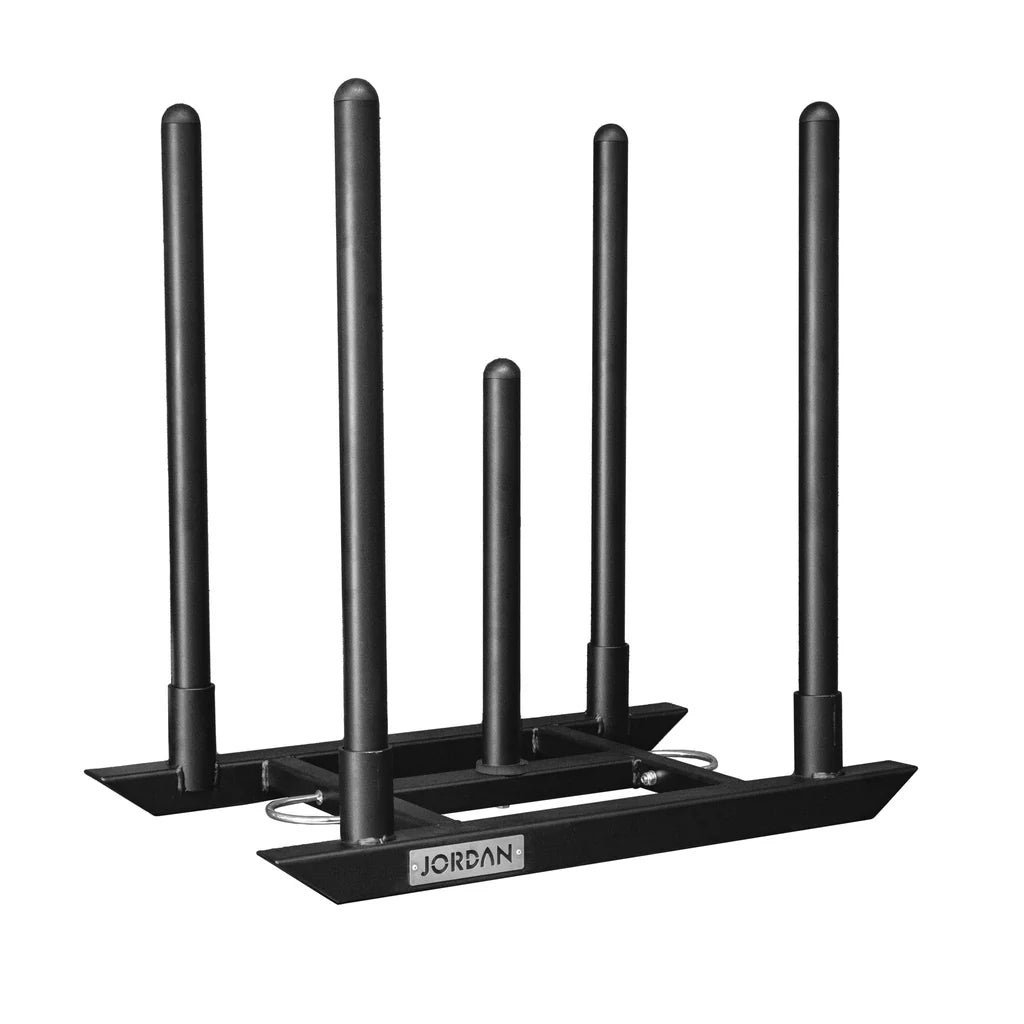
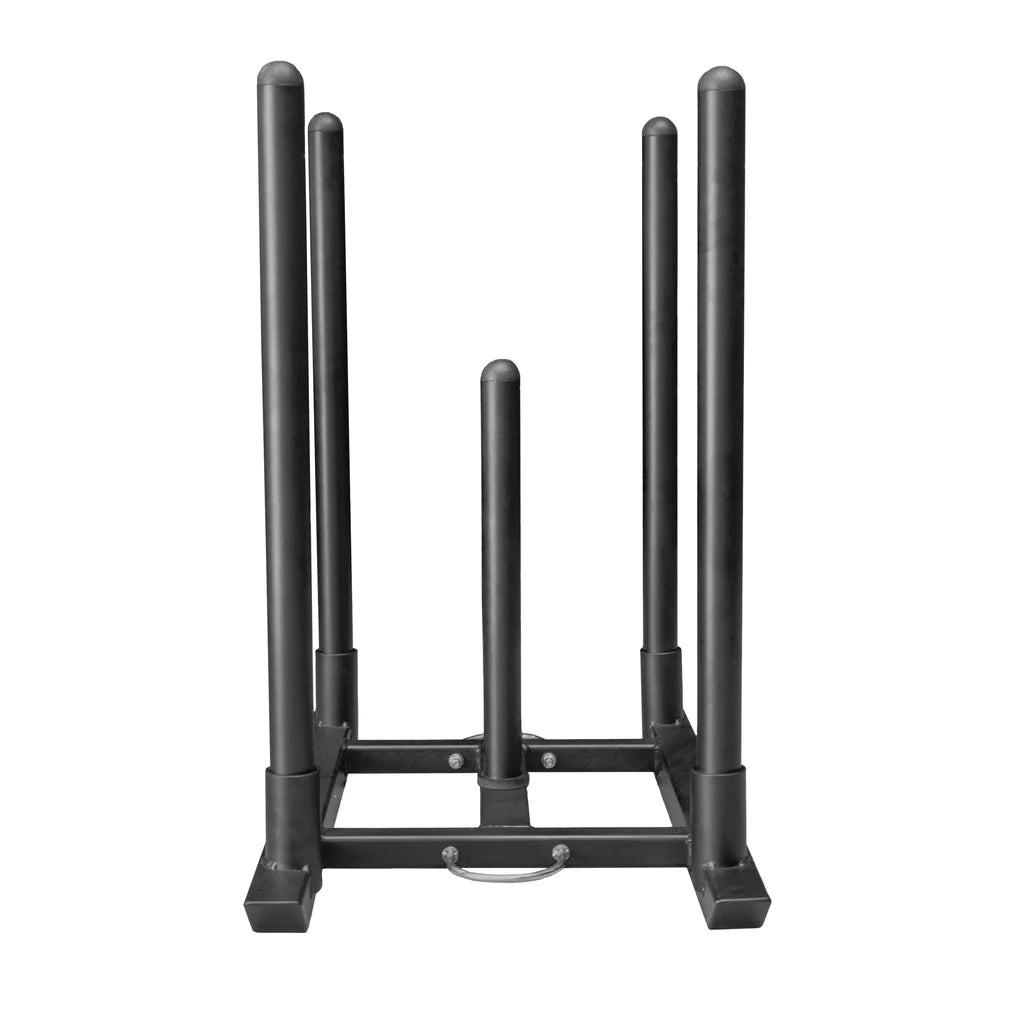
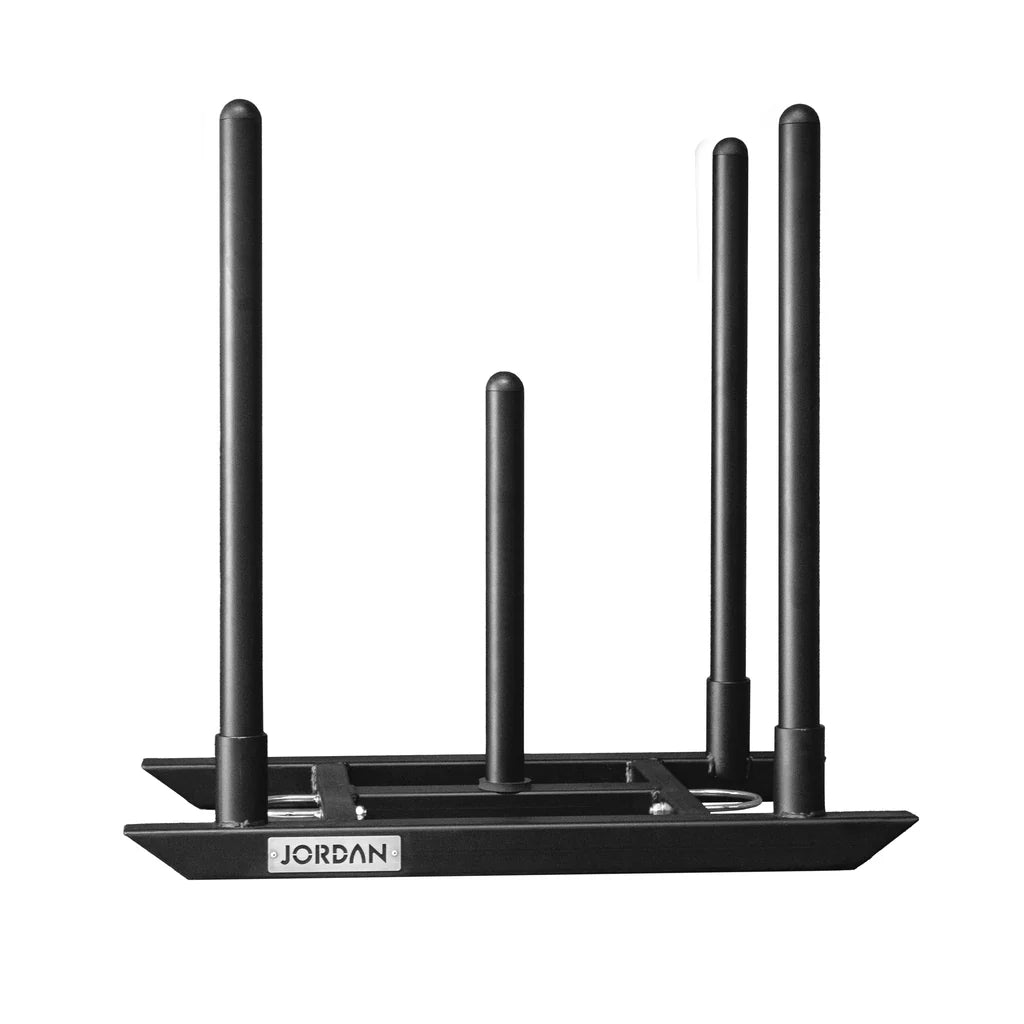
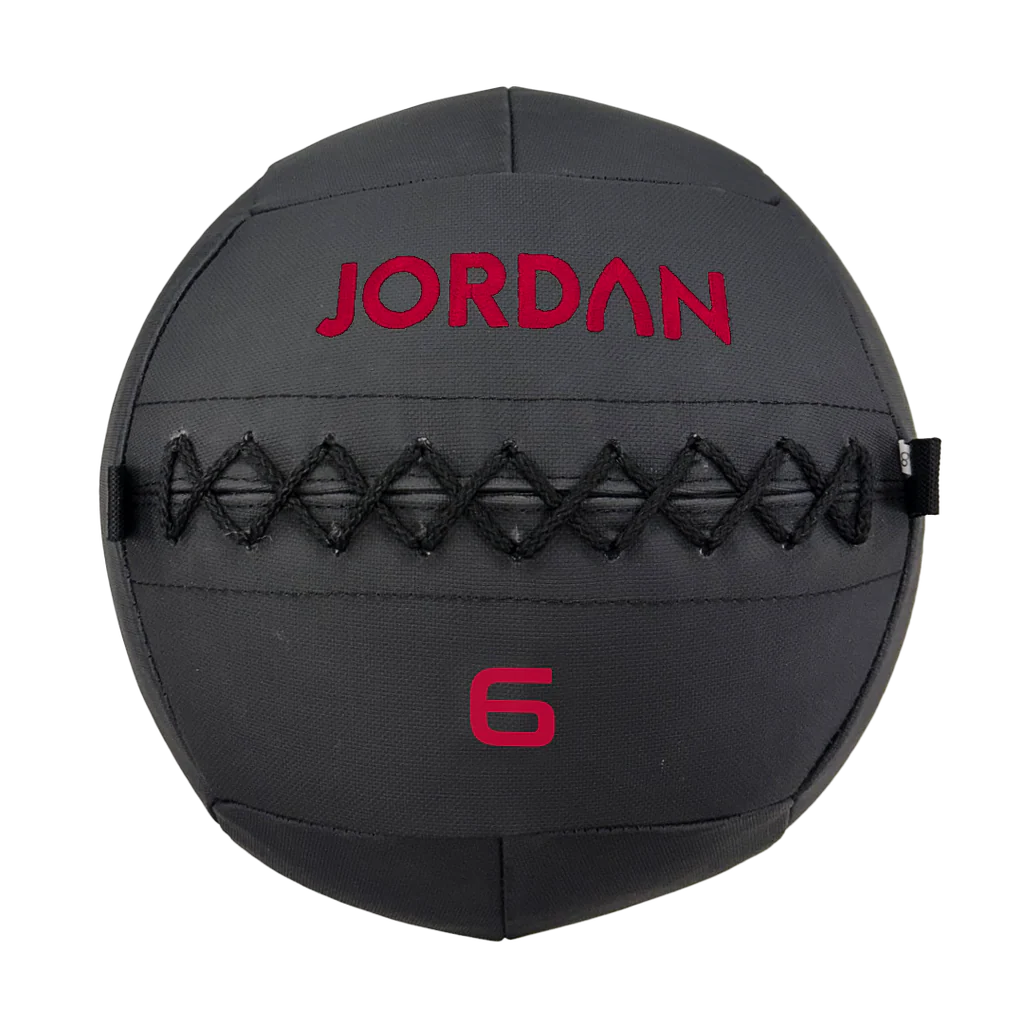
  • Sandbags, wall balls, sled or heavy prowler if the floor and door threshold allow pushing.

Layout concept

  • Long wall A: Position the rack centrally on one long wall, with the bench, barbell and plates contained in a 2.5–3 m wide strength bay. On either side, place dumbbell and kettlebell storage to keep the heavier kit clustered.
  • Long wall B: Line your main cardio machines here, for example SkiErg at one end, then rower, then air bike or treadmill. Machines are oriented so you face into the room, not into the wall, which makes the space feel more open.
  • Centre lane: Keep roughly a 1.5–2 m wide clear strip from the door to the rear for lunges, farmers carries, burpee broad jumps and functional circuits. This can double as a sled lane if your floor and door lip are flush enough.

This scenario prioritises heavy compound lifting, race-specific conditioning and generous open floor space, so it suits serious Hyrox athletes or strength-biased functional fitness.

Scenario 2: Family double garage gym – strength & cardio

The family-friendly layout balances strength, cardio and general fitness so multiple people can safely train at once. It softens the space visually, gives clear "lanes" for traffic, and offers options for  teens and adults to exercise together.


Key equipment for a family garage gym

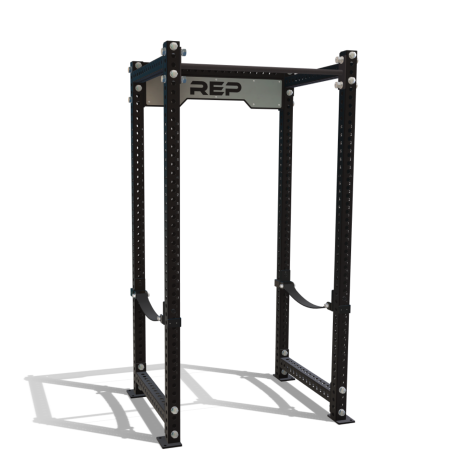
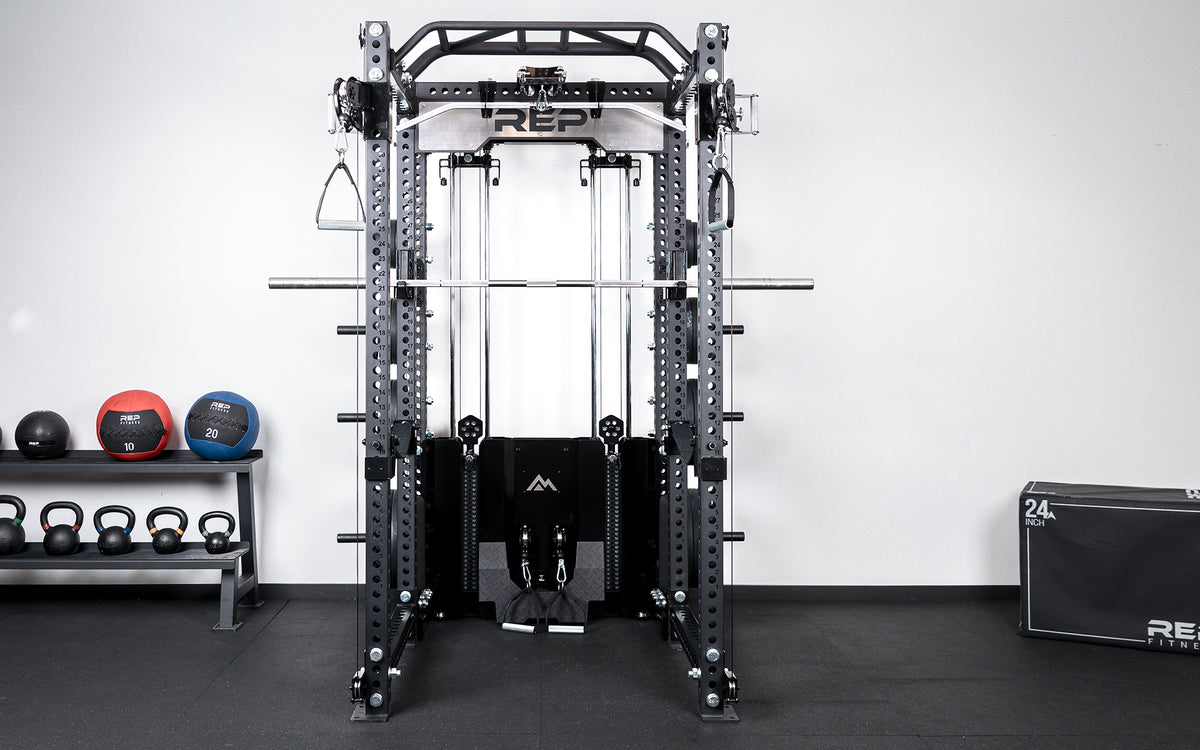
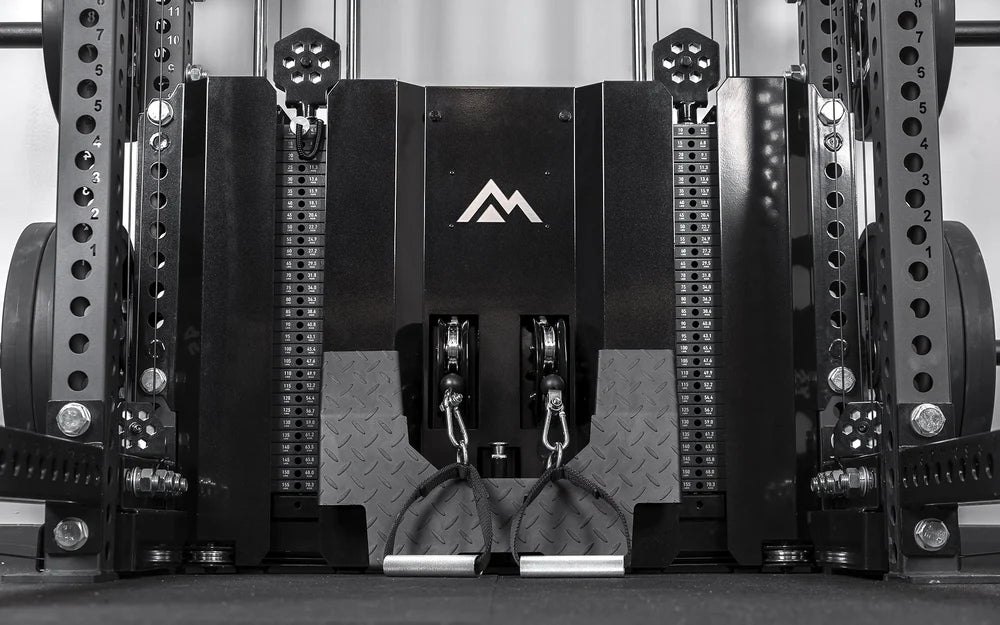
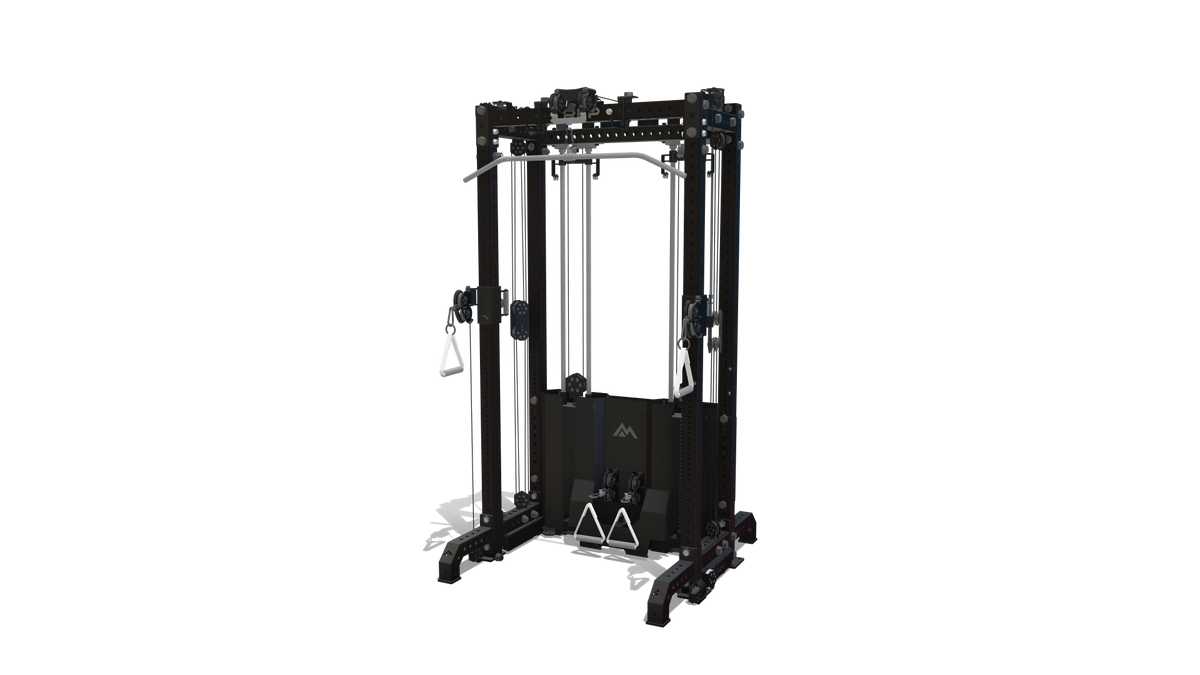
  • Compact half rack or all in one machine, to save depth when not in use.
  • 7 ft barbell and a moderate plate set (80–120 kg), plus lighter technique plates for less experienced lifters.
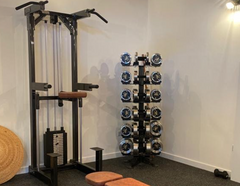
  • Smaller dumbbell range (e.g. 2–20 kg) with a tidy vertical rack.
  • One main cardio machine (treadmill, rower or bike) plus one secondary compact option (spin bike or air bike).
  • Suspension trainer or wall-mounted cable column for bodyweight and light resistance work.
  • Large mat area for bodyweight circuits, kids' movement games, and core work.

Layout concept

  • Strength corner: Use one rear corner for the rack, plates and bench so bar paths and spotting stay out of main walkways. A 2.5 m wide by 2.5–3 m deep square is usually enough for squats, presses and deadlifts if the bar points across the width of the garage.
  • Cardio wall: Place the main cardio machine(s) side-by-side on one long wall, ideally the wall nearest the house entry door so they are easily accessible and can share power sockets.
  • Family activity strip: Reserve a 2 m deep strip along the opposite wall or at the centre for mats, lighter free weights and circuits. Store lighter dumbbells, resistance bands and medicine balls in low racks that kids and teens can safely access.

This arrangement is still strong on barbell work but deliberately reduces clutter, emphasises safety, and allows simultaneous use: one person lifting, one on cardio, another doing mat-based training.

Scenario 3: Wellness, Infrared sauna & Pilates reformer studio

The wellness-led layout turns your double garage into a boutique-style studio with space for relaxation, low-impact strength and recovery. It suits people who value Pilates, yoga, heat therapy and a calmer aesthetic, while still wanting some light strength training options.

Key equipment for the wellness layout

  • Pilates reformer (full or compact), ideally positioned lengthways across the room width to maximise flow.
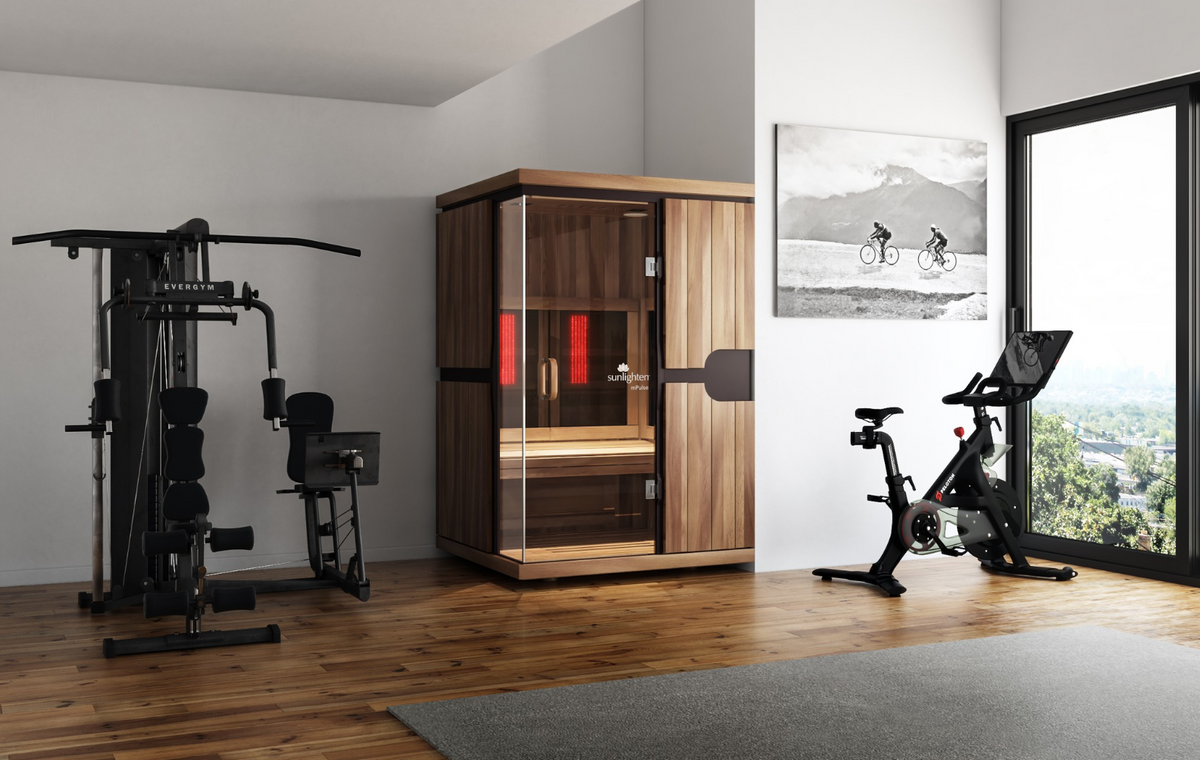
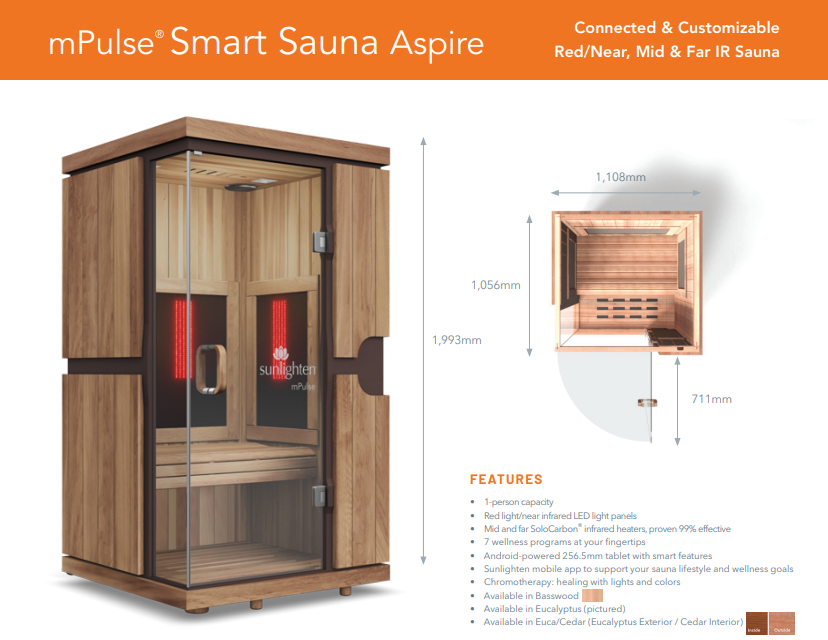
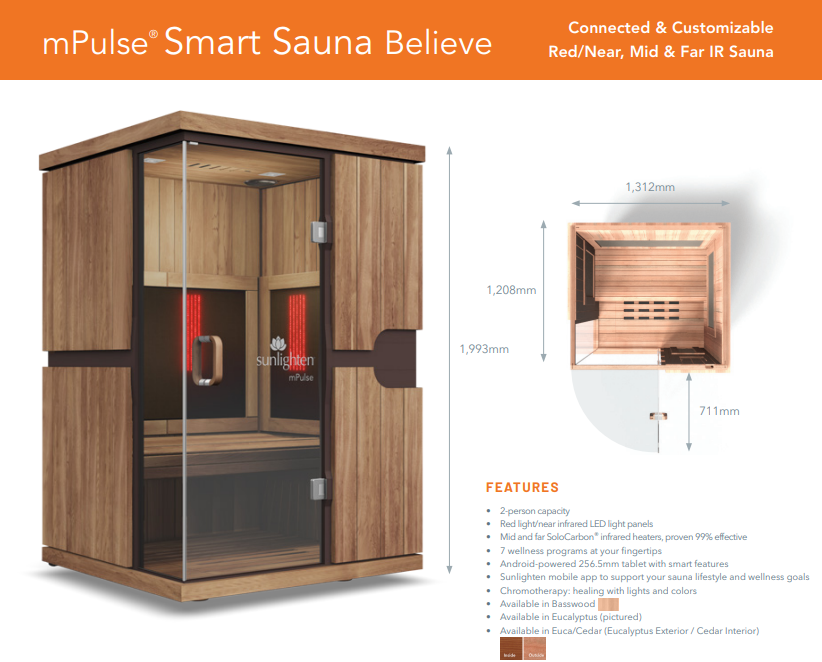
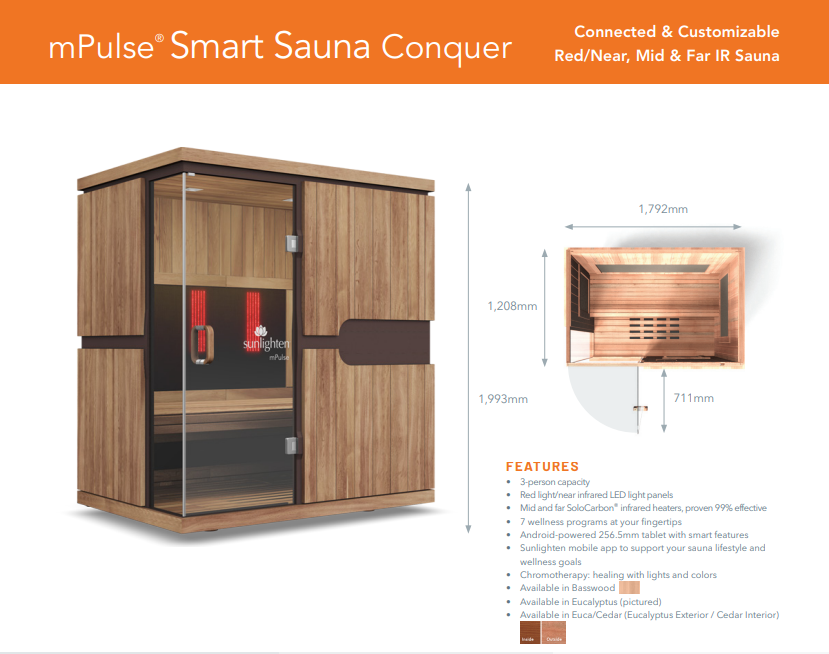
  • Infrared sauna cabin sized to one corner (typical two-person units are around 1.2–1.5 m wide x 1–1.2 m deep).
  • Quiet cardio option such as a compact treadmill, ski trainer or spin bike for low-impact conditioning.
  • Light dumbbells, resistance bands, small kettlebells and a small multi-purpose cable or pulley unit.
  • Generous mat space for Pilates matwork, yoga, stretching and breathwork.

Layout concept

  • Sauna and chill corner: Place the infrared sauna in the rear corner with enough clearance for the door to open fully and a small bench or chair outside for cooling and changing. Add towel hooks and a small shelf for water and essential oils to create a spa feel.
  • Pilates lane: Run the reformer parallel to the long wall, leaving at least 0.8–1 m around the head and foot of the carriage for the teacher or partner to move. You can mount a ballet barre and mirrors on the same wall to create a dedicated studio line.
  • Soft training zone: The opposite side of the garage becomes a soft-surface zone with mats, light weights and possibly a small, quiet cardio machine facing into the space. Keeping noisy, high-impact kit to a minimum protects the calm vibe associated with wellness work.

This scenario dedicates more square footage to low-intensity, restorative work, while still leaving enough room for light resistance training and occasional higher-intensity intervals.

Example layout overview table

Scenario Approx. focus split (Strength/Cardio/Wellness) Ideal double garage size Best for
Strength & Hyrox 50% / 40% / 10% 5.5–6 m x 6 m Hyrox prep, strong functional training.
Family Strength & Cardio 40% / 40% / 20% 5–6 m x 5.5–6 m Mixed-ability households with kids.
Wellness, Sauna & Pilates Reformer 25% / 25% / 50% 5.5–6 m x 5.5–6 m Low-impact training, recovery and de-stress.

Practical tips for any double garage gym

A few universal principles will make any of these layouts work harder for you.

  • Measure the internal footprint and ceiling height precisely, including door tracks and any boiler or utility boxes that steal space.
  • Decide your primary training goal first (Hyrox performance, family training, or wellness) and let that drive which zone gets the "prime" wall and the most depth.
  • Use modular, upgradeable kit: start with a rack, barbell, plates, adjustable bench and one cardio machine, then add SkiErg, reformer or sauna as budget and training needs evolve.
  • Keep at least one clear 1.5–2 m wide lane from the entry door to the back, to avoid a cluttered feel and make sessions flow smoothly.

With a thoughtful plan around dimensions, height and zoning, a standard UK double garage can comfortably become a dedicated strength and Hyrox facility, a versatile family gym, or a serene wellness studio with infrared sauna and Pilates reformer.

Common FAQ's for Double Garage Gym Layouts


What are standard double garage dimensions for a UK gym conversion?

Typically 5.5–6 m wide x 6 m deep (25–36 m²), with 2.3 m+ ceilings best for lifts.

Can I fit a power rack in a double garage?

Yes, half/full racks fit along a 6 m wall; all-in-ones like REP Ares save depth (76–90 cm).

What's the benefit of a curved treadmill for Hyrox?

Self-powered, no motor noise/wear; mimics race running efficiently in 175 cm length.

How to make a family gym safe for children?

Cable machine or mulitgym , consider a smith machine, use light weights, suspension trainers, mirror's for form checks.

Does an IR sauna fit in a garage gym?

Yes, 1.2–1.5 m corner footprint; pair with reformer for wellness balance.

What flooring for double garage gyms?

Typically 15–20 mm rubber tiles over concrete; full coverage for drops/safety.

Power needs for multiple machines?

Double sockets along walls; cardio + trainers draw 2–3 kW total.

How to store accessories without clutter?

Wall-mounted racks,  or vertical trees - some great multi product storage options available now.