Nationwide Sales & Service - 01536 802333

Ab workouts at home are one of the most efficient ways to build a stronger core, improve posture, and support overall performance without stepping into a gym. Targeted home ab training can help you feel more stable in everyday life, lift better in the gym, and reduce your risk of lower-back niggles over time.
In our guide, you’ll learn why core training matters, how to structure ab workouts at home for different levels, the best exercises you can do with minimal or no equipment, and which home gym machines are worth using. You’ll also get ready-made routines, practical tips, and FAQs to keep you consistent.
So lets firstly understand what are your “abs” they are part of a wider core that includes the rectus abdominis (your six-pack area), obliques on the sides of your trunk, and deep stabilisers like the transverse abdominis and multifidus. Training these muscles at home is about far more than aesthetics.
Because you can train abs with bodyweight and simple tools (a mat, towel, or light dumbbells), home is an ideal setting. Short, focused ab sessions fit easily around work, family, or other training.
Your core works in four main ways:
A smart ab workout at home includes a mix of these, not just endless crunches.
Just like any other muscle group, your abs respond to gradually increasing challenge. You can progress your home ab workouts by:
Momentum is the enemy of good ab training. Focus on smooth, controlled movement, exhaling as you brace and move through the hardest part of the rep, and keeping tension through your mid-section instead of swinging your limbs.
Even a short warm-up will help you switch “on” your core and protect your lower back.
Try this 3–5 minute sequence:
Once your trunk feels engaged, move into your main ab workout at home.
These bodyweight movements are ideal if you have just a mat and some floor space.
Dead bugs are one of the best ab workouts at home for teaching core stability and proper bracing.
Start with 2–3 sets of 6–10 reps per side.
Planks are a classic ab workout at home because they challenge your entire anterior core.
Begin with 2–3 sets of 20–40 seconds, and gradually build up.
Side planks target your obliques and help with anti-lateral flexion.
Start with 2–3 sets of 15–30 seconds per side.
This is a powerful ab exercise at home that teaches total body tension.
Start with 2–3 sets of 10–20 seconds and progress slowly.
Reverse crunches hit the lower portion of the rectus abdominis without loading the neck.
Perform 2–3 sets of 10–15 reps.
These turn a classic conditioning move into a controlled ab workout at home.
Aim for 2–3 sets of 10–16 slow reps per side.
If you’ve invested in a home gym, you can use equipment and compact machines to make your ab workouts at home more effective and varied. The goal is not just to “feel the burn” but to load the core safely through different movement patterns.
An adjustable bench plus a set of dumbbells unlocks a lot of ab training options.
Great exercises:
Keep loads modest and focus on tension rather than chasing heavy weights.
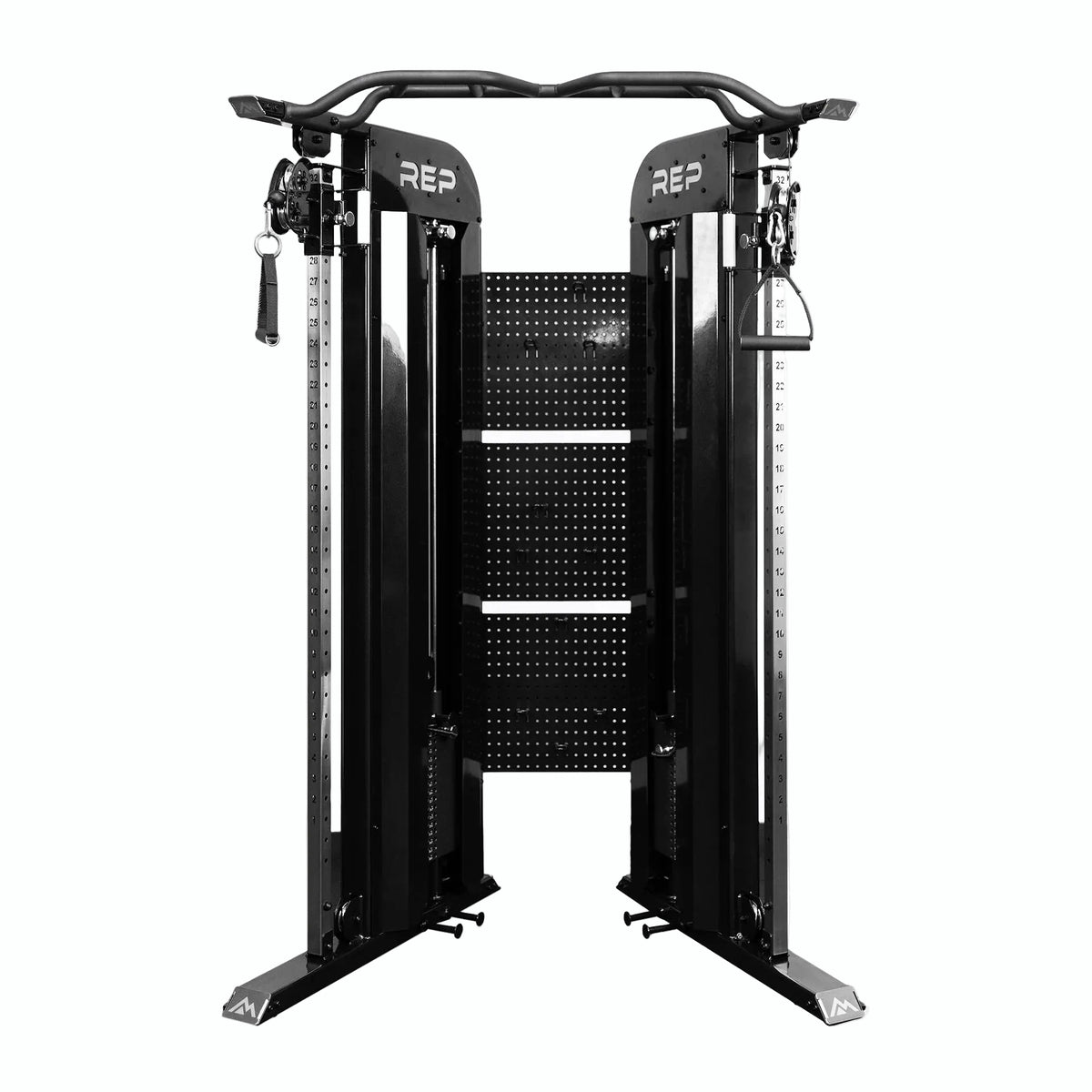
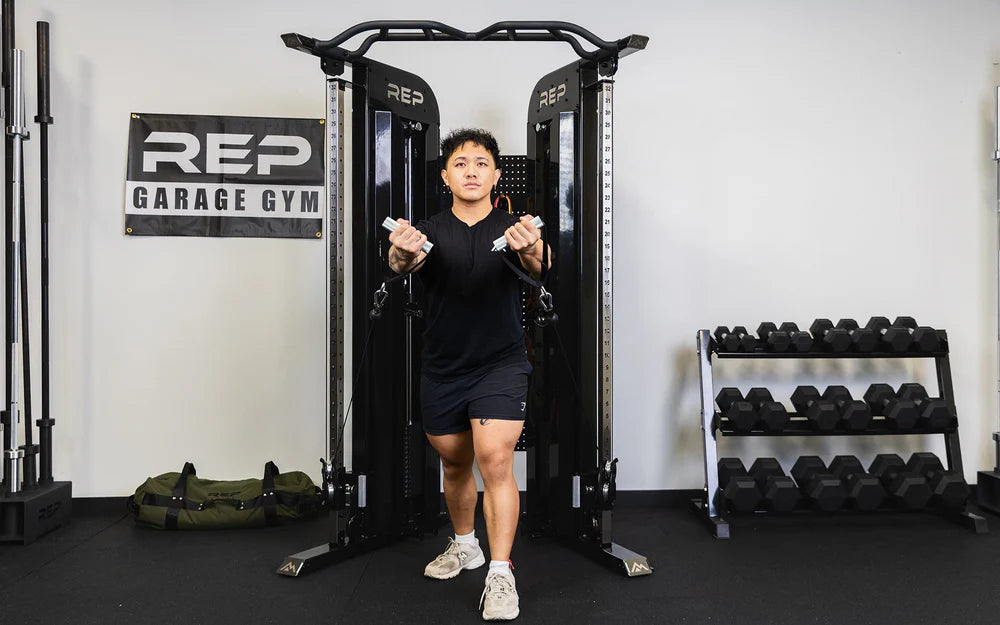
A compact cable tower, wall-mounted pulley, or functional trainer is excellent for rotational and anti-rotational ab work at home.
Try:
Use light to moderate loads and smooth, controlled motion to keep tension on the core.
A suspension trainer is perfect for small spaces and offers challenging ab workouts at home.
Options include:
Start with lower volume and focus on maintaining a solid plank line.
If you have a Roman chair or 45-degree hyperextension bench, you can train both posterior chain and core.
Useful movements:
Avoid excessive lumbar hyperextension; think long spine and controlled range.
An ab wheel is a small, affordable tool that massively increases anti-extension demands.
Begin with short ranges and low volume; this is deceptively tough even for advanced lifters.
A stability ball can make your ab workouts at home more dynamic and unstable, increasing recruitment.
Try:
Choose a ball size that allows you to keep a neutral spine and avoid sagging through the lower back.
Focus on learning control and building endurance.
Rest 45–60 seconds between sets. Aim for 2 sessions per week.
Add more time under tension and some anti-rotation work.
Rest 45–60 seconds between exercises and up to 90 seconds between rounds.
If you have basic kit, this routine uses it.
Rest 60–75 seconds between sets. Perform 2–3 times per week, not on consecutive days.
You don’t need to train abs every day to see results. For most people, the sweet spot is 2–4 focused ab workouts at home each week, along with 10–20 total sets of direct core work depending on your level, plus plenty of compound lifts and everyday movement that also engage the core.
If your core is very deconditioned, start with shorter sessions (5–10 minutes) at the end of your usual training and build up.
Ab workouts at home will build stronger muscles, but they don’t directly “burn belly fat” in one specific area. Visible abs depend on overall body-fat percentage, consistent nutrition, total weekly activity, and good sleep and stress management.
You’ll get the best aesthetic and performance results by combining regular ab workouts at home, full-body resistance training or active hobbies, and sustainable nutrition that creates a mild calorie deficit if fat loss is the goal.
1. How often should I do ab workouts at home?
Most people do well with 2–4 ab sessions per week. If you’re already lifting, 5–10 minutes of focused core work at the end of 2–3 sessions is a great starting point.
2. How long should an ab workout at home be?
You can get an effective session in 10–20 minutes. Short, high-quality sets with good control and progression will beat long, unfocused routines.
3. Do I need equipment for ab workouts at home?
No. You can build a strong core using only bodyweight exercises like dead bugs, planks, and hollow holds. Simple tools such as dumbbells, bands, a suspension trainer, or an ab wheel just add variety and progression.
They’ll build the underlying muscle and improve strength and posture, but visible abs mainly depend on overall body-fat levels. For a six-pack, combine ab training with smart nutrition and overall activity.
5. Are crunches bad for my back?
For most healthy people, controlled crunches in moderate volume are fine. If you have a history of lower-back issues, focus more on anti-extension and anti-rotation exercises (planks, dead bugs, Pallof presses) and get clearance from a qualified professional.
6. Can beginners do ab workouts at home every day?
Daily, low-intensity core activation is fine (like a few sets of dead bugs or bird dogs), but harder ab workouts are better 2–4 times per week so your muscles and connective tissues can recover.
Yes. Standing cable or band Pallof presses, suitcase marches, and controlled woodchops are excellent for real-world core strength and can be done in small spaces with minimal equipment.
8. When is the best time of day to do ab workouts at home?
Whenever you’re most likely to be consistent. Many people find it easiest to tag core work onto the end of an existing workout or daily routine (for example, after a run or strength session).
9. How quickly will I see results from ab workouts at home?
You may notice better control and posture within 2–4 weeks. Visible changes take longer and depend heavily on nutrition and overall training, typically 8–12+ weeks of consistent effort.
10. Can I combine ab workouts at home with other training?
Absolutely. Core work pairs well with full-body strength training, cardio, running, cycling, or sports. Just avoid training your abs to absolute failure right before heavy compound lifts where you need maximum trunk stability.
Ab workouts at home don’t need equipment (however it helps for variety) or long sessions. With smart exercise selection, sensible use of home gym equipment, and consistent practice, you can build a strong, functional core in the space you have – and carry that strength into everything else you do.