Cable Crunches: The Ultimate Exercise to Building a Stronger Core?

August 21, 2026 5 min read

Cable Crunches: The Ultimate Exercise to Building a Stronger Core?

What Are Cable Crunches?

Cable crunches are a weighted abdominal exercise performed using a cable machine with a rope or bar attachment. Unlike bodyweight crunches, the cable provides constant tension throughout the entire range of motion — meaning your abs are working harder for longer, with no rest at the top or bottom of the movement.

This makes cable crunches one of the most effective exercises for building genuine core strength and muscular definition, and a staple in the programmes of serious athletes, physique competitors, and anyone committed to a well-rounded home gym training routine.

Benefits of Cable Crunches

  1. Constant tension: The cable maintains resistance through the full range of motion, unlike bodyweight crunches where tension drops at the top.
  2. Progressive overload: Easily increase resistance to continue challenging your abs as you get stronger.
  3. Reduced neck strain: Holding the rope behind your head eliminates the need to pull on your neck, a common issue with traditional crunches.
  4. Greater muscle recruitment: Studies and trainer consensus show cable crunches activate the rectus abdominis more effectively than most other ab exercises.

Why Cable Crunches Beat Bodyweight Crunches

Bodyweight crunches have their place, but they have a fundamental limitation: resistance drops off as you approach the top of the movement. Cable crunches solve this entirely. The pulley system maintains consistent load throughout the full arc of motion, creating greater time under tension and a more effective stimulus for hypertrophy and strength.

Key advantages include:

  • Progressive overload — simply increase the weight stack to keep challenging your core as it adapts
  • Constant tension — no dead spots in the movement, unlike floor crunches
  • Reduced neck and hip flexor strain — when performed correctly, the movement isolates the rectus abdominis far more effectively
  • Scalability — suitable for beginners through to advanced athletes by adjusting load

How to Perform Cable Crunches: Step-by-Step


Setup

  1. Attach a rope handle to the high pulley of your cable machine.
  2. Select an appropriate weight — start lighter than you think you need until you've mastered the technique.
  3. Kneel facing the machine, approximately 60–90 cm from the weight stack.
  4. Grip the rope handles and bring them to either side of your head, just above your ears. Keep your hands here throughout — do not pull with your arms.

The Movement

  1. Begin in an upright kneeling position with a neutral spine.
  2. Brace your core and initiate the movement by flexing your spine — think about bringing your rib cage down towards your hips, not your head towards the floor.
  3. Crunch down until your elbows approach your thighs and you feel a strong contraction in your abs.
  4. Hold the contracted position for one second.
  5. Slowly return to the start position under control — resist the weight on the way up.
  6. Repeat for the desired number of repetitions.

Common Mistakes to Avoid

  • Pulling with the arms — your hands should remain fixed beside your head. All movement comes from spinal flexion.
  • Using momentum — slow, controlled reps are far more effective than fast, sloppy ones.
  • Hinging at the hips — the movement should come from your mid-section, not from rocking forward at the hips.
  • Going too heavy too soon — ego loading on cable crunches leads to poor form and reduced effectiveness. Build up gradually.

Programming Cable Crunches

Cable crunches respond well to moderate rep ranges with controlled tempo. A good starting point:

  • Sets: 3–4
  • Reps: 12–20 per set
  • Tempo: 2 seconds down, 1 second hold, 2 seconds up
  • Rest: 60–90 seconds between sets
  • Frequency: 2–3 times per week as part of a structured core routine

As you grow stronger, increase the weight incrementally rather than adding more reps indefinitely. Treat your abs like any other muscle group — they respond to progressive overload.

Cable Crunches in Your Home Gym

To perform cable crunches at home, you need a functional trainer or cable machine with a high pulley position. The quality of your machine matters — smooth, consistent cable tension makes a significant difference to the feel and effectiveness of the exercise.

At Training Station, we recommend two outstanding options for home gym use:

Inspire Fitness FT1 Pro Functional Trainer

The Inspire Fitness FT1 Pro Functional Trainer is one of the most capable and refined cable machines available for the home gym. With independently adjustable dual weight stacks and a full range of pulley positions, it delivers the smooth, consistent cable tension that makes exercises like cable crunches feel genuinely premium. The FT1 Pro's build quality, compact footprint, and versatility make it an exceptional centrepiece for any serious home training space.

  • Dual 165 lb (73 kg) weight stacks, upgradeable by an additional 50 lbs per side.
  • 30+ vertically adjustable swivel pulley positions for precise height settings.
  • 2:1 resistance ratio for smooth, controlled movement.
  • Heavy-duty 11-gauge steel frame with matte black powder coating for durability.
  • Integrated pull-up bar, tablet mount, and 9–11 included accessories (rope, handles, bars, ankle straps, belt).
  • Compact footprint: 108 cm (L) × 96.5 cm (W) × 207 cm (H)—ideal for luxury home gyms and garden rooms

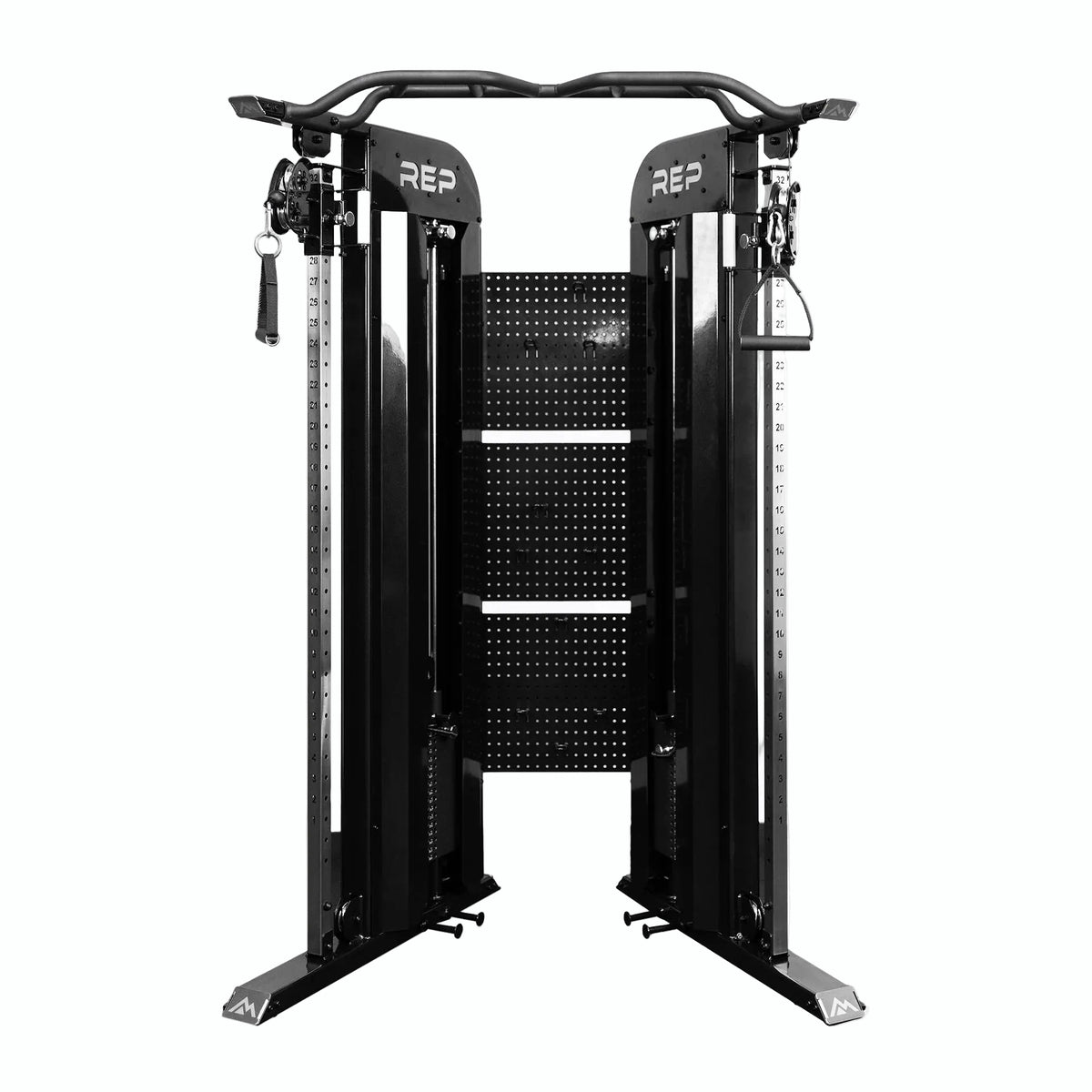
REP Arcadia™ Functional Trainer

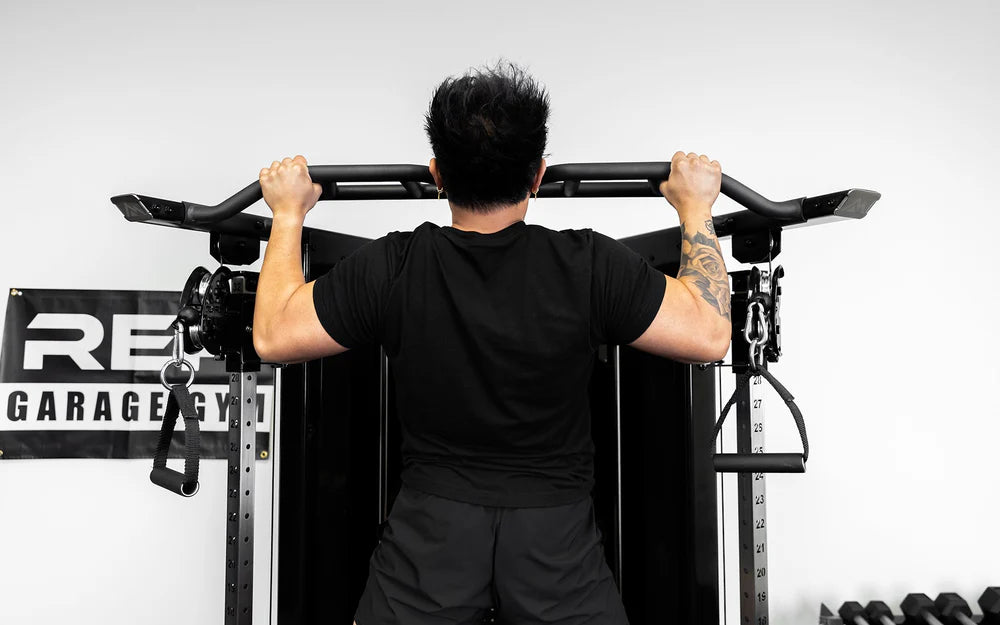
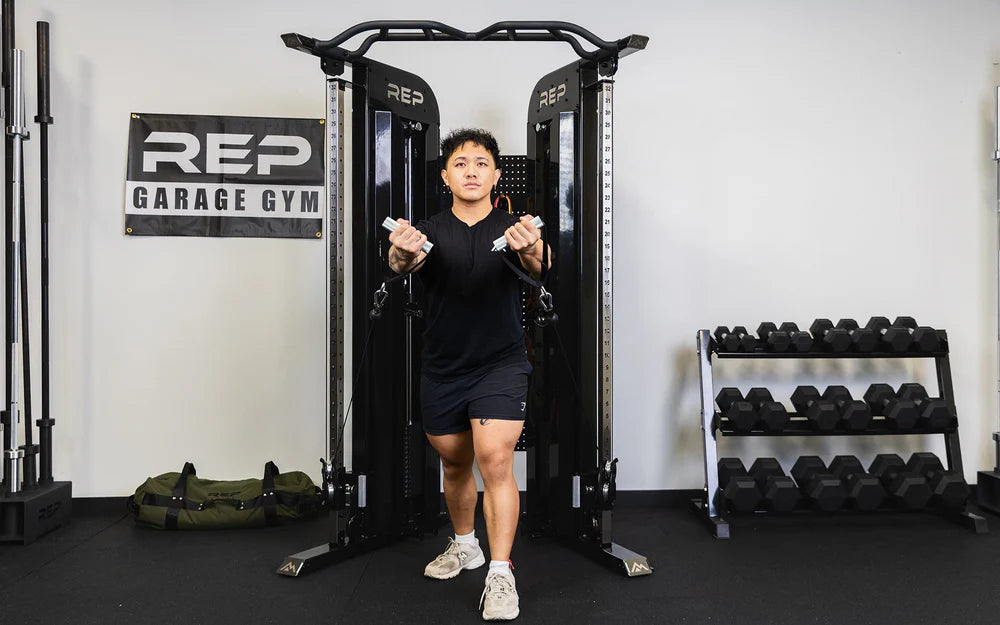
The REP Arcadia™ Functional Trainer is a beautifully engineered cable machine that combines serious performance with a clean, modern aesthetic. Its dual independent weight stacks, wide range of pulley adjustments, and robust construction make it ideal for a full spectrum of cable exercises — including cable crunches, pulldowns, rows, and cable flyes. The Arcadia is a favourite for our home gym designs where both performance and design matter.

  • Dual 170 lb (77 kg) weight stacks (Arcadia Max: 220 lb / 100 kg per stack).
  • 32 cable positions (Arcadia Max: 36) for versatile exercise setup.
  • 2:1 cable ratio with smooth aluminium pulleys for fluid motion.
  • Full-length customisable pegboards for organised accessory storage.
  • Cable travel: 93.4" (237 cm)—excellent range for tall users and full-extension movements.
  • Sleek, modern design with robust construction suited to high-end residential and commercial installations.

Variations to Try

Once you've mastered the standard cable crunch, consider adding these variations to your routine:

  • Kneeling cable crunch with rotation — add a slight twist at the bottom to engage the obliques
  • Standing cable crunch — performed standing, this variation increases the challenge to your stabilising muscles
  • Single-arm cable crunch — unilateral work to address any left-right imbalances in core strength
  • Cable crunch to the side — targets the lateral core and obliques more directly

Final Thoughts

Cable crunches are one of the most underrated core exercises available. When performed with proper technique and progressive loading, they build genuine abdominal strength and definition that bodyweight movements simply cannot match. Pair them with a high-quality functional trainer, programme them consistently, and you'll notice the difference — not just in how your core looks, but in how it performs across every other lift in your training.

Browse our range of functional trainers to find the right cable machine for your home gym.