Kettlebell Training for Beginners: Complete Guide & Workouts

November 14, 2025 8 min read

Kettlebell Training for Beginners: Complete Guide & Workouts

Introduction to Kettlebell Training

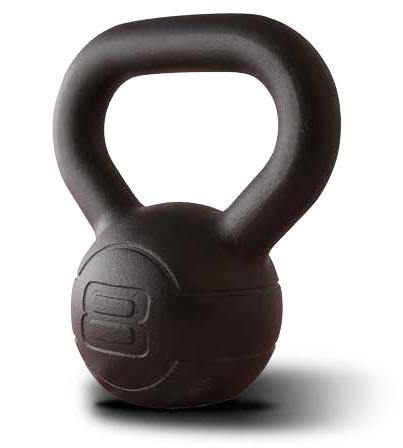
Kettlebell training has become one of the most effective and versatile forms of strength and conditioning training available. Unlike traditional dumbbells, the kettlebell's unique design—with its offset center of mass—creates a dynamic training tool that challenges your body in ways conventional equipment cannot match.

Whether you're setting up a home gym or looking to diversify your training routine, kettlebells offer an efficient path to building strength, power, and cardiovascular endurance simultaneously. This guide will walk you through everything you need to know to start your kettlebell training journey safely and effectively.

Why Choose Kettlebell Training?

Kettlebells deliver exceptional results because they combine strength training with cardiovascular conditioning in a single workout. The ballistic nature of many kettlebell exercises elevates your heart rate while building functional strength that translates directly to real-world movements.

Key benefits include:

  • Full-body conditioning: Most kettlebell exercises engage multiple muscle groups simultaneously, maximizing training efficiency
  • Improved functional strength: Movements mirror everyday activities, enhancing your ability to lift, carry, and move with confidence
  • Enhanced core stability: The offset weight constantly challenges your core to maintain proper alignment and control
  • Time efficiency: Achieve strength and cardio benefits in 20-30 minute sessions
  • Space efficiency: Perfect for home gyms—a single kettlebell provides countless exercise variations
  • Increased power and explosiveness: Ballistic movements develop athletic performance and metabolic conditioning

Choosing Your First Kettlebell

Selecting the right weight is crucial for safe, effective training. Too light and you won't see results; too heavy and you risk injury or poor form.

Recommended Starting Weights

  • Women (beginners): 8-12kg (18-26lbs)
  • Women (some strength training experience): 12-16kg (26-35lbs)
  • Men (beginners): 12-16kg (26-35lbs)
  • Men (some strength training experience): 16-20kg (35-44lbs)

If you're between sizes, start lighter. Proper form is always more important than weight. As you progress, you'll likely want to add heavier kettlebells for lower-body dominant exercises and lighter ones for upper-body and overhead work.

Quality Considerations

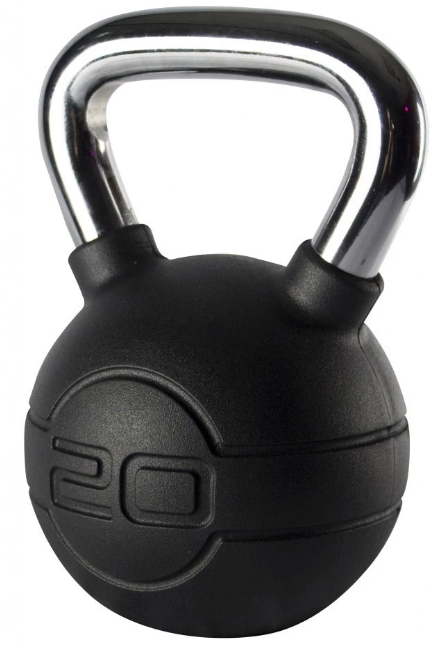
Invest in a quality kettlebell with:

  • Smooth handle finish for comfortable grip during high-rep work
  • Proper handle diameter (approximately 35mm for standard bells)
  • Flat base for stability during floor exercises
  • Durable coating that won't chip or flake
  • Accurate weight calibration

Essential Kettlebell Exercises for Beginners

Master these foundational movements before progressing to advanced variations. Each exercise builds upon fundamental movement patterns that form the basis of all kettlebell training.

1. Kettlebell Deadlift

Primary Muscles: Glutes, hamstrings, erector spinae (lower back), quadriceps
Secondary Muscles: Core stabilizers, trapezius, forearms and grip

Why it's essential: The deadlift is the foundation of all kettlebell training. It teaches the fundamental hip hinge pattern—the cornerstone movement for swings, cleans, and snatches. This exercise builds posterior chain strength critical for injury prevention and athletic performance.

How to perform:

  1. Place the kettlebell on the floor between your feet, which should be hip-width apart
  2. Push your hips back while maintaining a neutral spine, bending your knees slightly
  3. Grip the kettlebell handle with both hands, keeping your shoulders pulled back and chest proud
  4. Engage your core and drive through your heels, extending your hips and knees simultaneously
  5. Stand tall at the top, squeezing your glutes without hyperextending your lower back
  6. Reverse the movement by pushing your hips back first, then lowering the kettlebell with control

Common mistakes: Rounding the lower back, lifting with the arms instead of the hips, not fully extending the hips at the top

2. Kettlebell Goblet Squat

Primary Muscles: Quadriceps, glutes, adductors (inner thighs)
Secondary Muscles: Core stabilizers, erector spinae, shoulders (from holding position), calves

Why it's essential: The goblet squat teaches proper squat mechanics while the front-loaded position naturally encourages an upright torso and deep range of motion. It's excellent for building lower-body strength and mobility simultaneously.

How to perform:

  1. Hold the kettlebell by the horns (sides of the handle) at chest height, elbows tucked close to your body
  2. Stand with feet slightly wider than hip-width, toes pointed slightly outward
  3. Initiate the squat by simultaneously pushing your hips back and bending your knees
  4. Descend until your elbows touch the inside of your knees, maintaining an upright torso
  5. Keep your weight distributed across your entire foot, not just your toes
  6. Drive through your heels and midfoot to return to standing, keeping the kettlebell close to your chest

Common mistakes: Allowing knees to cave inward, rising onto toes, leaning too far forward, not squatting deep enough

3. Kettlebell Swing (Two-Handed)

Primary Muscles: Glutes, hamstrings, erector spinae, core (entire abdominal wall)
Secondary Muscles: Quadriceps, shoulders, upper back, forearms and grip, cardiovascular system

Why it's essential: The swing is the most fundamental ballistic kettlebell exercise and the gateway to advanced movements. It develops explosive hip power, cardiovascular conditioning, and posterior chain strength. This single exercise can provide a complete workout.

How to perform:

  1. Start with the kettlebell on the floor slightly in front of you, feet shoulder-width apart
  2. Hinge at the hips and grip the kettlebell with both hands, tilting it toward you
  3. Hike the kettlebell back between your legs like a football snap, keeping your arms straight
  4. Explosively drive your hips forward, standing tall and squeezing your glutes
  5. Let the momentum carry the kettlebell to chest height—your arms are just the connection, not the engine
  6. As the kettlebell descends, allow it to swing back between your legs while hinging at the hips
  7. Maintain a neutral spine throughout—this is a hip hinge, not a squat

Common mistakes: Squatting instead of hinging, using arms to lift the weight, hyperextending the back at the top, allowing the kettlebell to drop too low

4. Kettlebell Single-Arm Row

Primary Muscles: Latissimus dorsi (lats), rhomboids, trapezius (middle and lower)
Secondary Muscles: Posterior deltoids, biceps, core stabilizers (anti-rotation), erector spinae, forearms and grip

Why it's essential: Rows build a strong, balanced back to counteract the pushing movements in your training. The single-arm variation challenges core stability and addresses strength imbalances between sides.

How to perform:

  1. Place your left hand and left knee on a bench, keeping your back flat and parallel to the floor
  2. Position the kettlebell on the floor beneath your right shoulder
  3. Grip the kettlebell and engage your core to prevent rotation
  4. Pull the kettlebell toward your hip, driving your elbow back and keeping it close to your body
  5. Squeeze your shoulder blade toward your spine at the top of the movement
  6. Lower the kettlebell with control, fully extending your arm
  7. Complete all reps on one side before switching

Common mistakes: Rotating the torso, using momentum instead of muscle, pulling the weight too far forward, shrugging the shoulder

5. Kettlebell Overhead Press

Primary Muscles: Deltoids (shoulders—all three heads), triceps
Secondary Muscles: Upper chest, core stabilizers, serratus anterior, trapezius, forearms and grip

Why it's essential: The overhead press builds shoulder strength and stability while teaching proper overhead mechanics. It's crucial for developing balanced upper-body strength and shoulder health.

How to perform:

  1. Clean the kettlebell to the rack position: kettlebell rests on your forearm, elbow tucked close to your ribs, wrist straight
  2. Stand with feet hip-width apart, core engaged, glutes tight
  3. Press the kettlebell straight overhead, rotating your arm so your palm faces forward at the top
  4. Fully extend your arm with your bicep near your ear—don't stop short
  5. Keep your ribs down and core braced—don't arch your lower back
  6. Lower the kettlebell back to the rack position with control
  7. Complete all reps on one side before switching

Common mistakes: Arching the lower back, pressing forward instead of straight up, not fully extending the arm, holding breath

6. Kettlebell Turkish Get-Up

Primary Muscles: Entire body—shoulders, core (all regions), glutes, quadriceps, hip stabilizers
Secondary Muscles: Triceps, chest, upper back, hamstrings, calves, deep stabilizing muscles throughout

Why it's essential: The Turkish get-up is the ultimate full-body exercise, developing strength, stability, and mobility through multiple planes of motion. It teaches body awareness and control while building bulletproof shoulders and core.

How to perform (simplified breakdown):

  1. Lie on your back with the kettlebell in your right hand, arm extended straight up
  2. Bend your right knee, placing your foot flat on the floor; extend your left arm at 45 degrees
  3. Keep your eyes on the kettlebell throughout the entire movement
  4. Roll onto your left elbow, then press up to your left hand
  5. Lift your hips, threading your left leg back to a kneeling position
  6. Sweep your left leg back into a half-kneeling position
  7. Stand up, keeping the kettlebell overhead
  8. Reverse the entire sequence to return to the starting position
  9. Complete all reps on one side before switching

Common mistakes: Taking eyes off the kettlebell, rushing through the movement, not maintaining vertical arm position, poor hip mobility

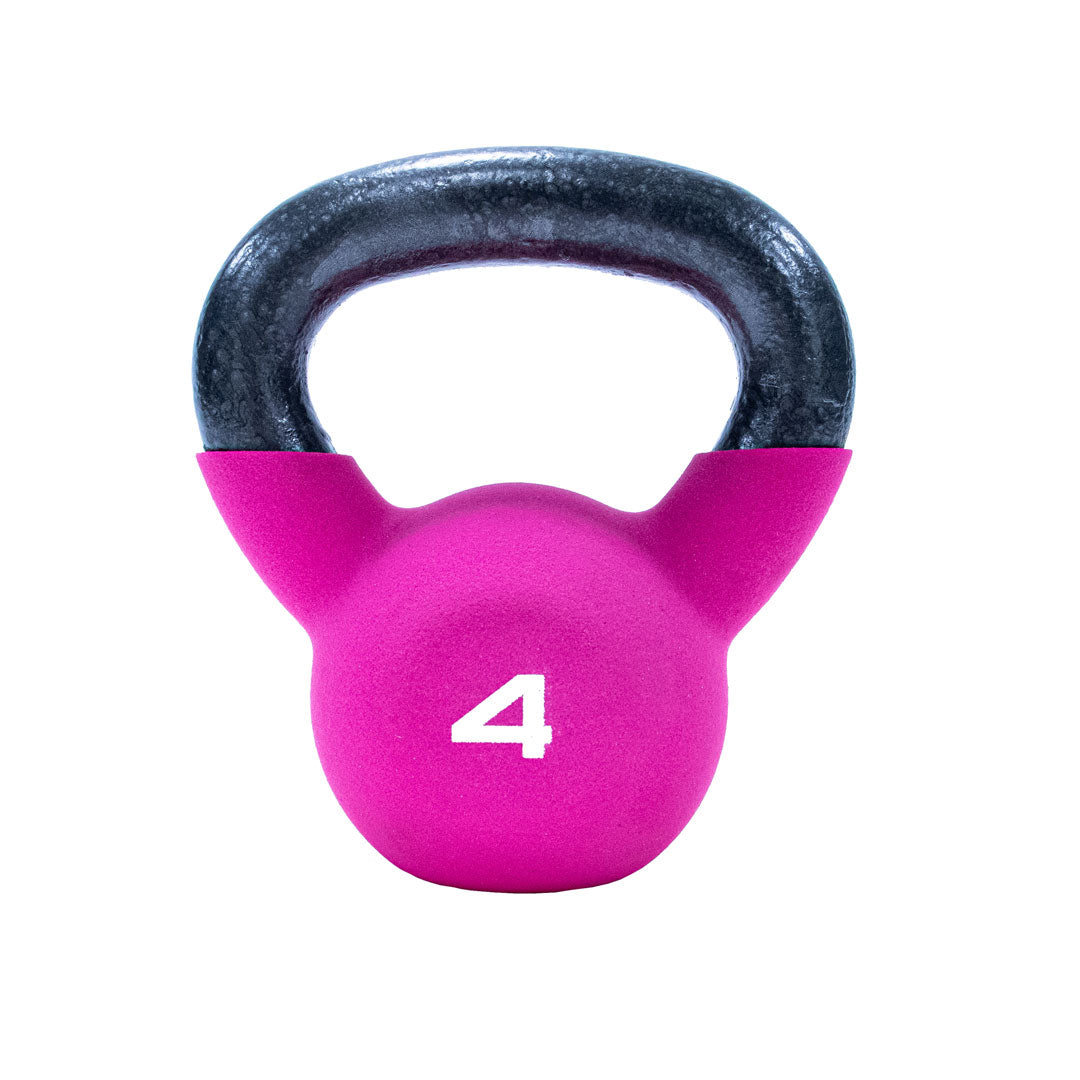
Beginner tip: Master this movement without weight first, then progress to a light kettlebell (4-8kg) before increasing load.

Studio  kettlebell Group Training

Sample Beginner Workouts

Start with these structured workouts 2-3 times per week, allowing at least one rest day between sessions.

Workout A: Foundation Builder (20-25 minutes)

  • Warm-up: 5 minutes of mobility work (hip circles, arm circles, bodyweight squats)
  • Kettlebell Deadlift: 3 sets of 10 reps
  • Kettlebell Goblet Squat: 3 sets of 8 reps
  • Kettlebell Single-Arm Row: 3 sets of 8 reps per side
  • Kettlebell Overhead Press: 3 sets of 6 reps per side
  • Cool-down: 5 minutes of stretching

Rest 60-90 seconds between sets. Focus on perfect form over speed.

Workout B: Swing Focus (15-20 minutes)

  • Warm-up: 5 minutes including hip hinges and light swings
  • Kettlebell Swing: 10 sets of 15 reps (30 seconds work, 30 seconds rest)
  • Kettlebell Goblet Squat: 3 sets of 10 reps
  • Kettlebell Turkish Get-Up: 3 sets of 2 reps per side (slow and controlled)
  • Cool-down: 5 minutes of stretching

Workout C: Full-Body Circuit (25-30 minutes)

  • Warm-up: 5 minutes
  • Complete 3-4 rounds of the following circuit with minimal rest between exercises:
  • Kettlebell Deadlift: 10 reps
  • Kettlebell Swing: 15 reps
  • Kettlebell Goblet Squat: 8 reps
  • Kettlebell Single-Arm Row: 8 reps per side
  • Kettlebell Overhead Press: 6 reps per side
  • Rest 2 minutes between rounds
  • Cool-down: 5 minutes

Kettlebell training Safety Tips and Common Mistakes

Kettlebell training is safe when performed correctly, but the dynamic nature of the movements requires attention to proper technique.

Essential Safety Guidelines

  • Master the basics first: Spend 2-4 weeks perfecting deadlifts and goblet squats before progressing to swings
  • Maintain neutral spine: Never round your lower back, especially during hip hinge movements
  • Start light: Use a weight that allows 15-20 perfect reps; you can always progress
  • Warm up properly: Spend 5-10 minutes preparing your body with mobility work and light movement
  • Control the descent: Never let the kettlebell crash down—control every phase of each movement
  • Protect your floor: Use rubber mats to protect both your floor and your kettlebell
  • Wear appropriate footwear: Flat, stable shoes or barefoot training is ideal—avoid cushioned running shoes
  • Create space: Ensure adequate clearance around you, especially for swings and overhead work

Common Mistakes to Avoid

  • Ego lifting: Using too much weight too soon compromises form and increases injury risk
  • Inconsistent breathing: Never hold your breath—exhale during exertion, inhale during the easier phase
  • Gripping too tight: Maintain a firm but not death-grip on the handle to prevent forearm fatigue
  • Skipping progressions: Each exercise builds on previous skills—don't skip steps
  • Training through pain: Discomfort from effort is normal; sharp or joint pain is not—stop and assess
  • Neglecting mobility: Tight hips and shoulders limit performance and increase injury risk

KettleBell Training Progression and Next Steps

After 4-6 weeks of consistent training with these foundational exercises, you'll be ready to progress.

Signs You're Ready to Progress

  • You can perform all exercises with perfect form for the prescribed reps
  • The current weight feels noticeably easier than when you started
  • You can complete workouts with good energy and recovery
  • Your movement quality remains consistent even when fatigued

Progression Options

  • Increase weight: Move up 4kg (8-10lbs) for lower-body exercises, 2-4kg for upper-body
  • Add volume: Increase sets or reps by 10-20%
  • Reduce rest periods: Decrease rest between sets by 15-30 seconds
  • Learn new exercises: Progress to single-arm swings, cleans, snatches, and windmills
  • Increase training frequency: Add a fourth session per week

Concluding Kettlebell Training Thoughts

Kettlebell training offers an efficient, effective path to building strength, power, and conditioning with minimal equipment. By mastering these six foundational exercises and following the structured workout programs, you'll develop a solid base of functional fitness that translates to improved performance in all areas of life.

Remember: consistency and proper form trump intensity every time. Start with appropriate weights, focus on movement quality, and progress systematically. Your body will reward you with increased strength, improved body composition, and enhanced athletic performance.

Ready to begin your kettlebell journey? Explore our range of premium kettlebells designed for home and commercial use, and start building the strong, capable body you deserve.