Nationwide Sales & Service - 01536 802333

The jerk stands as one of the most explosive and technically demanding movements in strength training. As the second component of the clean and jerk—one of two contested lifts in Olympic weightlifting—the jerk represents the ultimate expression of speed-strength, requiring athletes to drive a loaded barbell from the shoulders to a locked-out overhead position in under one second.
Our comprehensive Jerk guide explores every aspect of the jerk, from fundamental biomechanics to advanced programming strategies, providing the knowledge needed to master this powerful movement.
The jerk is an explosive Olympic weightlifting movement where the barbell is driven from the shoulders to a locked-out overhead position using a rapid leg dip and drive, then a fast drop under the bar to receive it with straight arms. It is the second half of the clean and jerk and is one of the most powerful total-body expressions of speed-strength in barbell training.
The movement starts from the front rack—bar on the shoulders, elbows slightly in front of the bar—then uses a shallow, vertical dip of the knees and hips, followed by a violent leg drive to accelerate the bar upwards. As the bar rises, the lifter rapidly pushes themselves under it into a receiving position (split, power, or squat), catching it overhead with locked elbows before recovering to a stable standing position with feet in line.
The clean and jerk has been contested in Olympic weightlifting since 1896. The jerk component typically allows lifters to move 15-25% more weight than they can clean, making jerk technique critical for competitive success. Georgian weightlifter Lasha Talakhadze holds the current world record at 267kg, whilst elite female super-heavyweights exceed 180kg.
Beyond competitive weightlifting, the jerk has found widespread applications in CrossFit, strength and conditioning programmes, and athletic development due to its unparalleled ability to develop explosive power and total-body coordination.
Because the jerk is a compound lift, almost every major muscle group contributes.
Lower Body: Quadriceps are primary drivers in the dip and drive, extending the knees to accelerate the bar. Gluteus maximus extends the hips powerfully during the drive and helps stabilise the pelvis in the split or squat catch. Hamstrings assist hip extension, stabilise the knee, and help control the split/squat position. Calves contribute to plantarflexion during the finish of the drive, adding speed to the bar.
Trunk and Back: Spinal erectors maintain a rigid, upright torso during dip, drive, and catch. Rectus abdominis and obliques brace the trunk and resist extension/flexion and rotation, especially in an asymmetrical split stance. Lats and mid-back (traps, rhomboids) help keep the bar path close to the body and stabilise the shoulder girdle under load.
Shoulders and Arms: Deltoids work isometrically to support the bar and contribute to the final punch into lockout. Triceps extend the elbows to secure the bar in a locked-out overhead position. Rotator cuff muscles stabilise the shoulder joint throughout. Forearm flexors/extensors maintain a secure grip on the bar throughout the dip and drive.

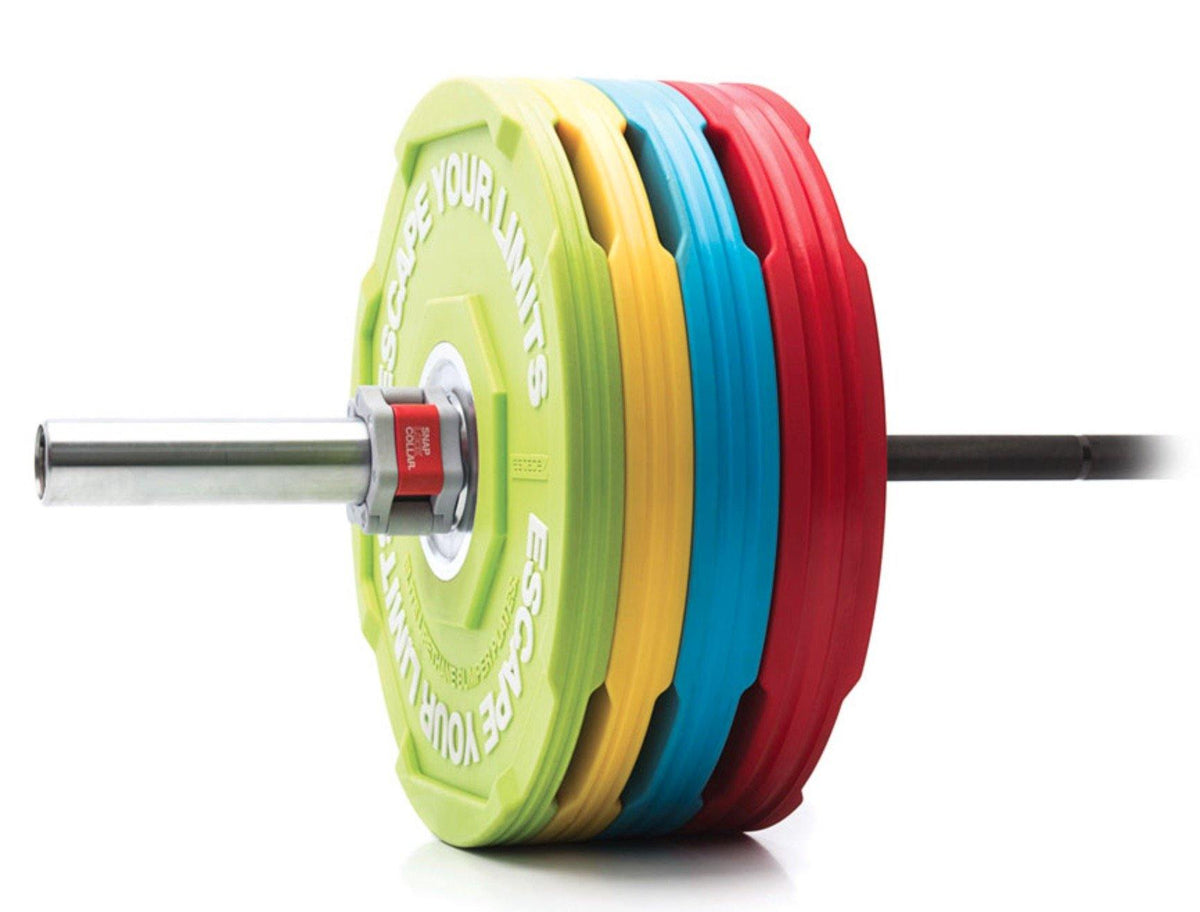
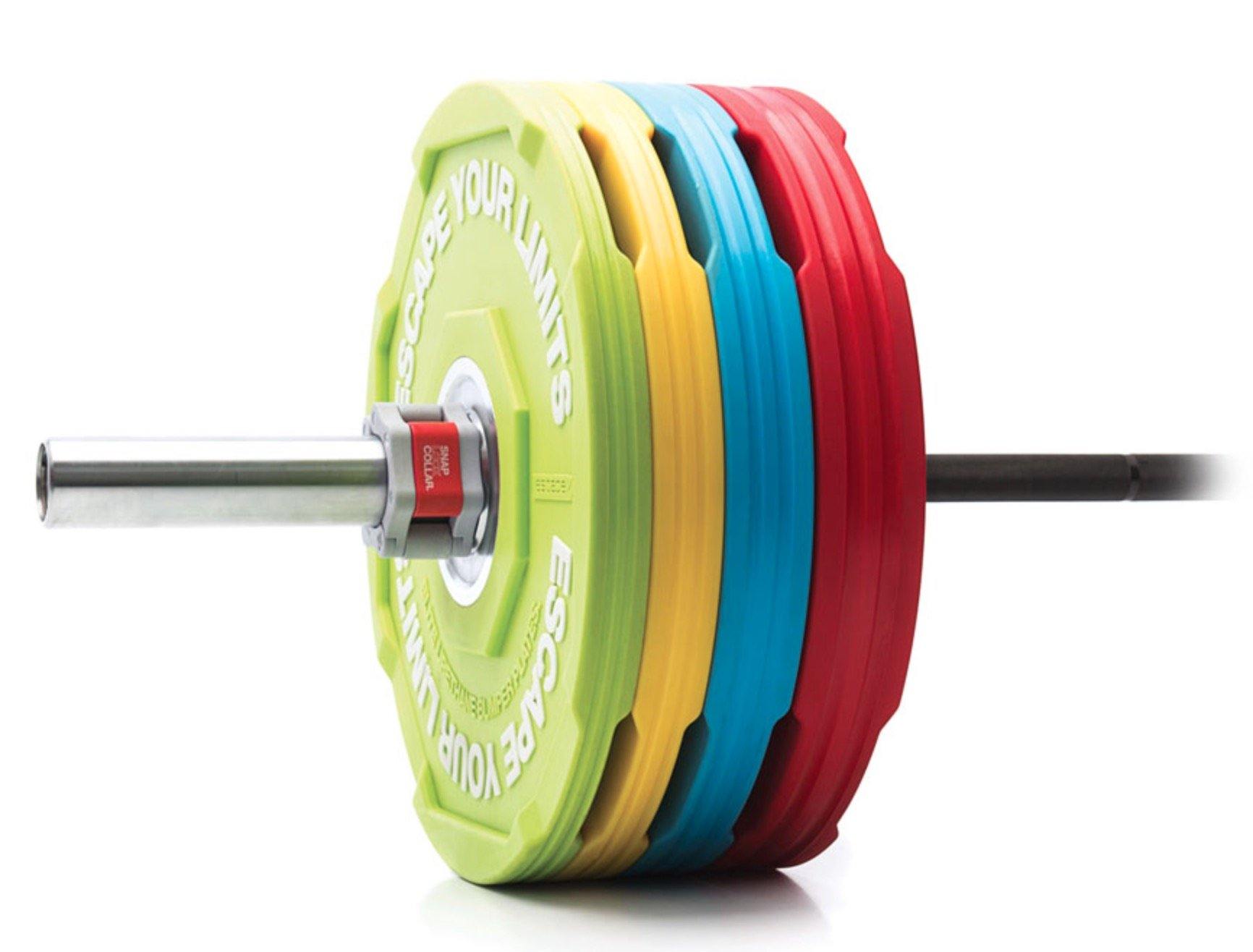
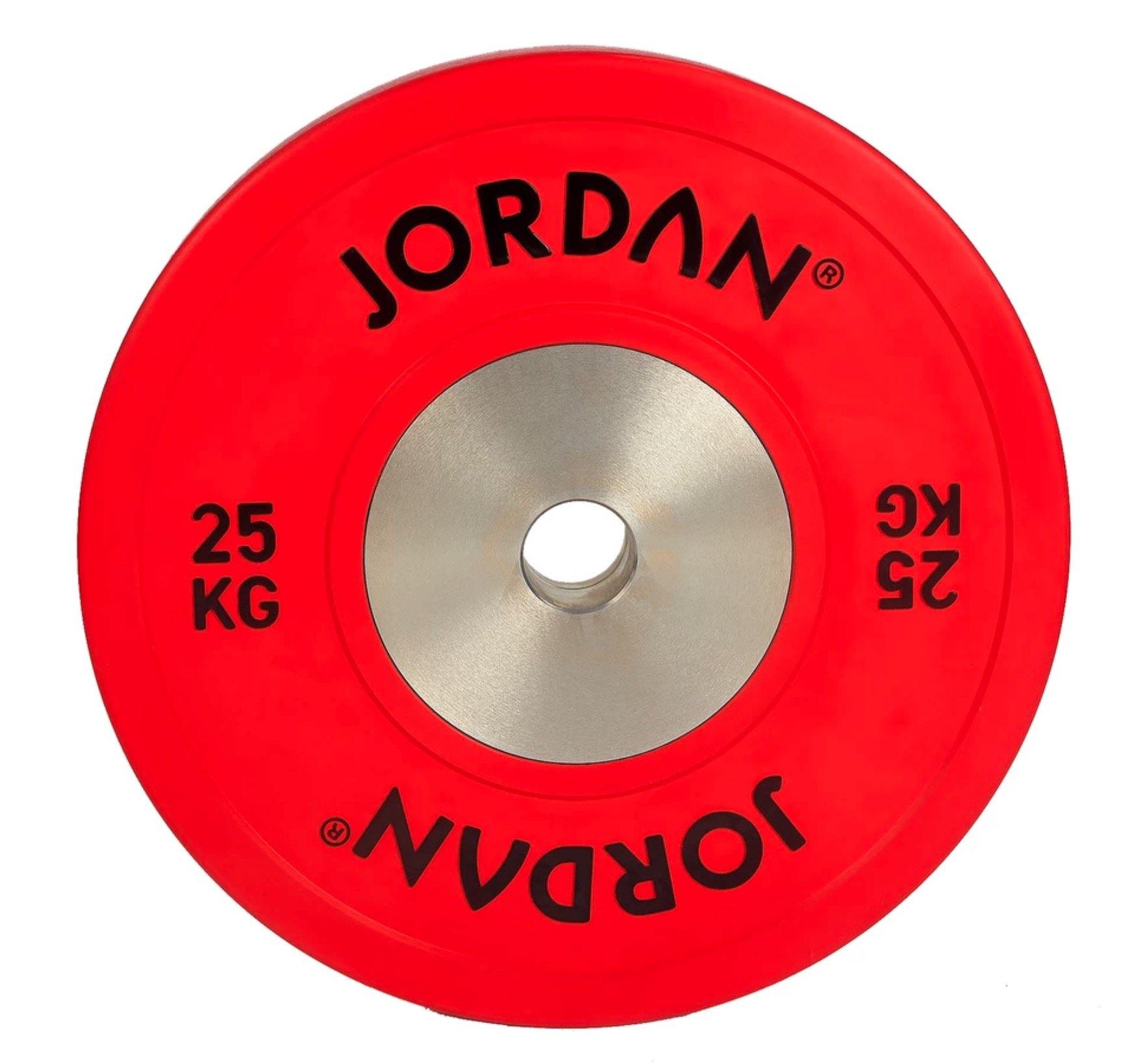
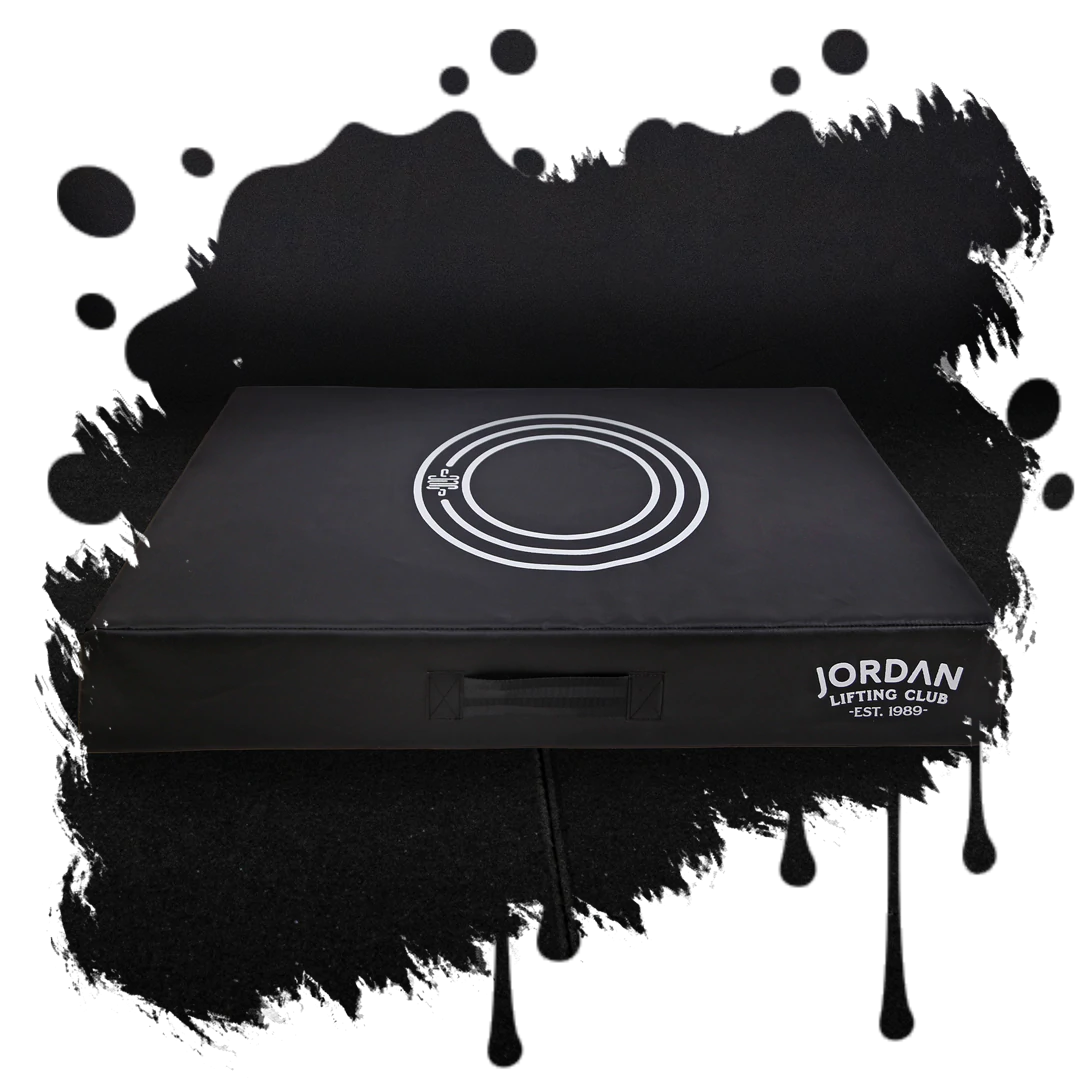
Quality equipment enhances safety, effectiveness, and progression in jerk training.
1. Split Jerk (Standard): Classic competition style; bar driven from front rack to overhead whilst feet move into a front-back split to receive the load. The split creates a large base of support, allowing the greatest loads. Technical focus: precise foot placement, even weight distribution, vertical torso, aggressive lockout.
2. Power Jerk: Bar driven overhead and caught with feet roughly in line in a shallow squat or power position, emphasising vertical drive and overhead stability. Requires greater bar elevation than split jerk. Commonly used in CrossFit due to simplicity and faster cycling speed.
3. Squat Jerk: Bar driven overhead and caught in a full overhead squat with feet in line; demands exceptional mobility and balance. Develops extraordinary overhead strength but proves technically demanding.
4. Push Jerk: Shallower dip and catch compared with power jerk, focusing on fast cycling and basic dip-drive mechanics. Often used in CrossFit and general strength work for high-repetition efficiency.
5. Behind-the-Neck Jerk: Bar starts on the upper back; reduces front-rack limitations and can make the overhead line easier for some lifters by positioning the bar closer to its final overhead position.
6. Behind-the-Neck Split Jerk: Combines behind-the-neck start with a split catch; useful for training overhead position and aggression under the bar whilst preserving competition footwork.
7. Behind-the-Neck Power Jerk: BN start with a power catch; emphasises vertical bar path and pure leg drive without front-rack constraints.
8. Tall Jerk (from Front): Performed with no leg drive; lifter starts on toes or flat-footed and just moves under the bar, training speed under and footwork timing. Use 30-50% of max jerk to allow maximal speed.
9. Tall Split Jerk: Tall jerk finished in a split stance, reinforcing aggressive drop under, precise split position, and lockout timing.
10. Tall Jerk Behind the Neck: Bar on the back with no leg drive; focuses purely on moving the body down into the receiving stance and refining overhead balance.
11. Jerk from Blocks: Performed with the bar resting on jerk blocks at shoulder height; allows higher volume and heavier loads without cleaning every rep. Essential for jerk-specific strength development.
12. Pause Jerk: Adds a 2-3 second pause at the bottom of the dip or in the drive to build strength, control, and consistency in key positions. Eliminates timing inconsistencies.
13. Power Jerk in Split: Catch is shallower in the split, blending power-jerk height with split-jerk footwork for speed-strength and positional work.
14. Jerk Balance: A drill where the bar starts already partially overhead; the front foot steps out into the split whilst punching the bar up to reinforce footwork and balance. Develops the specific skill of moving into the split whilst simultaneously locking out the arms.
15. Complex Jerks: Integrated sequences combining jerks with cleans or tall/BN variations (e.g., clean + 2 jerks, or jerk + tall jerk) to train fatigue resistance, timing, and technical consistency under accumulating fatigue.
Pressing Out: The lifter presses the bar upwards with arms rather than dropping under it, resulting in slow lockout and limited loads. Corrections: tall jerk variations to develop speed under the bar, cueing aggressive foot movement, ensuring adequate leg drive.
Forward Dip: Torso leans forward during the dip, shifting weight to toes and throwing the bar forward. Corrections: dip-and-hold drills (dip down, pause 3 seconds, stand up without driving), filming from the side for visual feedback, cueing vertical shin and torso position.
Uneven Split: Feet land at different distances from starting position, creating instability. Corrections: footwork drills without the bar, marking optimal foot positions with tape, tall jerk variations to isolate footwork.
Soft Lockout: Elbows fail to achieve full extension in receiving position, creating instability. Corrections: overhead strength work (strict press, push press, overhead holds), cueing aggressive arm punch, ensuring proper bar position over back of head.
Rebending: After achieving lockout, knees or elbows rebend, often resulting in missed lifts. Corrections: reducing dip depth to decrease downward momentum, strengthening receiving position through overhead squats and split holds, ensuring complete lockout before recovery movement.
Maximal Strength Development: Programme heavy singles, doubles, and triples at 85-95% of 1RM, performed 2-3 times weekly. Use jerk blocks to allow work above clean max. Sample session: Jerk from blocks—work up to heavy single (90-95% 1RM), then 3 sets of 2 reps at 85-90%, followed by 3 sets of 3 reps pause jerk (2-second dip pause) at 70-75%.
Power and Speed Development: Emphasise lighter loads (60-75% 1RM) moved with maximal speed. Sample session: Power jerk—5 sets of 3 reps at 65-70% with maximal bar speed, followed by 4 sets of 2 reps tall jerk at 40-50% focusing on speed under the bar.
Technical Refinement: Use moderate loads (70-80% 1RM) allowing focus on technical precision. Sample session: Split jerk—work up to 80% for 5 singles with video review between sets, then 4 sets of 3 reps jerk balance at 50-60%, finishing with 3 sets of 5 reps tall split jerk at 40%.
Conditioning and Work Capacity: Use push jerks or power jerks at moderate loads (50-65% 1RM) for higher repetitions. Sample session: EMOM for 10 minutes—3 push jerks at 60%, or 5 rounds for time: 10 push jerks at 50%, 15 box jumps, 20 wall balls.
Shoulder Mobility: Adequate shoulder flexion (180 degrees with neutral spine) proves essential. Many lack 10-20 degrees, compensating with excessive lumbar extension. Mobility work: wall slides, band pull-aparts, thoracic extension over foam roller, lat stretches.
Thoracic Extension: Ability to extend the thoracic spine allows proper overhead positioning. Mobility work: thoracic extensions over foam roller, quadruped thoracic rotations, wall angels.
Ankle Mobility: Adequate ankle dorsiflexion allows vertical dip mechanics. Limited mobility forces knees backward during dip, creating forward torso lean. Mobility work: ankle dorsiflexion stretches, banded ankle mobilisations. Weightlifting shoes with elevated heels partially compensate.
Wrist Flexibility: Front rack requires wrist extension. Mobility work: wrist flexion and extension stretches, loaded wrist stretches, front rack holds with light weights.
Core Stability: Maximal core stability protects the spine and enables efficient force transfer. Stability work: planks, Pallof presses, overhead carries, heavy compound lifts.
Weeks 1-2: Learn dip mechanics with PVC pipe: 3 sets of 10 reps dip-and-stand. Practise footwork without bar: 3 sets of 10 reps split stance transitions. Introduce push press: 4 sets of 5 reps with light load.
Weeks 3-4: Push jerk with light loads: 5 sets of 3 reps at 40-50% estimated max. Tall jerk: 4 sets of 3 reps at 30-40% to develop speed under bar.
Weeks 5-6: Introduce split jerk: 5 sets of 2 reps at 50-60%. Continue tall split jerk: 4 sets of 3 reps at 40%.
Weeks 7-8: Build split jerk loads: work up to 70-75% for singles. Add jerk from blocks: 4 sets of 2 reps at 75-80%.
Wave Loading: Alternate between heavier and lighter sets within a session to potentiate the nervous system. Example: 80% × 2, 85% × 1, 75% × 3, 90% × 1, 80% × 2.
Cluster Sets: Break working sets into smaller clusters with brief rest. Example: 3 sets of (2+1+1) at 85% with 20 seconds between clusters, 3 minutes between sets.
Complex Training: Pair jerks with plyometric exercises. Example: 3 reps jerk at 80%, immediately followed by 5 box jumps. Repeat for 4-5 sets.
Percentage-Based Periodisation: 4-week block: Week 1—5×3 at 70%, Week 2—5×2 at 80%, Week 3—5×1 at 85-90%, Week 4—deload 4×2 at 65%.
Final 8 weeks before competition should follow a structured taper. Weeks 8-5: maintain volume with moderate intensity (75-85%). Weeks 4-3: reduce volume 20-30%, increase intensity to 85-92%. Week 2: reduce volume 40-50%, maintain intensity 85-90%. Week 1: minimal volume (50-60% reduction), technique work at 70-80%, complete rest 2-3 days before competition.
Adequate recovery proves essential for jerk development. Sleep 7-9 hours nightly for optimal adaptation. Nutrition should include 1.6-2.2g protein per kg bodyweight, adequate carbohydrates to fuel training, and sufficient calories to support recovery. Active recovery includes light cardio, mobility work, and massage or foam rolling. Monitor recovery through resting heart rate, HRV if available, subjective energy and motivation, and training performance metrics.
The jerk represents one of the most powerful and technically sophisticated movements in strength training. Mastering it requires understanding the biomechanics, developing specific physical qualities, practising with proper technique, and following intelligent programming. Whether training for competitive weightlifting, athletic performance, or general strength development, the jerk offers unparalleled benefits for explosive power, total-body coordination, and overhead strength. With quality equipment from brands like Jordan, Escape, and Watson, dedicated practice, and systematic progression, lifters at all levels can harness the jerk's extraordinary training benefits.