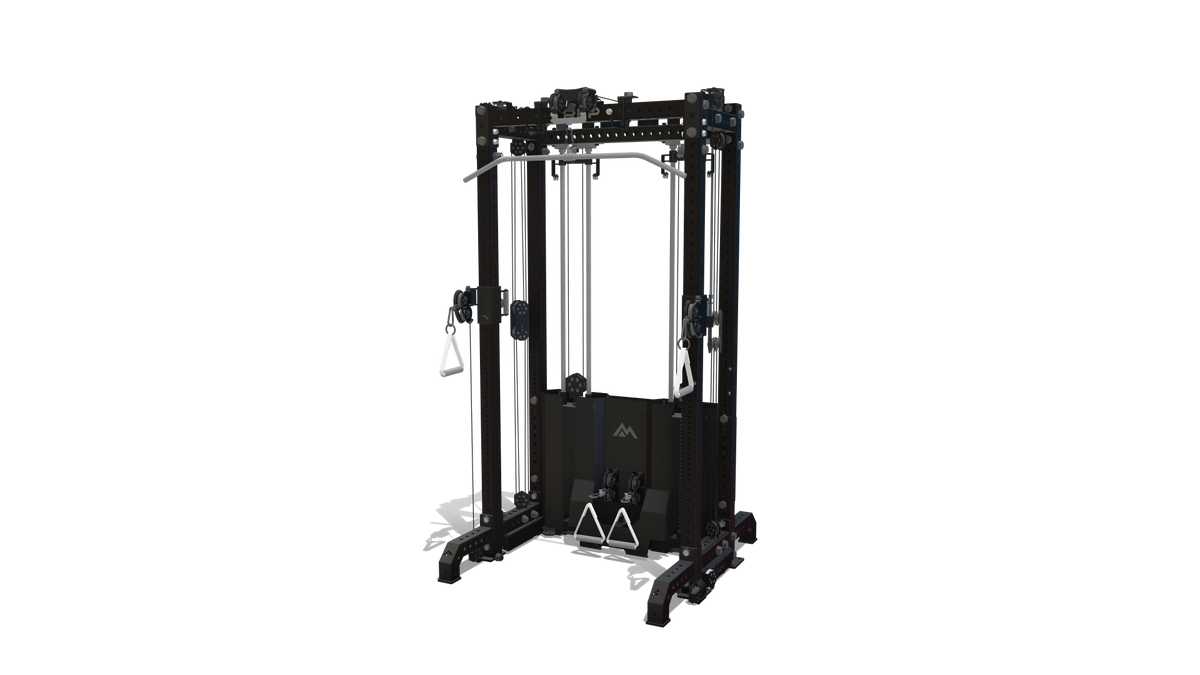
Cable Machine | Home or Commercial use Banner

Cable Machine | Home or Commercial use

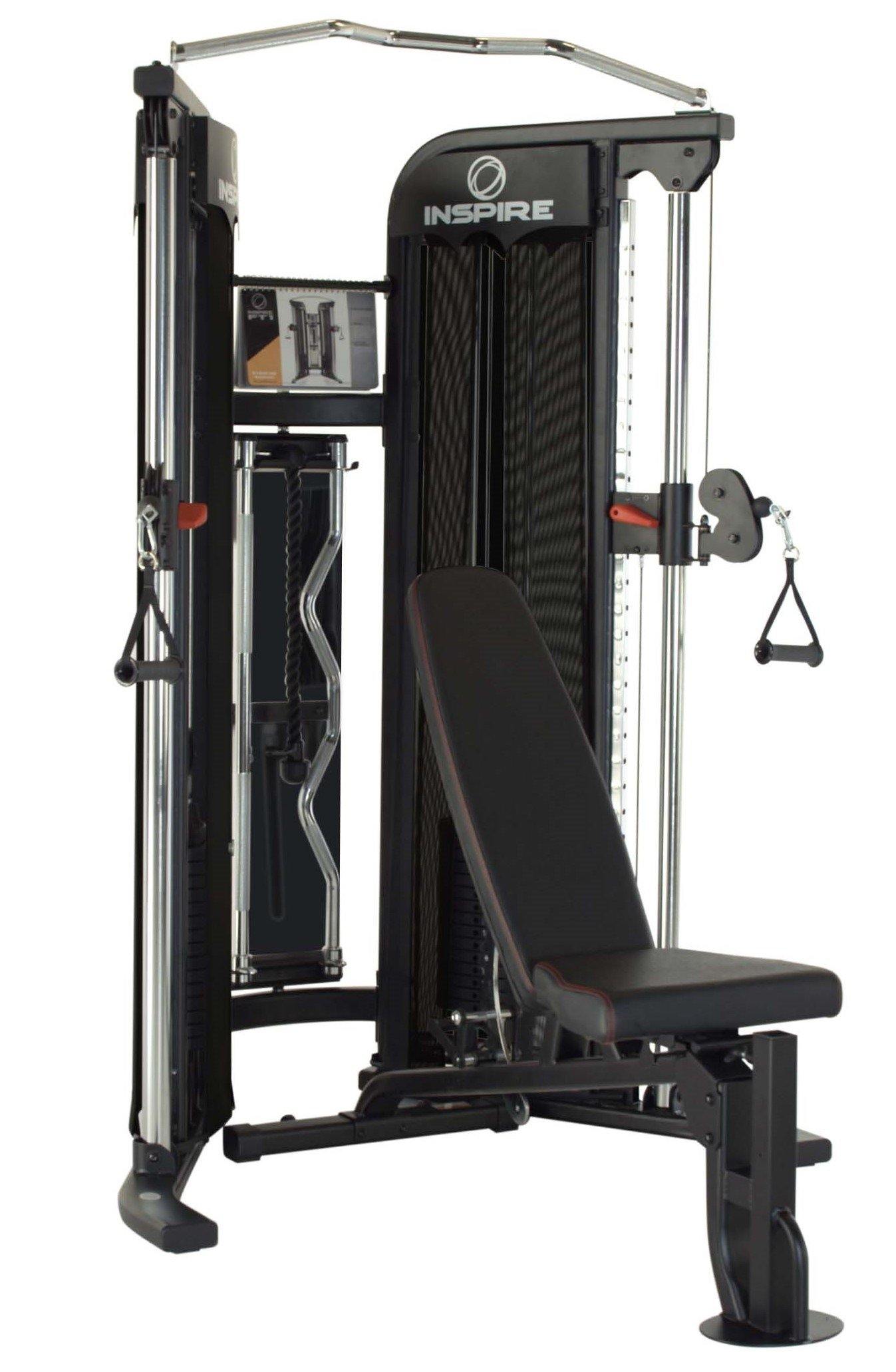
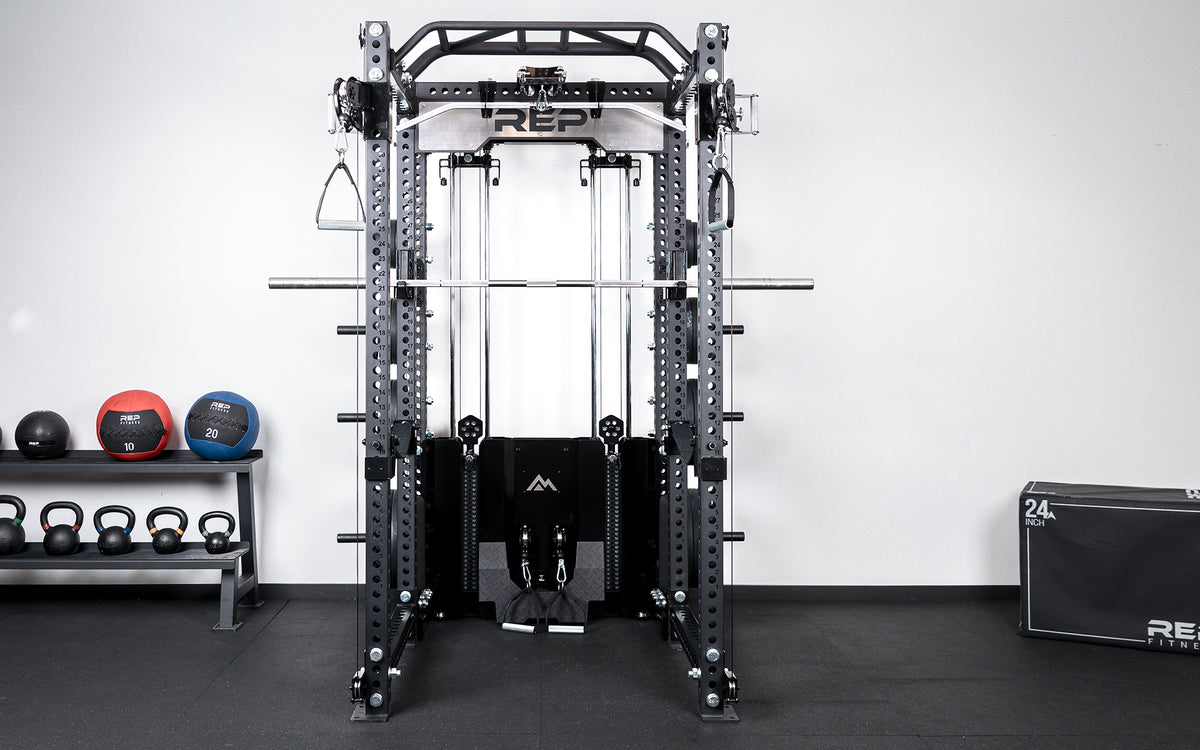
A cable machine can be bought as  single stack cable machines or a dual cable machine (DAP).  A  cable pulley machine for home  is very popular, for versatility on a small footprint or in a  gym, ever popular for Cable Crossover, Row, Fly  and many more exercises. We have the leading brands, tried, tested and well reviewed, Primal, Matrix, Life Fitness, Inspire, Watson, NOHRD, Spirit.

If your unsure read our understanding cable machines article. We also have some of them  on display in our showroom if the location works for you.  They are either in stock or supply to your home gym design or commercial project.

A cable machine can be bought as  single stack cable machines or a dual cable machine (DAP).  A  cable pulley machine for home  is very popular, for versatility on a small footprint or in a  gym, ever popular for Cable Crossover, Row, Fly  and many more exercises. We have the leading brands, tried, tested and well reviewed, Primal, Matrix, Life Fitness, Inspire, Watson, NOHRD, Spirit.

If your unsure read our understanding cable machines article. We also have some of them  on display in our showroom if the location works for you.  They are either in stock or supply to your home gym design or commercial project.

A cable machine (or cable crossover/dual pulley system) is one of the most versatile pieces of strength equipment, allowing continuous resistance through adjustable pulleys for dynamic, full‑body training.

How to Use a Cable Machine

To use a cable machine:

  • Adjust the pulley height and weight stack based on the exercise.
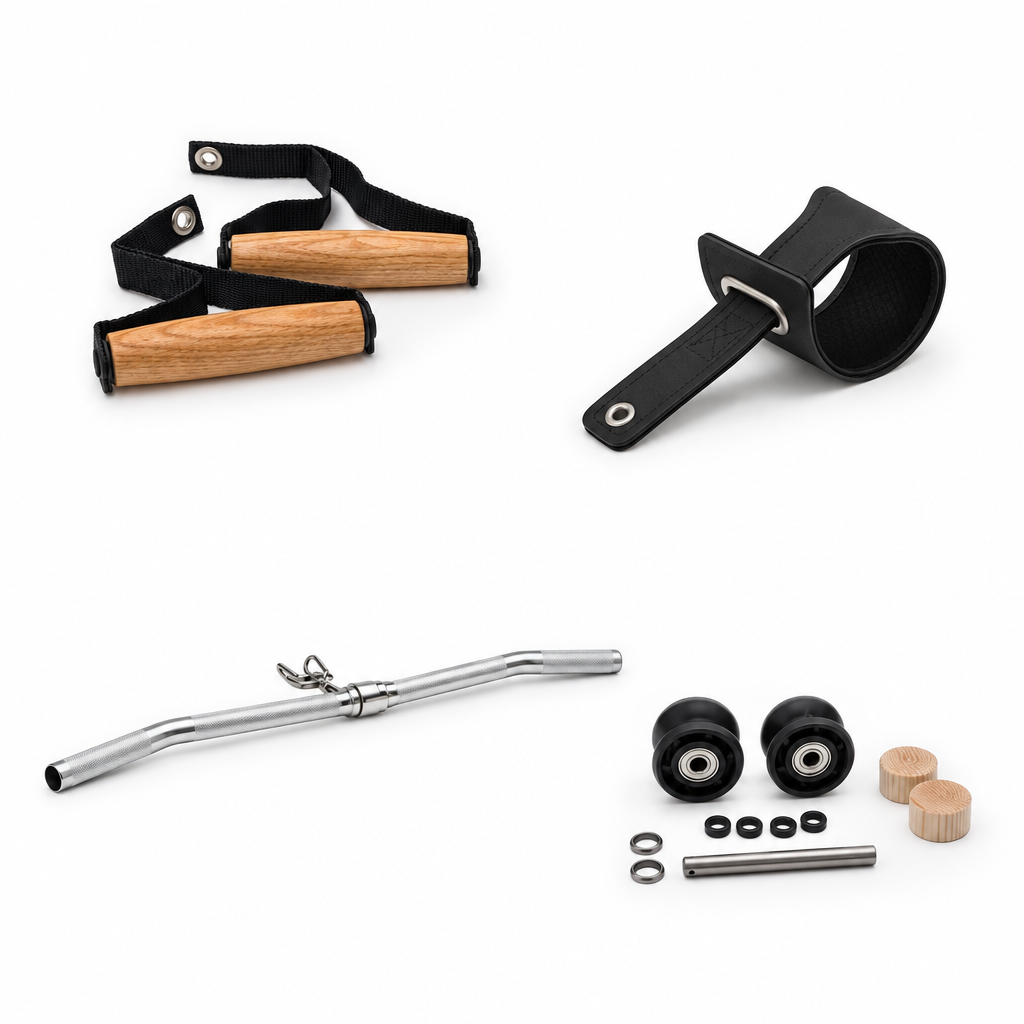
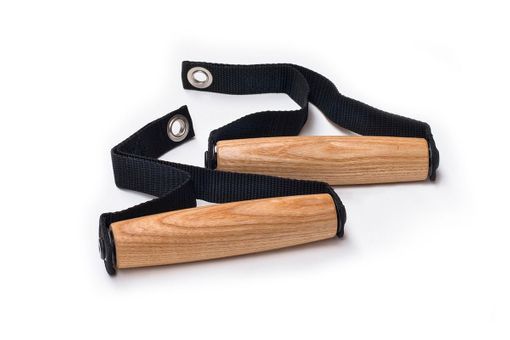
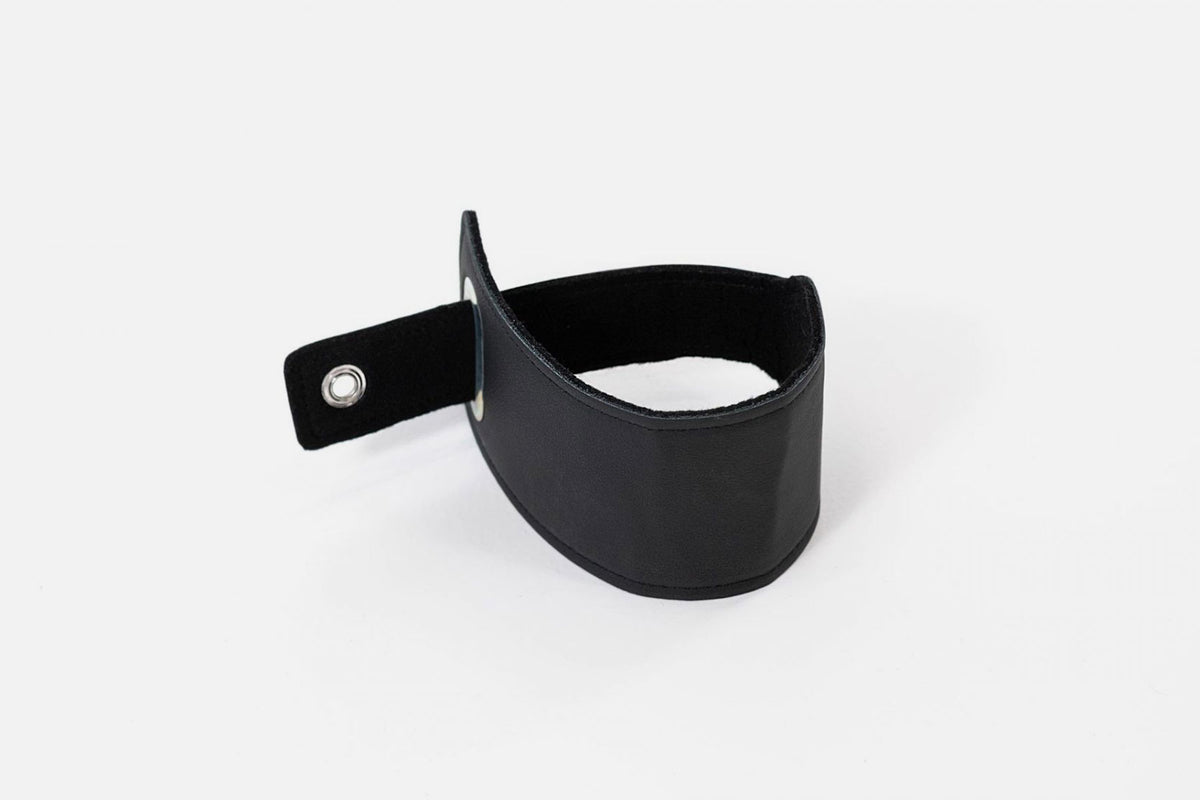
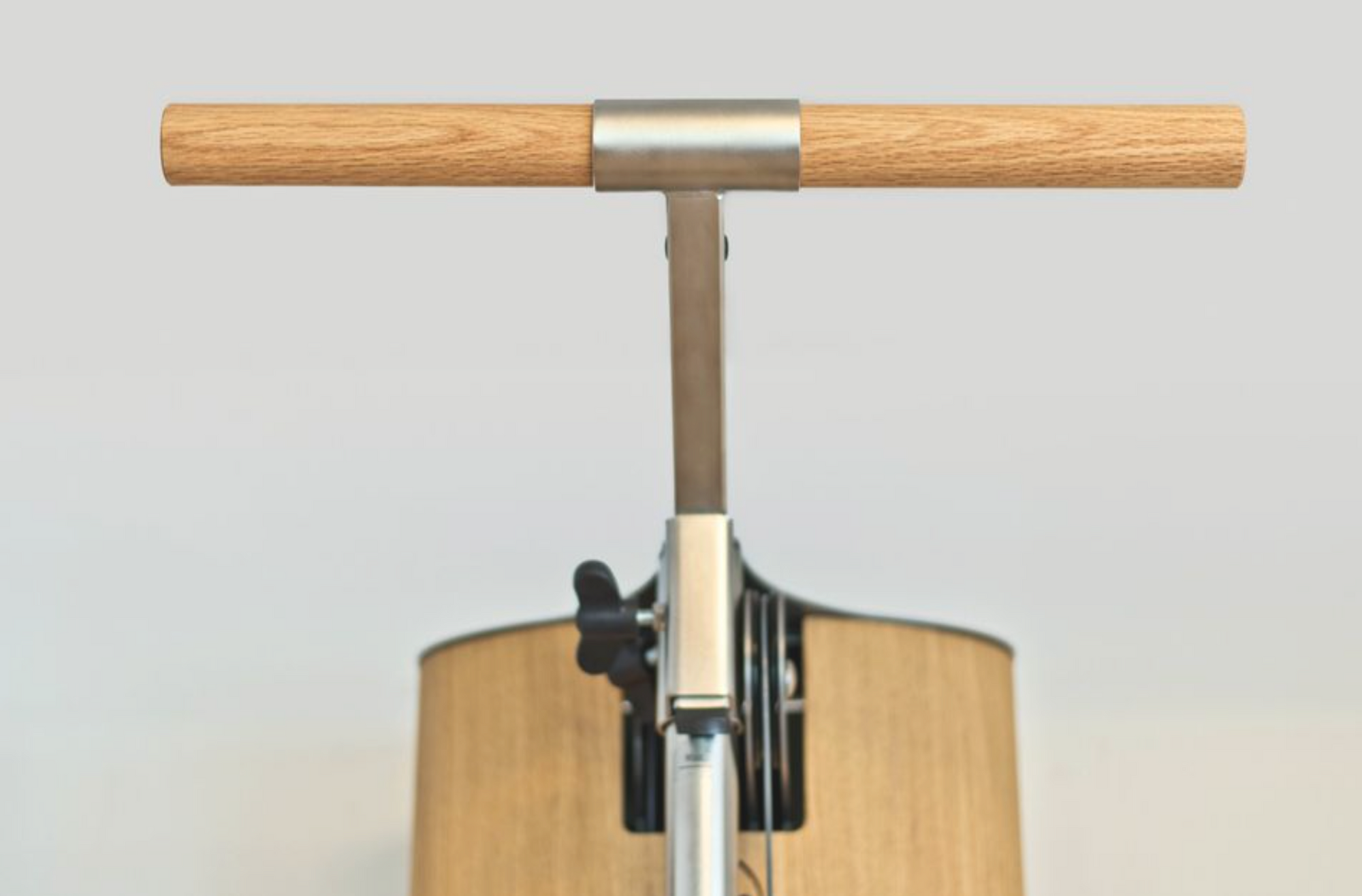
  • Attach the correct handle (rope, D‑handle, straight bar, or ankle strap).
  • Stand in a balanced stance, maintain core engagement, and move through a controlled full range of motion.
  • Keep steady tension throughout both concentric and eccentric phases of each exercise.

Cable machines support compound and isolation movements such as lat pulldowns, chest flyes, cable rows, biceps curls, and rotational core exercises.

Benefits of Cable Machines

Cable machine training offers multiple biomechanical and functional benefits:

  1. Constant tension: ensures muscles work throughout the whole range of motion, improving hypertrophy stimulus.
  2. Improved joint safety: smoother resistance reduces stress on joints compared with free weights.
  3. Versatility: one machine can train every major muscle group using dozens of attachments and height options.
  4. Functional stability: mimics natural movement patterns and engages stabilizing muscles.
  5. Time efficiency: allows supersets with short rest and compact transitions between exercises.
  6. Suitable for all experience levels: weight increments and pulley adjustments make it beginner‑friendly or advanced‑capable.

Key Features of Cable Machines

Modern cable machines vary in design but commonly include :

  • Dual adjustable pulleys for unilateral and bilateral exercises.
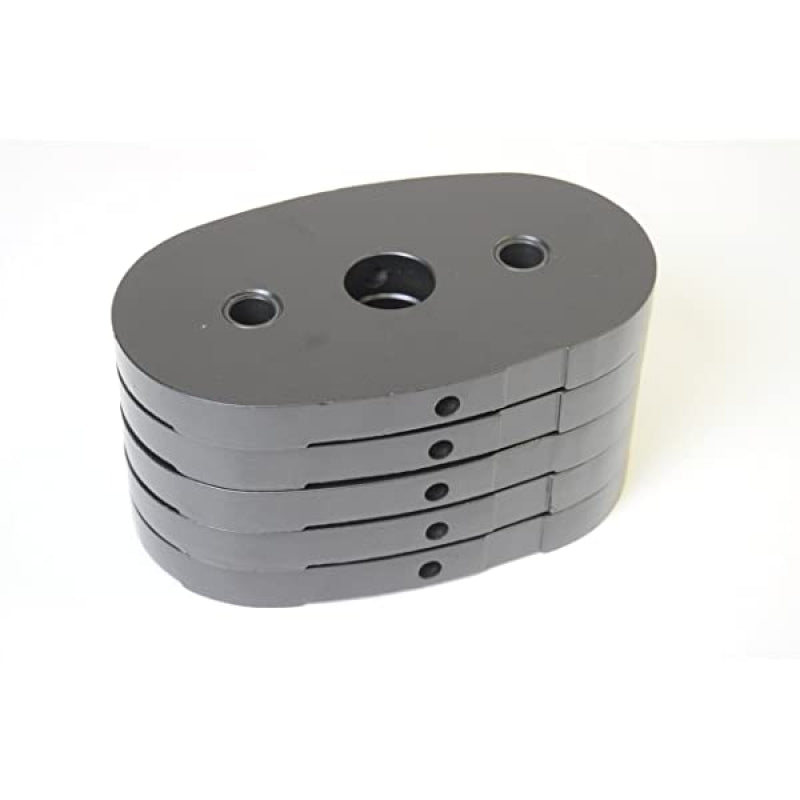
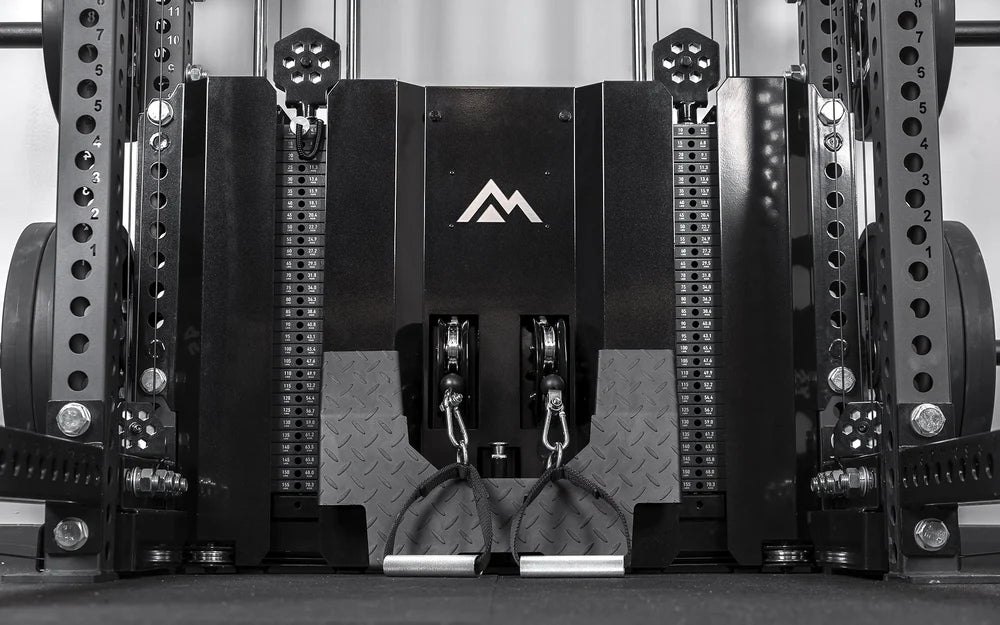
  • Weight stacks or plate‑loaded resistance with variable cable ratios (1:1 for full load or 2:1 for smoother travel).
  • Multiple handle attachments for targeting specific muscles.
  • Height‑adjustable pulleys supporting hundreds of exercises.
  • Ergonomic frame design ensuring stability and ease of access.
  • Commercial and home units differ mainly by build grade—commercial frames use thicker 11‑gauge steel, while home units prioritize compactness.

Cable Machine Buying Tips

When buying a cable machine consider:

  • Space: measure ceiling and floor area; cable systems require full arm extension room.
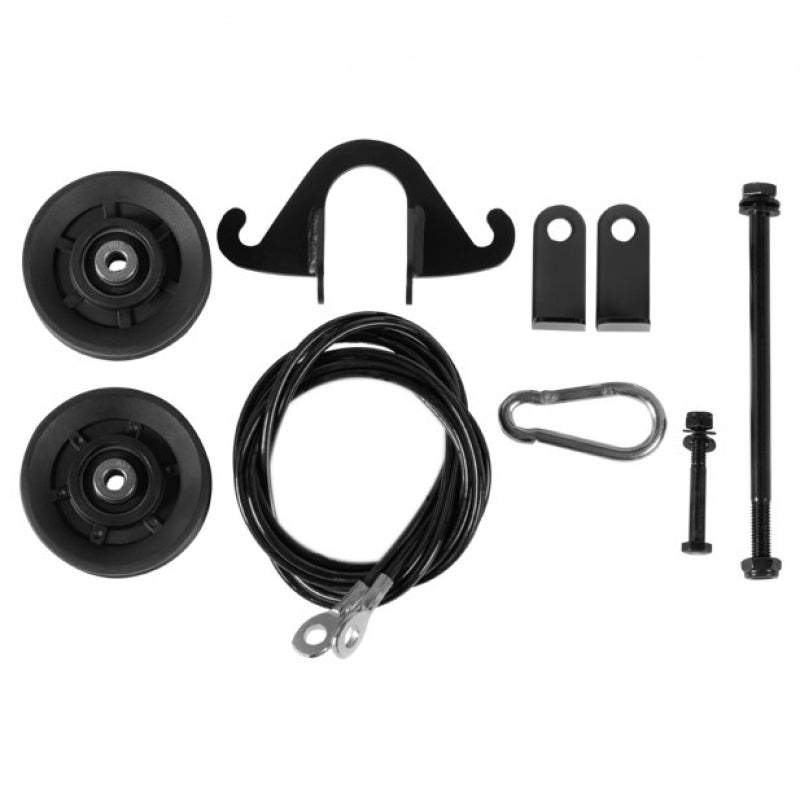
  • Cable smoothness: look for aluminum or nylon pulleys with sealed bearings.
  • Weight capacity: commercial stacks often range 70–100 kg per side; choose according to strength goals.
  • Ratio awareness: 2:1 ratios offer smoother motion, while 1:1 ratios deliver higher resistance per plate.
  • Attachments: ensure inclusion of ropes, single handles, and bars.
  • Build quality: select coated steel cables with high breaking strain.
  • Maintenance & warranty: check for lifetime frame warranties and spare‑part support.

Frequently asked questions (FAQs) about cable machines 

Covering their functionality, benefits, use, and buying considerations:

Can beginners use cable machines safely?

Yes. The guided resistance and adjustable weights make them beginner-friendly. Users can focus on form with lower injury risk compared to free weights.

What exercises can be done on cable machines?

Common exercises include cable rows, chest flyes, triceps pushdowns, bicep curls, lateral raises, face pulls, and rotational core movements. Cable machines support both compound and isolation exercises.

What is cable ratio and why is it important?

Cable ratio (e.g., 1:1 or 2:1) describes how much resistance the user feels relative to the weight selected. A 1:1 ratio means full load resistance; 2:1 halves the resistance for smoother cable travel and control. The ratio affects training feel and load precision.

How long do cable machines last?

With regular maintenance (lubrication, cable inspection), the frame can last decades. Cables and pulleys may need replacement every few years depending on usage intensity.

Can cable machines replace free weights?

No. While cables allow dynamic, functional movements with stability, free weights develop more stabiliser muscles and coordination. They complement each other for balanced training.