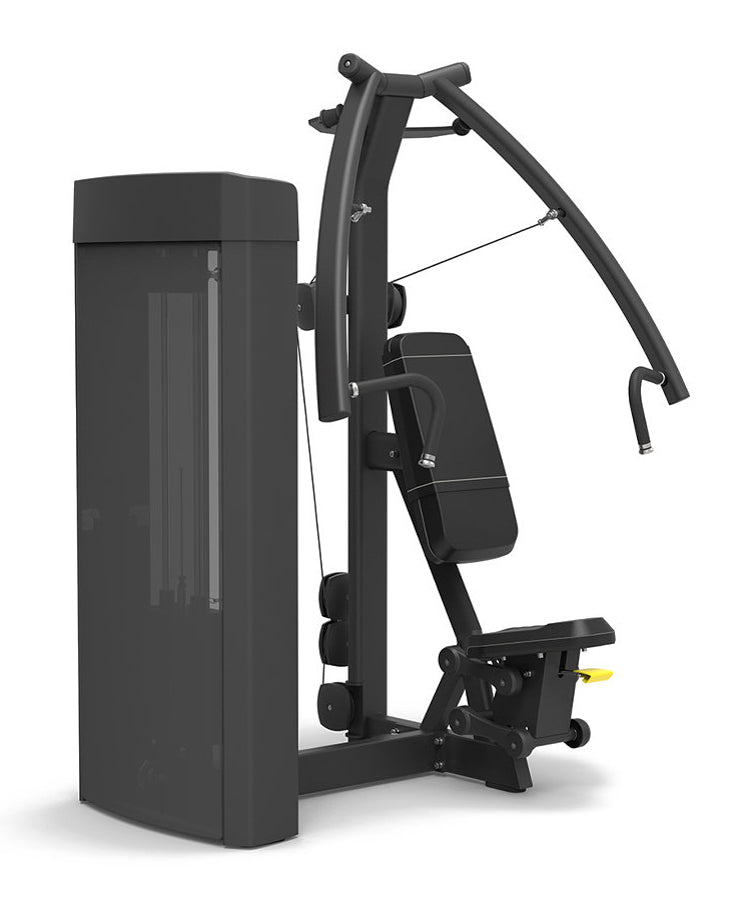
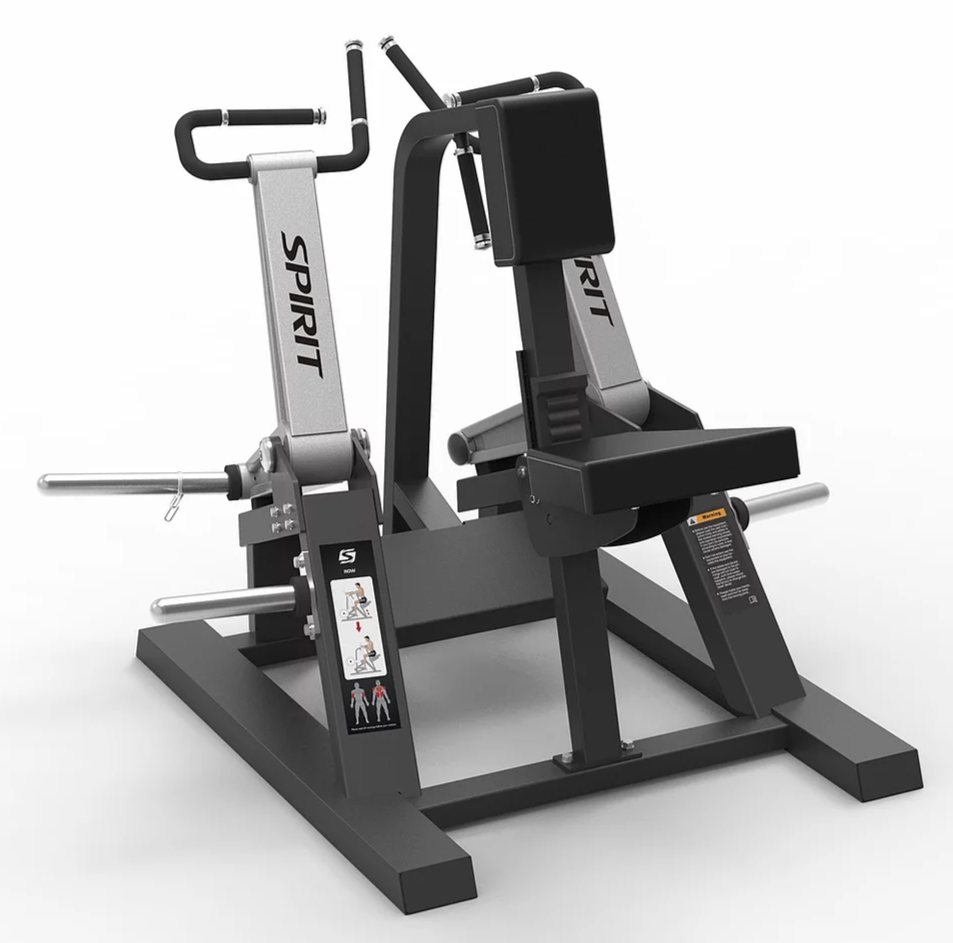
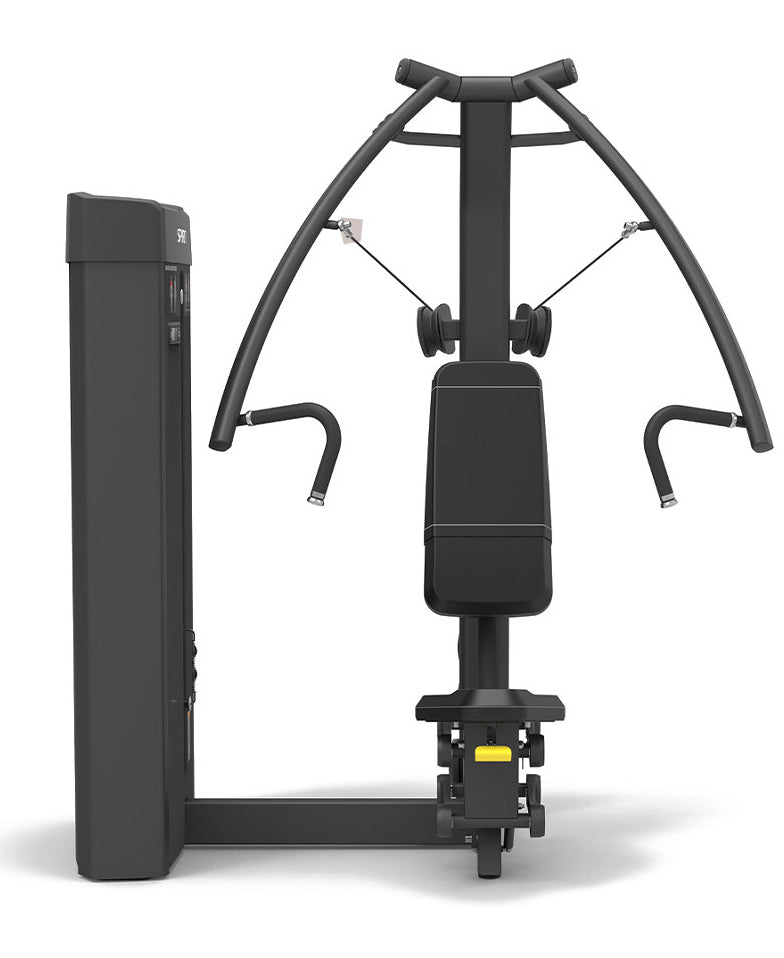
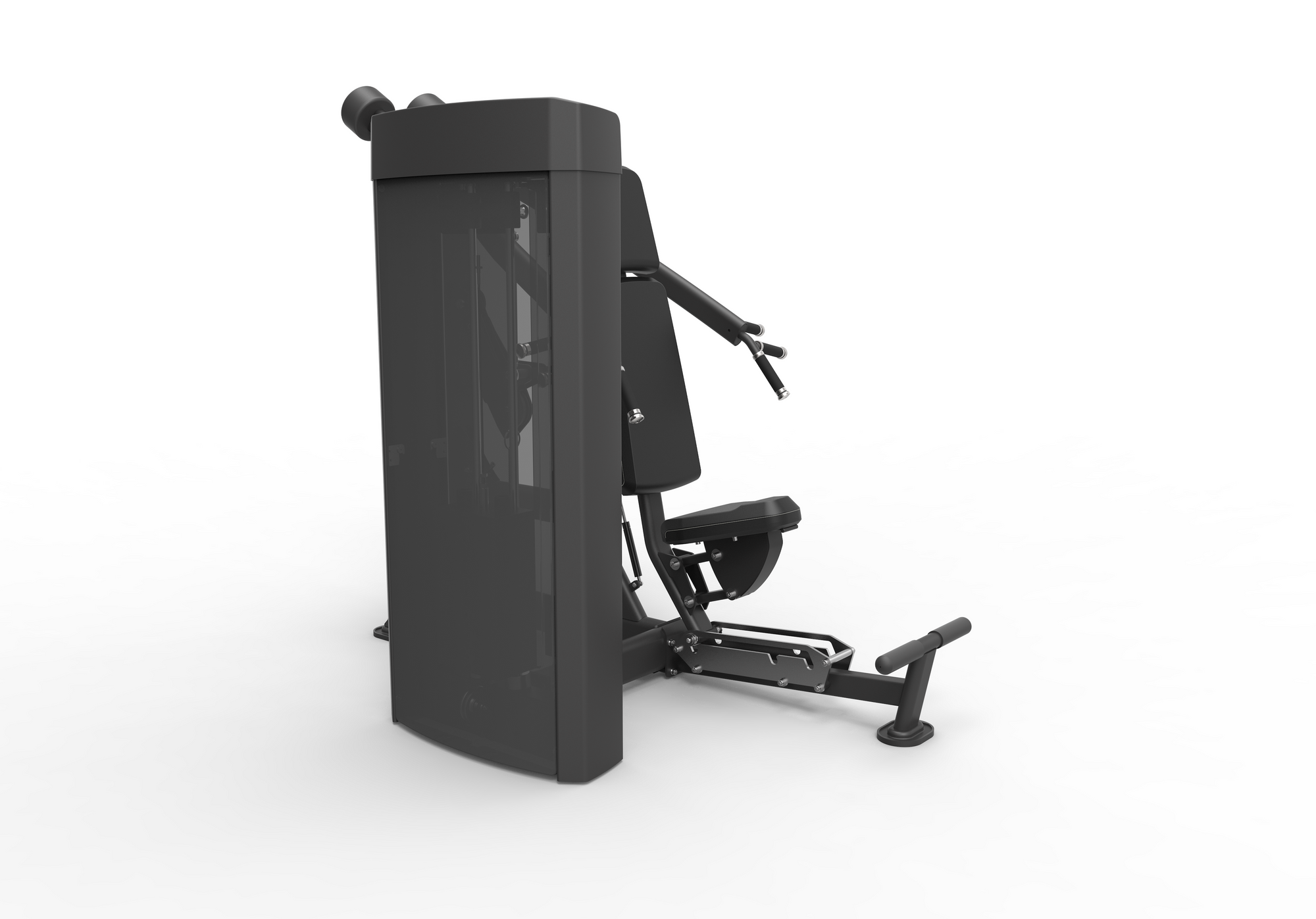
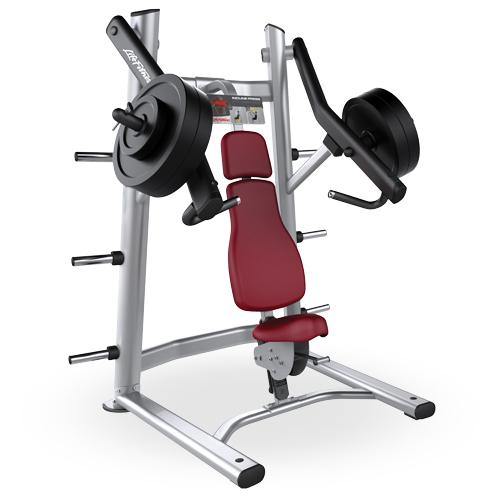
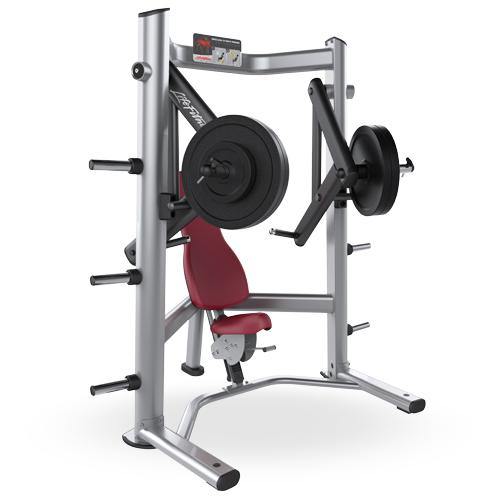
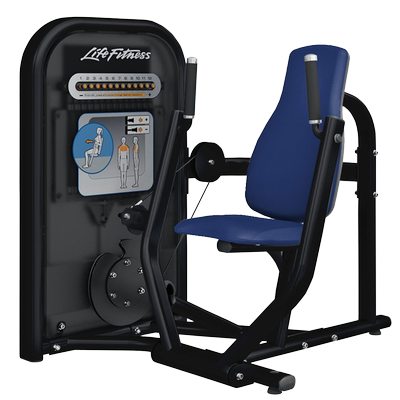
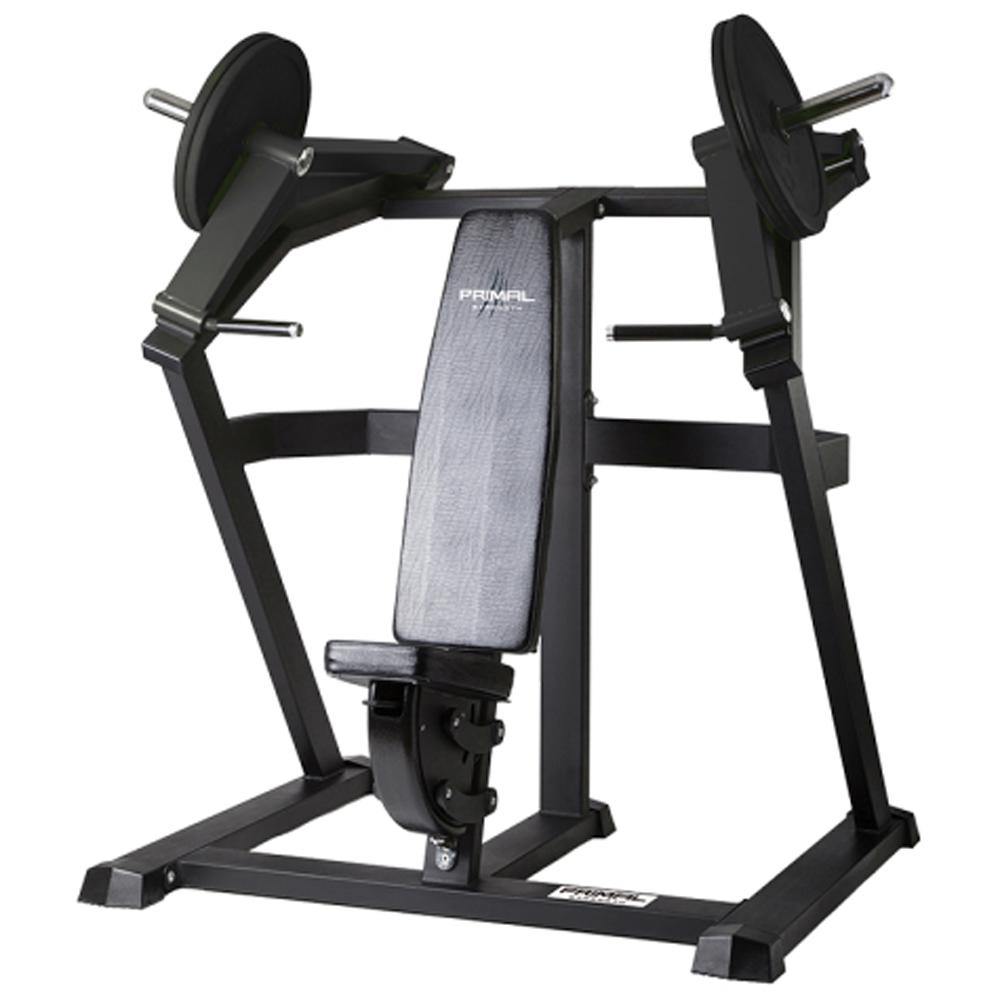
The key advantage of a chest machine is that it allows for safe muscle development without needing a spotter. It primarily engages the pectorals, triceps, and deltoids. By adjusting the machine’s settings, you can focus on specific areas of the chest—for instance, positioning the handles higher emphasizes the upper pectoral muscles.
Chest Press Machine Variants
These are generally seated chest press machines:-
- Horizontal (Flat) Chest Press: Simulates a flat bench press; handles move straight forward from the chest in a seated position, commonly selectorised.
- Incline Chest Press Machine : Press path angled upward (30–45°); targets upper chest, available in plate-loaded or selectorised models.
- Decline Chest Press Machine: Downward angle press for lower chest focus; usually plate-loaded and less common in commercial gyms.
- Plate-Loaded Chest Press Machine: Resembles free-weight “feel”; Olympic plates are loaded for variable resistance and tactile feedback.
- Selectorised Chest Press Machine: Uses weight stack and easy adjustability; best for rapid workouts and beginner-to-advanced progression.
- Iso-Lateral Chest Press Machine: Each arm moves independently to address left/right strength discrepancies and aid rehabilitation.
- Converging Chest Press Machine: Handles move inward as arms extend, more closely replicating natural arm movement for enhanced pec activation.
- Dual-Function Chest/Shoulder Press Machine: Machine allows both chest and shoulder pressing, optimizing space for compact facilities.
Benefits of Chest Press Machines
- Safety and Accessibility: Provides a controlled movement path, minimizing risk of dropped weights and uncontrolled motion.
- Muscle Isolation: Allows targeted activation of the pectorals with less reliance on stabilizer muscles, aiding beginners and therapy.
- Progressive Overload: Safely increase resistance without needing a spotter, enabling plateau-busting strength improvements.
- Technique Reinforcement: Guides proper form, ideal for refining pressing technique before transitioning to free weights.
- Balanced Strength: Iso-lateral and converging variants help correct muscular imbalances and improve aesthetic results.
- Reduce Injury Risk: Especially beneficial for older adults, rehab, or those with shoulder instability due to built-in safety stops
Muscles Used with Chest Press Machines
- Primary: Pectoralis major (chest); activation varies with angle.
- Secondary: Anterior deltoid (front shoulder) and triceps brachii (back of arm).
- Tertiary: Serratus anterior, biceps brachii (minor stabilizer), and core.
Buying Tips for Chest Machines
- Frame & Durability: Seek heavy-duty steel construction, quality welds, and commercial-grade components for longevity.
- Type & Programming Fit: Plate-loaded suits strength gyms and advanced lifters; selectorised works best for all-population environments and group workouts.
- Adjustability: Look for adjustable seat and handle positions to accommodate diverse body sizes and pressing paths.
- Range of Motion & Comfort: Test for smooth movement, ergonomic handles, and natural press angle; converging/iso-lateral arms maximize pec activation.
- Size & Footprint: Consider available floor space; dual-function machines may save room for studios.
- Maintenance: Selectorised machines feature simpler maintenance and quick pin changes; plate-loaded require upkeep of moving parts.
- Safety Features: Built-in stops and safety catches are crucial for injury prevention and solo training.
- Warranty & Brand Support: Favor brands with robust support and easy access to service for commercial installations.
Selecting the right chest press machine should be based on the facility’s clientele and programming goals, aiming for durability, proper biomechanics, and ease of maintenance