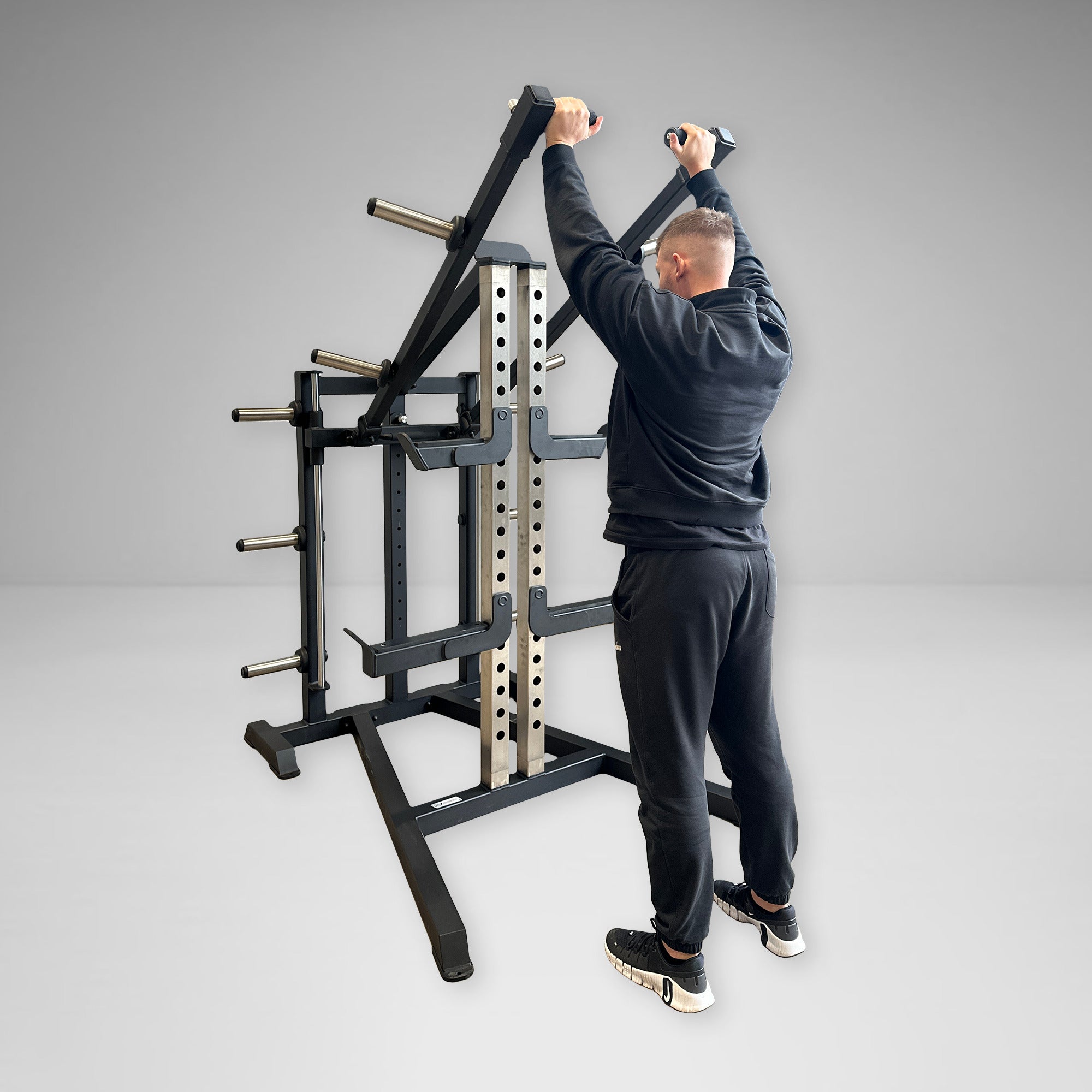
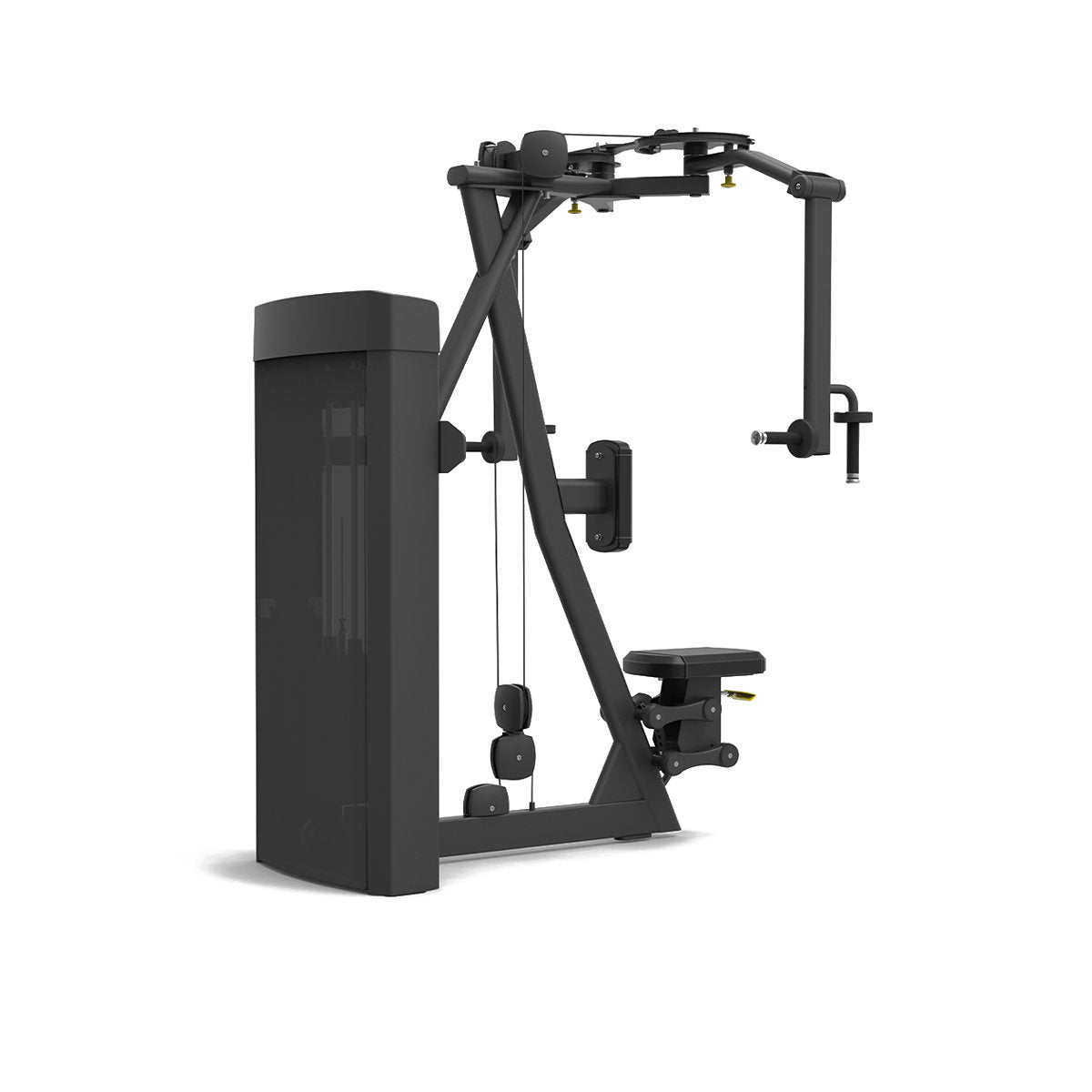
Rear delt fly exercises focus on the rear deltoid muscles at the back of the shoulders. When you use a machine to perform a rear delt fly, the controlled range of motion isolates the delts provides a controlled range of motion that isolates the delts, preventing involvement of other muscles and joints for stability. This encourages proper form and technique while reducing strain, thereby lowering the risk of injury.
Muscles Used on Rear Delt Fly Machine
The rear delt fly machine primarily targets the posterior deltoid muscles, while also engaging the rhomboids and middle trapezius. The deltoids control shoulder joint movement, with the rear deltoid playing a crucial role in stabilizing the joint and assisting in pulling the arms backward.
- Primary: Posterior deltoid (rear delts) of the shoulder.
- Secondary: Rhomboids, trapezius, teres minor, and other upper-back muscles also assist with scapular retraction and stabilization.
How to Use a Rear Delt Fly Machine
- Adjust the seat height so that when seated, arms are parallel to the ground as they grasp the handles.
- Sit facing the machine with chest pressed against the pad, feet flat, and core engaged for stability.
- Using a neutral grip (palms facing in) or the available grip variant, start with a slight bend in the elbows.
- Initiate the movement by drawing the shoulder blades together, pulling the handles out and back while keeping arms in line with shoulders—avoid shrugging or hyperextending.
- Pause briefly at peak contraction, then return to start with slow, controlled motion, maintaining consistent tension.
Key Points When Buying Rear Delt Fly Machines
- Adjustable seat and arm pad positions: Ensures proper bio-mechanics and accommodates a range of user sizes.
- Dual-function capability: Many machines offer both pec fly and rear delt exercises in a split machine, boosting versatility and saving floor space.
- Weight stack capacity: Commercial units typically range from 86 kg to 109 kg, with increments allowing precise progression.
- Range of motion adjustments and independent arm movement: Facilitates unilateral or bilateral training and accommodates various grip styles.
- Sturdy commercial frame and cable design: Heavy-duty steel tubing and premium cables for longevity in busy gym environments.
- Ergonomic padding and sweat-resistant upholstery: Increases comfort and hygiene, with robust seat/arm pads for repeated use.
- Warranty and commercial grade certification: Seek long-term parts and frame warranties, essential for facilities with high traffic