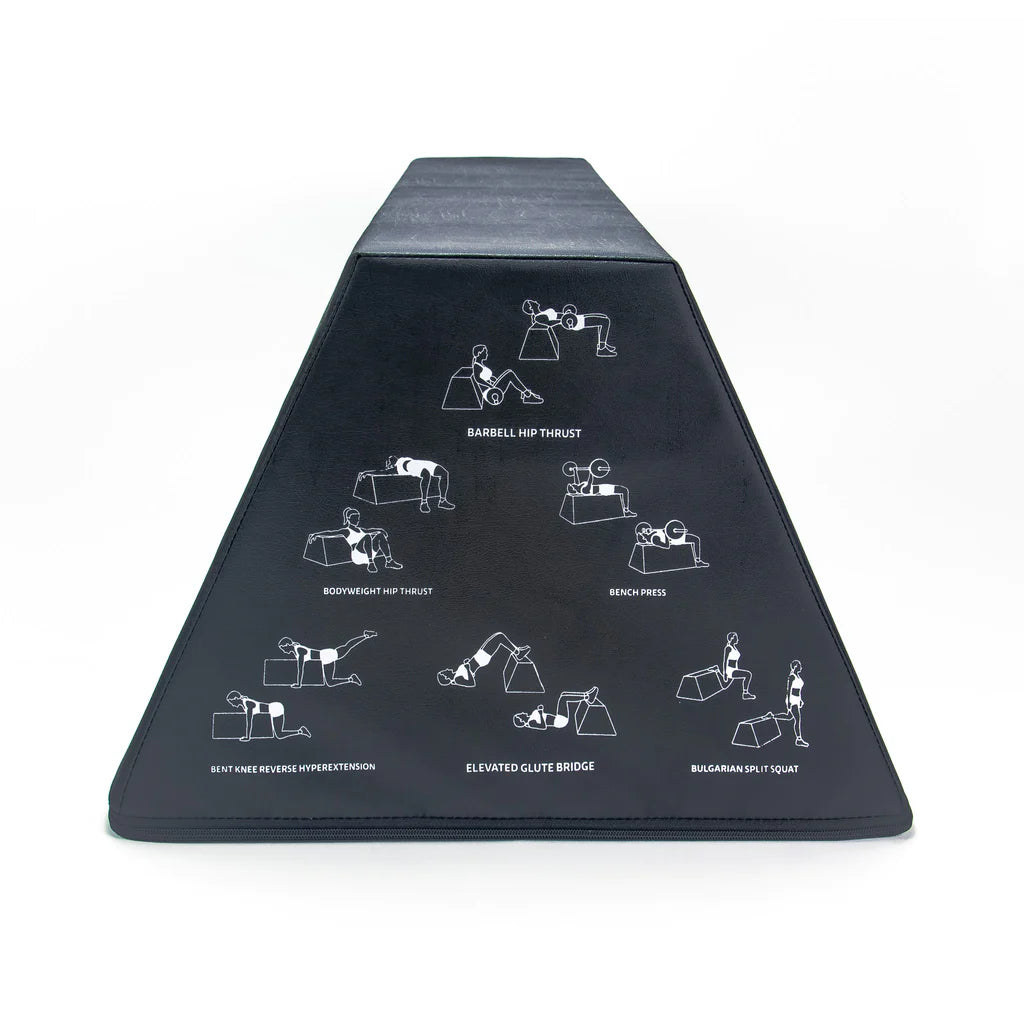
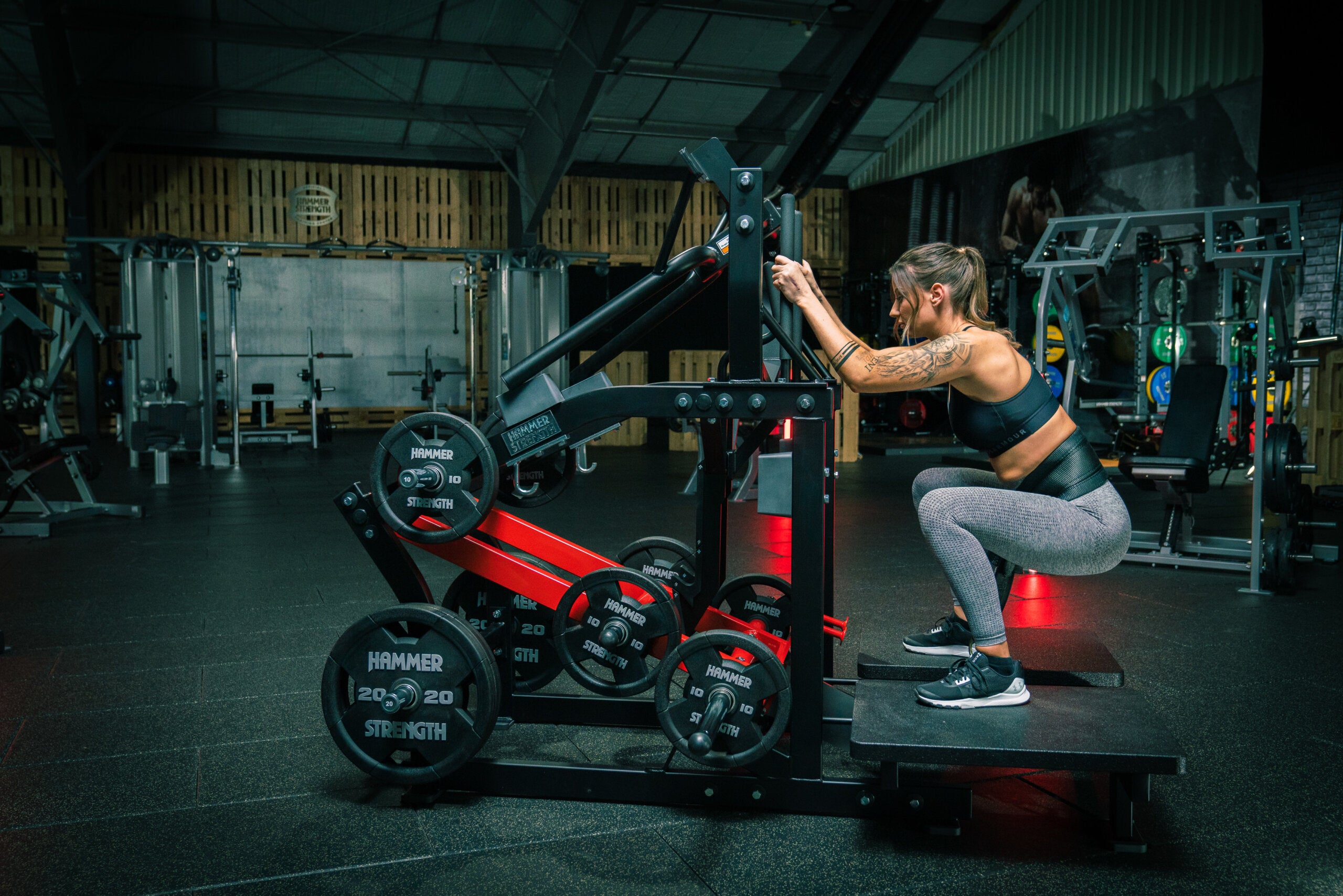
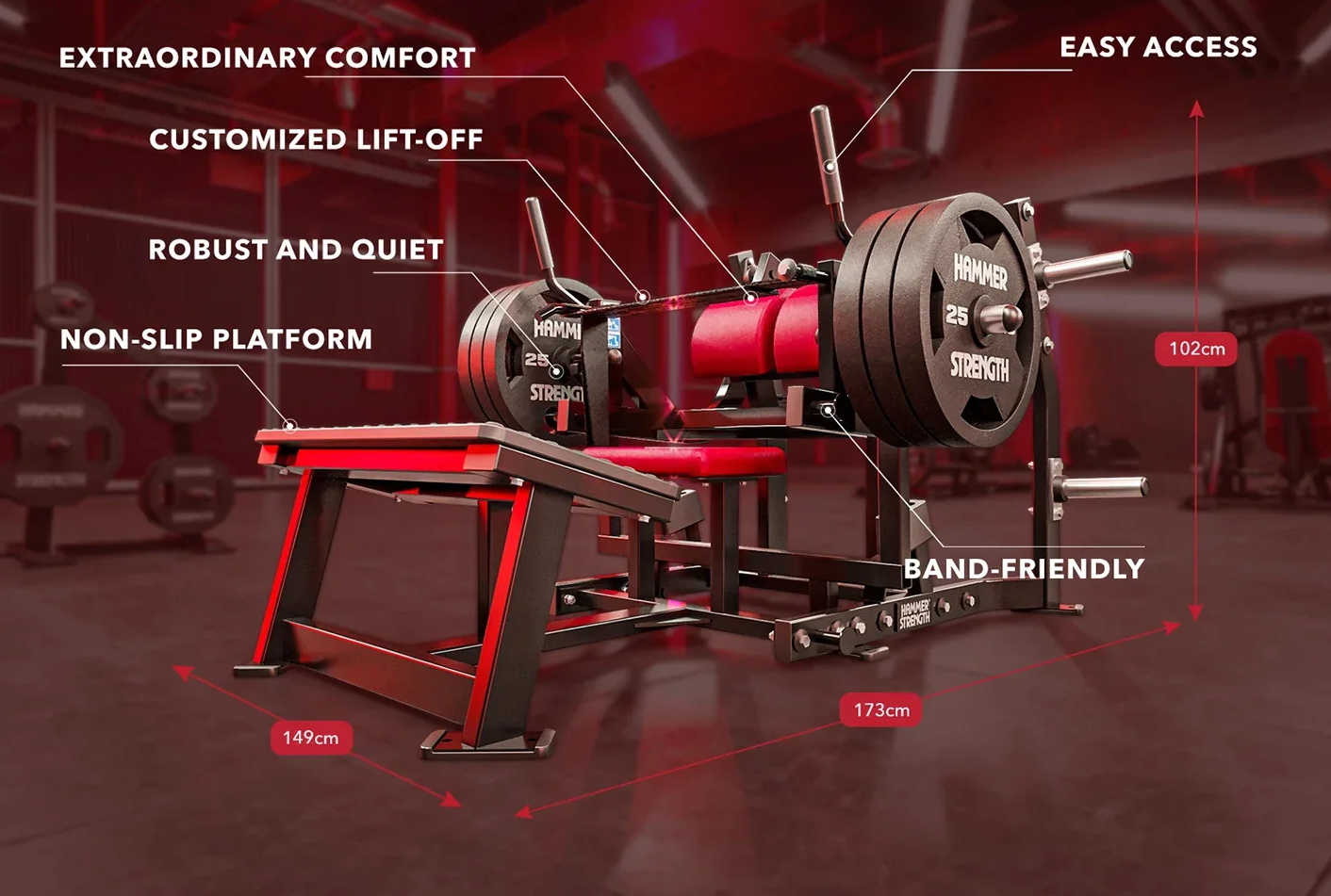
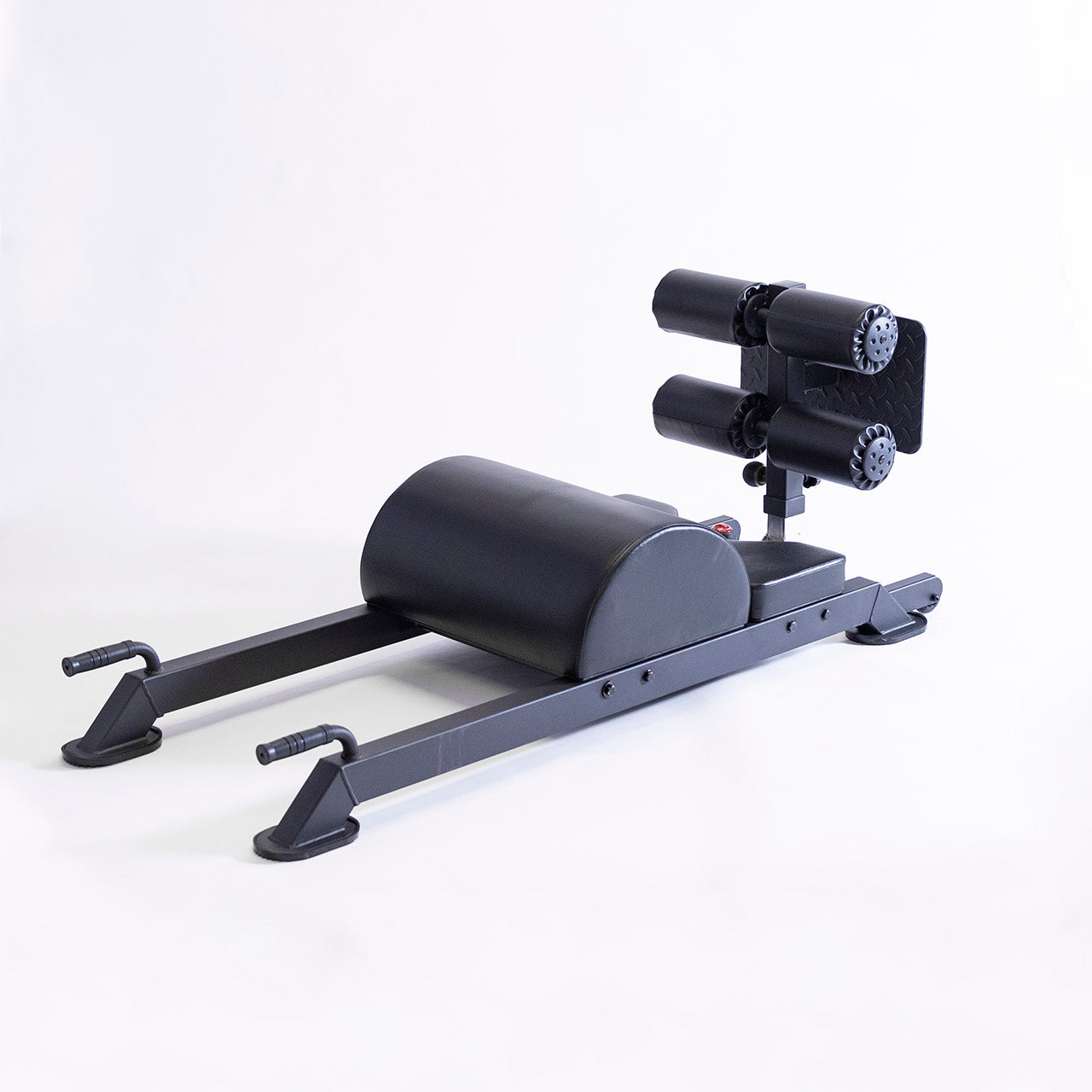
A hip thrust machine is a dedicated piece of equipment designed to optimise your glute training with safe, efficient, and progressive resistance. Seated or standing hip thrust machines we have put together detailed muscle activation, how to use benefits, and buyer considerations for commercial or advanced private gyms.
How to Use a Hip Thrust Machine
- Setup: Adjust the machine for user height and load, then sit or lie down so the upper back is against the back pad and the bar or padded strap is across the hips.
- Foot Position: Feet flat, shoulder-width apart on the platform, with shins vertical or knees at a 90-degree angle at the top.
- Safety Belt: Strap yourself tightly but comfortably, securing the hips under the padded roller or belt.
- Initial Lift-Off: Drive through the heels to lift the hips, releasing machine locks or safety pins if required.
- Press Phase: Explode the hips upward by squeezing the glutes and bracing the core, ensuring the torso and thighs form a straight line; pause and squeeze at the top.
- Lowering: Lower hips with control, keeping tension on glutes and hamstrings, returning just above the ground or base pad, then repeat.
Muscles Used Using a Hip Thrust Machine
Primary Muscles:
- Gluteus Maximus – Main mover for hip extension, highest EMG activity at the lockout.
- Gluteus Medius & Minimus – Provide pelvic stability, prevent knee valgus, and contribute to abduction and rotation.
Secondary Muscles:
- Hamstrings (Biceps Femoris, Semitendinosus, Semimembranosus): Assist in hip extension, stabilise the pelvis.
- Adductor Magnus: Works alongside glutes to extend and stabilize the thigh during the ascent.
- Quadriceps (Vastus Lateralis, Vastus Medialis, Rectus Femoris): Play an auxiliary role, especially in stabilizing the knee and assisting upward drive.
- Erector Spinae: Stabilizes the spine, maintains trunk position.
- Core Musculature: Bracing for spinal stability throughout the movement.
Benefits of Hip Thrust Machines
- Superior Glute Activation: Greater glute engagement compared to squats or deadlifts; ideal for hypertrophy and targeted strength.
- Enhanced Hip Extension Power: Fundamental for sports requiring sprinting, jumping, or acceleration.
- Lower Back & Knee Support: Strong glutes provide postural support, pelvic stability, reduce spinal strain, and help prevent injury.
- Posture & Pelvic Health: Corrects imbalances, relieves quad dominance, enhances overall lower-body symmetry.
- Safe, Progressive Overload: Machine design allows heavier or incremental loading without the barbell setup hassle, and built-in safety stops prevent injury, making it accessible for less experienced users or high-volume programming.
- Rehabilitation & Athletic Populations: Hip thrusts are frequently used in return-to-play protocols, for glute reactivation, and for populations needing a stable base for lower-limb strength development.
When: Hip thrust machines are best placed in lower-body days, glute specialisation routines, athletic power blocks, or as a safe heavy-lift alternative to barbell hip thrusts or bridges.
Hip Thrust Machines Buying Tips for Commercial Use
Commercial Priorities:
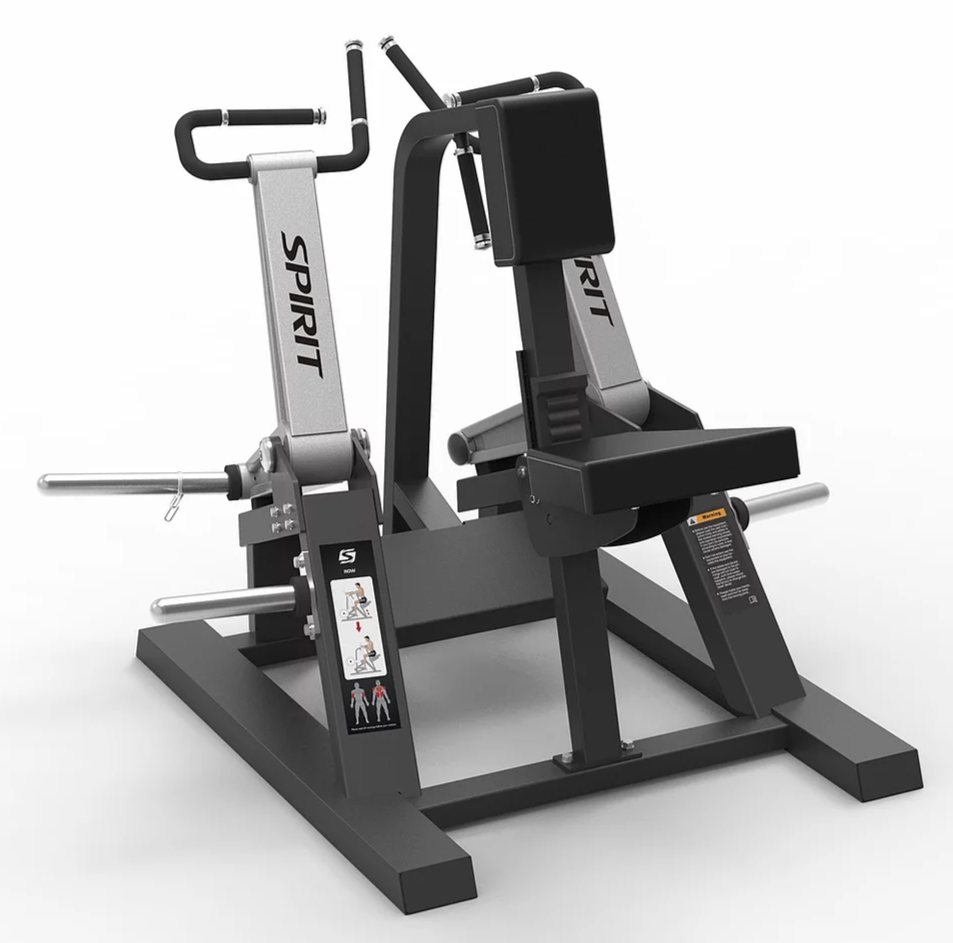
- Type: Fixed/path machines (pivoting lever or platform) vs. cable or plate-load models.
- Adjustability: Fully adjustable back pad height, band/strap position, and foot platform angle accommodate varied user anthropometrics.
- Load System: Plate-loaded vs. selectorised stacks—stacks offer convenience but plate systems allow heavy loading.
- Size/Footprint: Measure area for installation; some units are compact, others require space for loading and user movement.
- Safety Features: Look for wide, slip-resistant foot platforms, secure padding, safety stops, and easy-release mechanisms for solo lifters.
- Build Quality: Commercial units should have robust, reinforced steel frames (11-gauge or better), non-slip surfaces, and dense foam pads rated for heavy use.
- Smooth Mechanics: Bearings, pivots, and guides should provide smooth, consistent resistance through the full range.
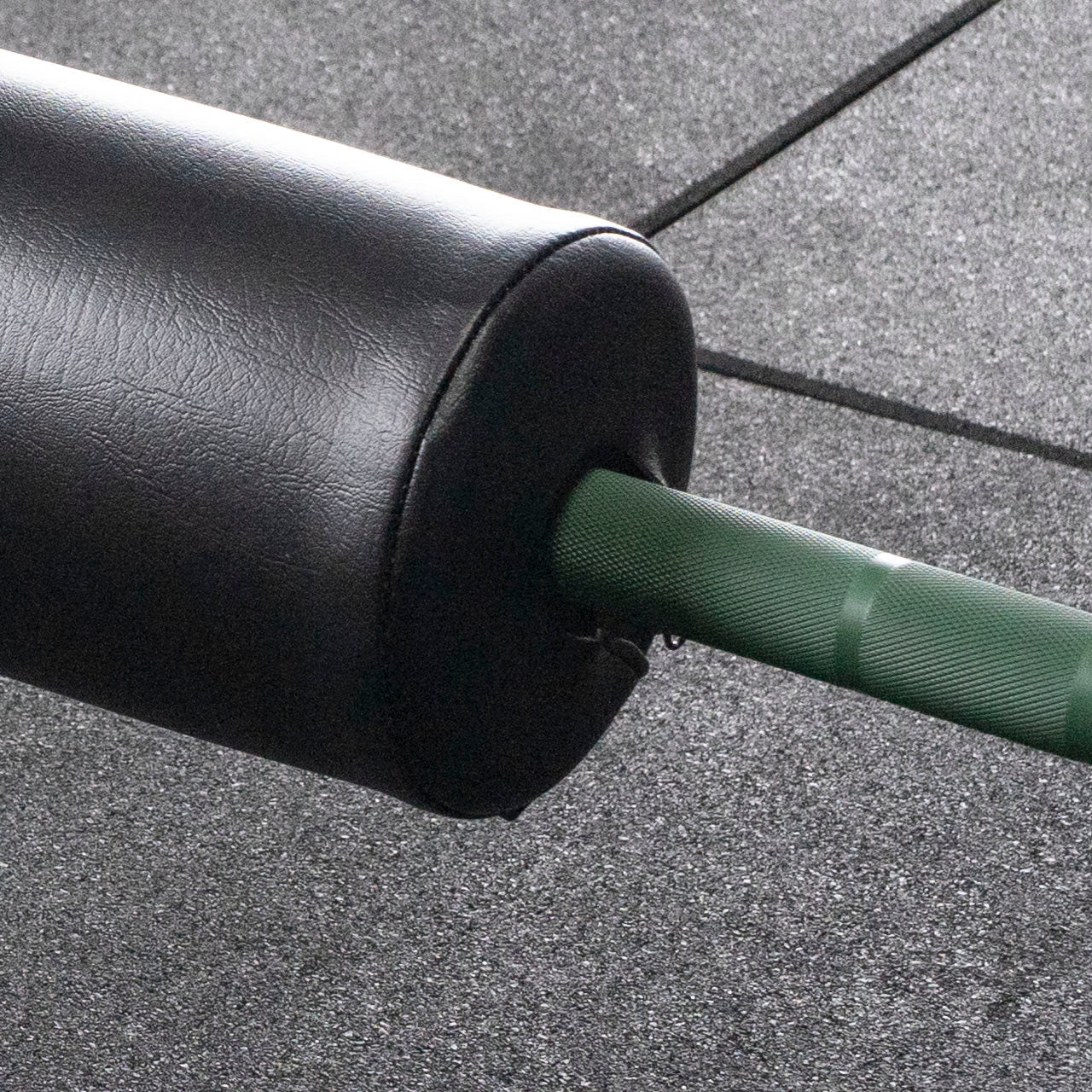
- User Comfort: Ergonomically shaped pads, sweat-resistant upholstery, and a stable platform for user confidence.
- Maintenance: Prefer machines with minimal exposed cables/pulleys and easily serviceable upholstery/hardware.
- Brand Reputation: Top names include Hammer Strength, Matrix, Watson, Booty Builder, and The Glute Builder, Primal & Skelcore.