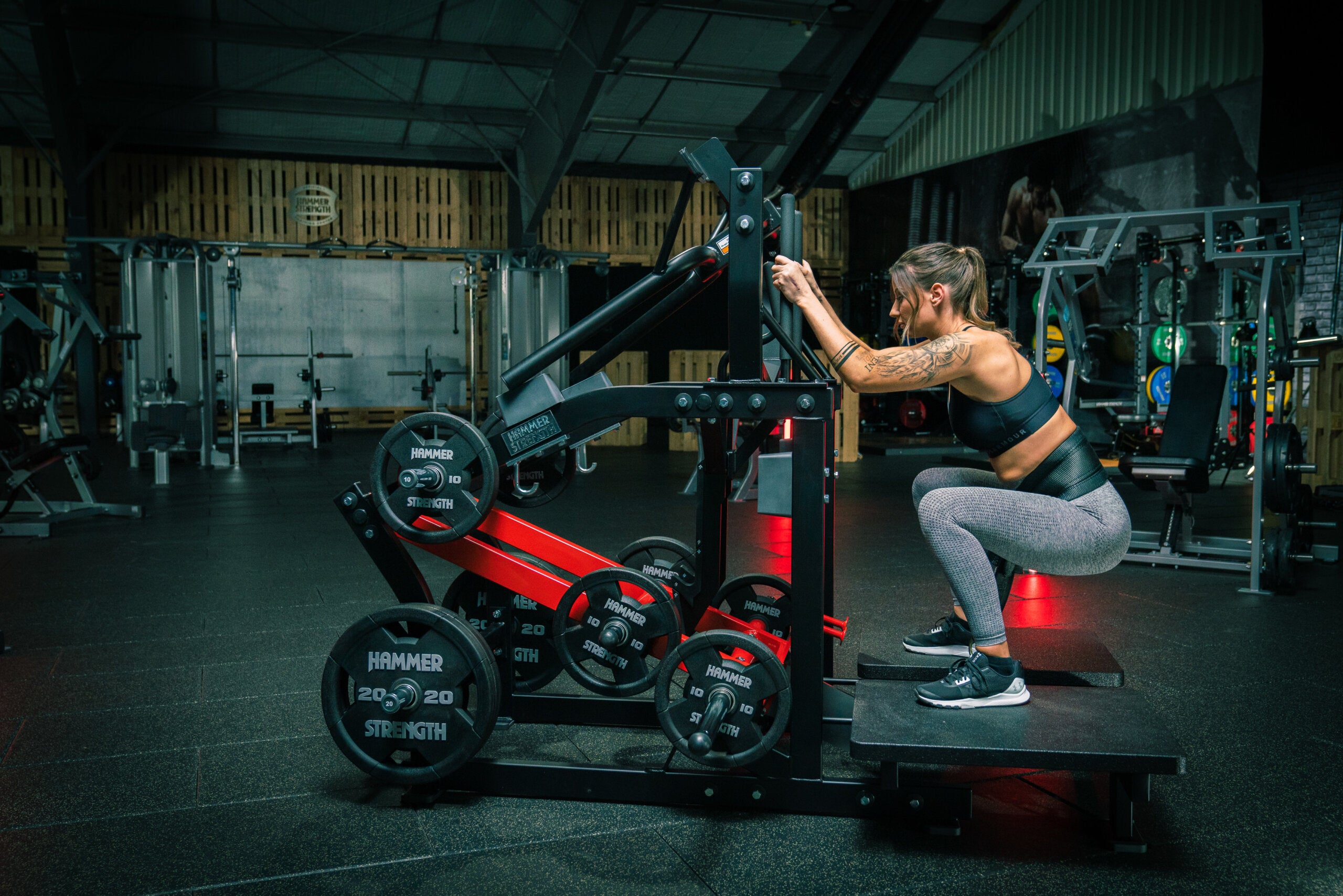
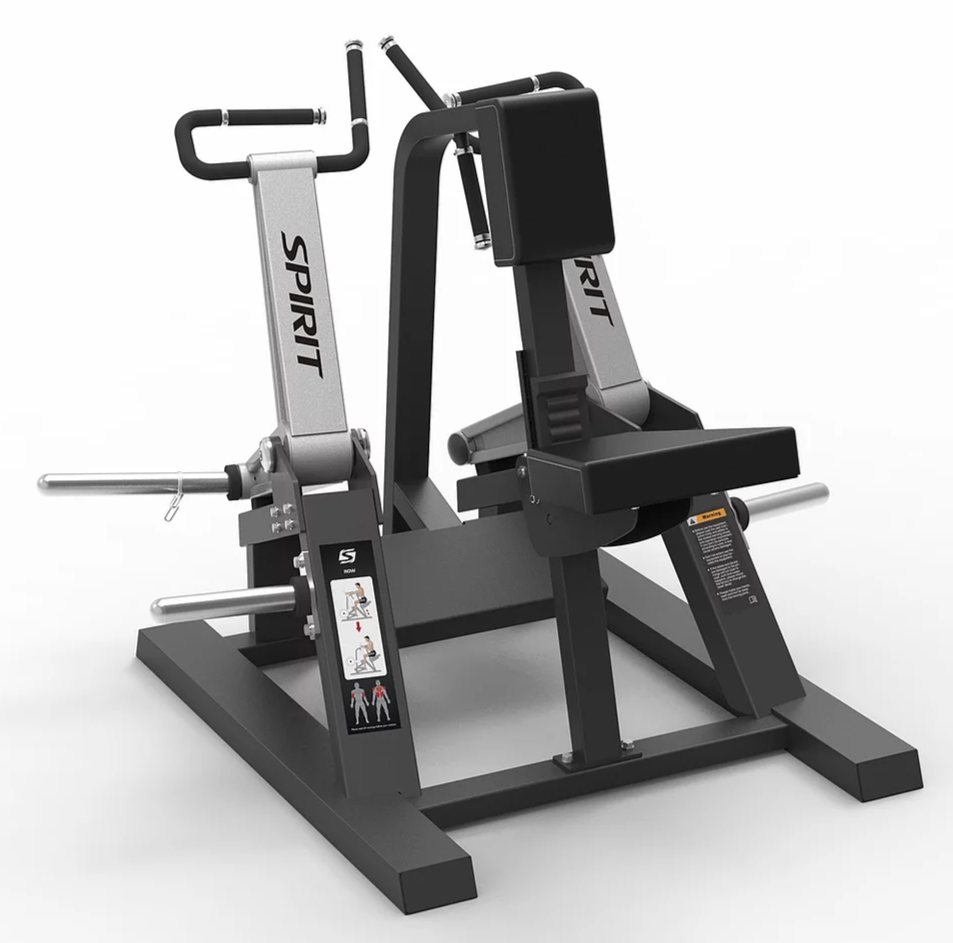
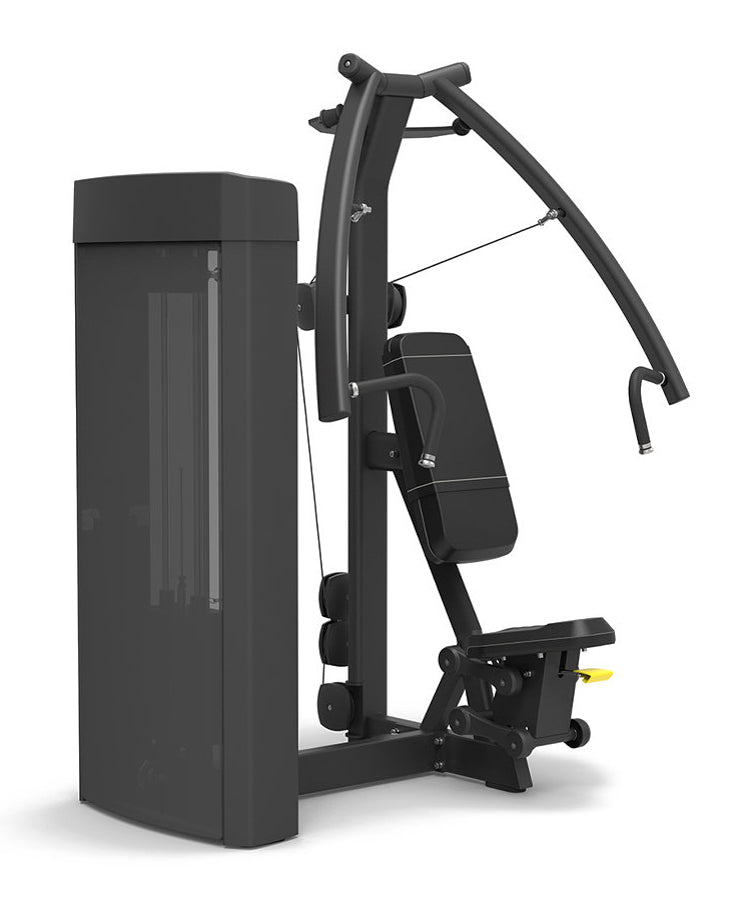
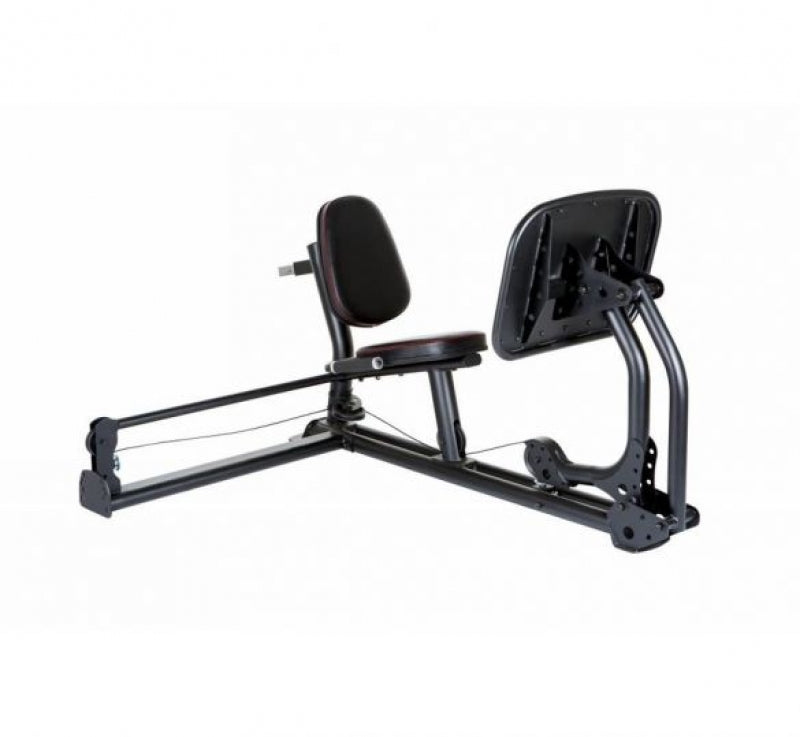
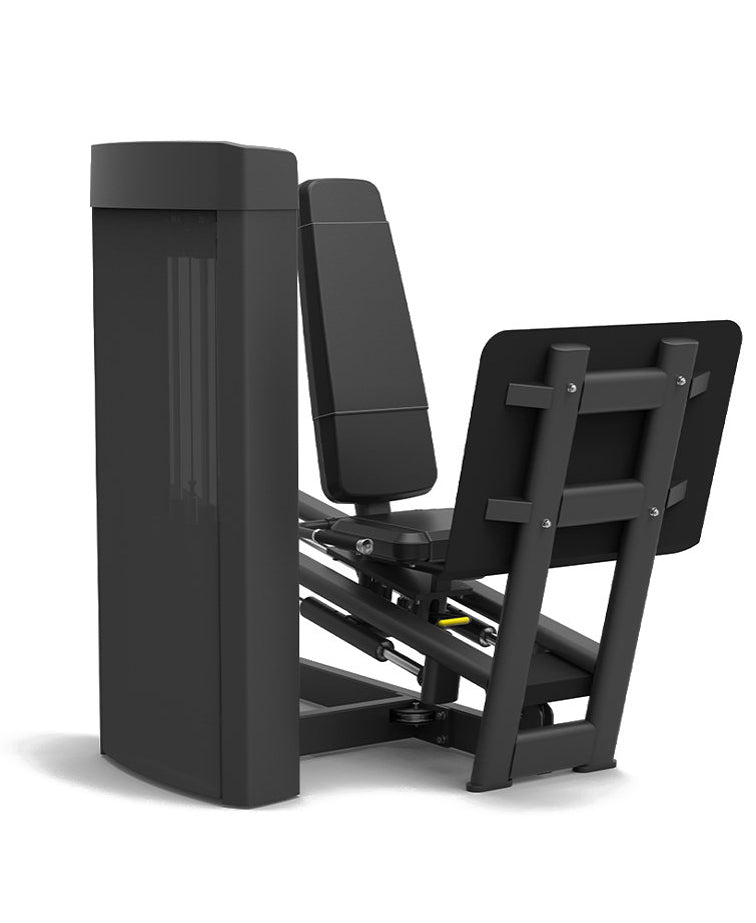
A leg press machine is a versatile and foundational lower-body training device found in commercial gyms. It allows users to target major leg muscles in a controlled, supported setting with less risk to the spine than free-weight alternatives.
How to Use a Leg Press Machine
- Select appropriate weight, adjust seat or backrest for a comfortable starting position that puts knees at least at a 90° angle when feet are on the platform.
- Place both feet on the footplate, shoulder-width apart or per desired muscle targeting, and ensure heels stay planted through the movement.
- Grip the handles, brace your core, and keep your back flat against the support.
- Disengage safety levers and slowly lower the sled by bending your knees and hips—stop once knees form a 90° angle and before glutes leave the seat or spine rounds.
- Drive the weight up through your heels, fully engaging target muscle groups, and extend legs with a soft bend in the knees (never lock out).
- Repeat for 5–15 reps with controlled tempo, re-engaging safety levers or pins after final rep.
Muscles Used with Leg Press Machines
- Quadriceps (vastus lateralis, vastus medialis, vastus intermedius, rectus femoris): Primary movers, drive knee extension.
- Gluteus maximus: Extends the hip, more activated with high or wide foot positions.
- Hamstrings (biceps femoris, semitendinosus, semimembranosus): Assist hip extension and knee stabilization.
- Adductors: Engage with wider stances, aid in thigh stabilization.
- Calves (gastrocnemius, soleus): Serve as stabilizers, especially during the upward drive.
Foot placement variations shift muscle emphasis:
Low foot position: Quad dominant.
High foot position: Glutes and hamstrings.
Wide stance: Inner thighs and adductors.
Narrow stance: Outer thighs/quads.
How and When To Use
- Ideal for lower-body training days, suitable as a primary or accessory lift for muscle building, rehabilitation, or athletic development.
- Useful for high-volume work, resistance progression, and as a low-impact alternative or complement to squats.
- Can be programmed for 2–4 sets of 8–15 reps, adjusted for training goals (strength, hypertrophy, endurance).
Benefits of using a Leg Press Machine
- Safe, supported movement protects spine, reduces risk of form-related injury compared to free barbell lifts.
- Allows progressive overload and high weight for lower-body muscle growth.
- Versatile muscle targeting via stance and platform adjustments.
- Suitable for all user types including beginners, seniors, and rehabilitation clients.
- Develops squat pattern strength in a stable setting, transferring to improved performance in athletics and free-weight lifts.
Buying Tips for Leg Press Machine Types
- Commercial machines should feature rugged frames, reinforced welds, quality bearings, and high weight capacity (typically 300–700kg for plate-loaded units).
- Choose between plate-loaded and selectorised models depending on facility needs; plate-loaded offer heavier progression, selectorised easier usability.
- Consider seat/backrest adjustability, platform size, and smooth mechanical movement.
- Look for multiple footplate angles and safety stops for different user requirements.
- Top brands include Life Fitness, Primal, Skelcore, Watson Technogym, Hammer Strength, Matrix, —seek robust, easy-maintenance units with reliable warranty and support.
A commercial-quality leg press machine is a cornerstone of leg training and lower-body development, delivering muscle, strength, safety, and performance versatility for a wide range of users.