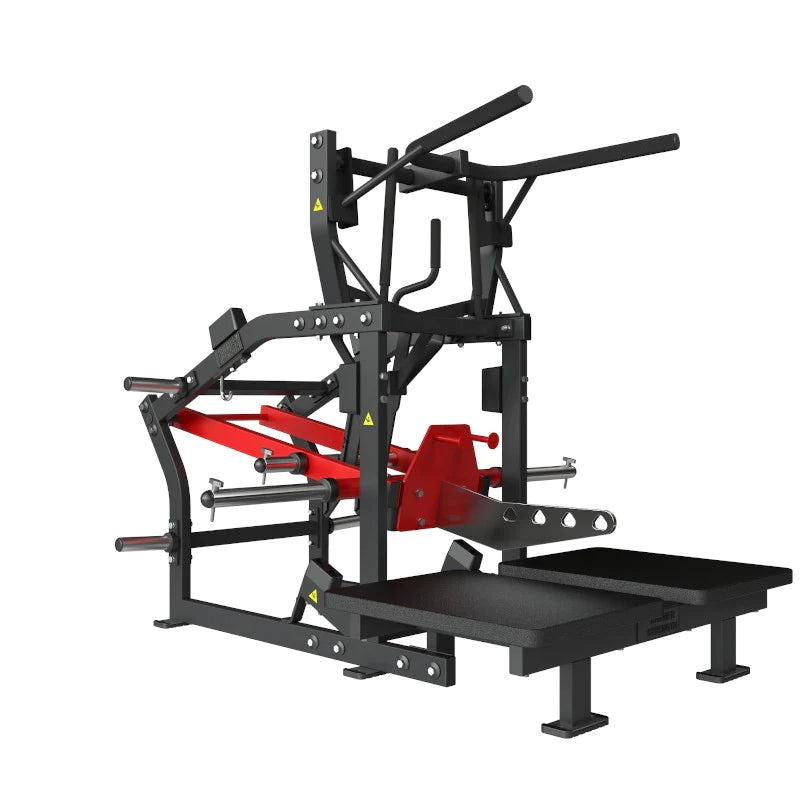
Leg machines come in a wide array of variants, each serving specific training purposes, targeting different muscles, and offering unique benefits for both strength athletes and general fitness users. These leg machines can be broadly categorized by movement pattern and muscle group emphasis.
Common Leg Machine Types:
- Leg Press Machines: Includes horizontal, 45-degree (angled), and vertical styles. Users push a weighted platform away using their feet, targeting quadriceps, glutes, and hamstrings. These machines are excellent for building lower body mass and strength with controlled movement and heavy loading.
- Hack Squat Machines: Mimic barbell squats but with the user supported along a back pad and shoulders. They primarily hit the quads and glutes and are favored for their safety and consistent form, especially for those with back limitations.
- Belt Squat Machines: Load is applied via a hip belt rather than the back or shoulders. These especially emphasize quads, glutes, and hamstrings while minimizing spinal compression. They are a great option for athletes seeking high-volume leg work without back fatigue.
- Leg Extension Machines: Designed for isolating the quadriceps by extending the knee against resistance. These provide focused development, help with strengthening the knee joint, and correct muscle imbalances.
- Leg Curl Machines: Available in seated, lying (prone), and standing styles. These isolate the hamstrings with knee flexion, improving injury resistance, strength, and muscle symmetry.
- Hip Adductor/Abductor Machines: Train the muscles of the inner (adductor) and outer (abductor) thighs by pressing legs together or apart. Useful for athletes and rehab, these machines aid in hip stability and mobility.
- Calf Raise Machines: Includes seated and standing types. They target the calf muscles (gastrocnemius and soleus) through plantar flexion. Both variants help improve ankle strength and lower leg mass.
Glute Machines: Such as glute drives, kickback machines, and dedicated hip thrust platforms. These focus on the gluteus maximus with hip extension movements, helping in strength, aesthetics, and athletic power.
Key Points on Selection of Leg Machines
- Each variant offers different patterns (press, squat, curl, extension, abduction/adduction) and naturally biases certain muscles over others.
- Machine choice should align with training goals (isolation vs. compound movement, muscle rehabilitation, strength, or hypertrophy).
- Large commercial gyms tend to include all major variants for full-spectrum training, while home gyms prioritize space and may select multi-function machines.
- Adjustability, ergonomic features, and smooth, controlled movement help maximize results and maintain safety.
Leg machine variants provide customization and progression opportunities for lower body training, supporting both specialized and general fitness needs. Choosing appropriate machines ensures balanced development, injury prevention, and effective training experiences across user populations.