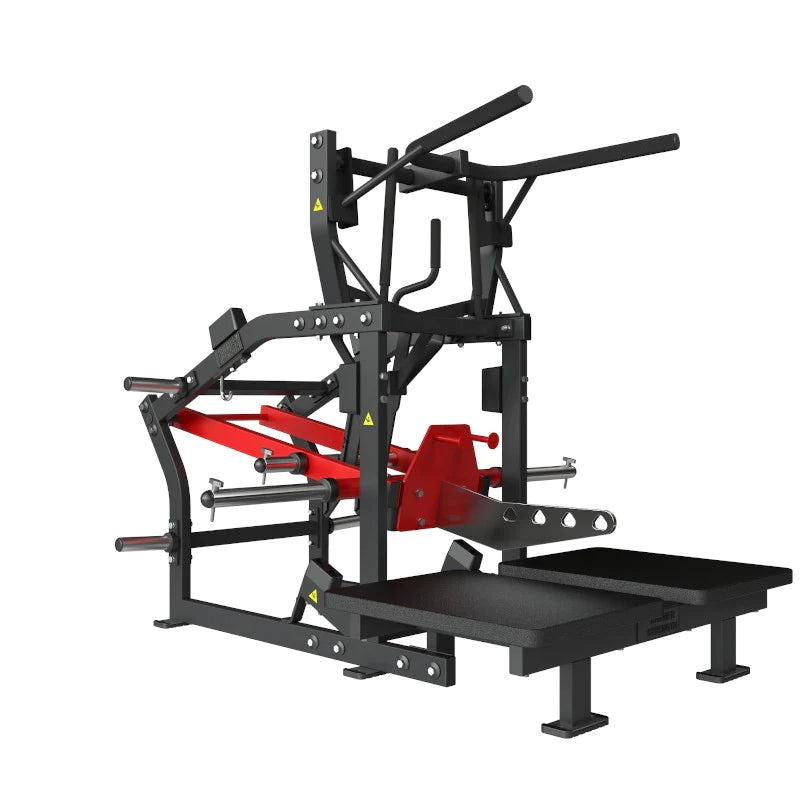
Muscles Used with a Belt Squat Machine
- Primary Muscles Used: Quadriceps
- Secondary Muscles Used: Hamstrings, glutes, adductors, hip flexors, core muscles - The belt squat activates these muscles similarly to back squats but with less trunk and lower back stress, making it a quad-dominant exercise while allowing intense lower body training without spinal compression.
How to Use the Belt Squat Machine
- Adjust the belted squat machine and load appropriate weight.
- Stand on the platform with feet roughly shoulder-width apart.
- Secure the belt snugly around the hips.
- Attach the belt chain to the machine.
- Begin squat with a mostly upright torso, lowering until hips are parallel or below knees.
- Push through the heels to return to standing.
- Hands can rest on the support bar or cross arms for stability.
- Adjust foot placement or belt attachment point to emphasize glutes/hamstrings or quads.
Benefits of a Belt Squat Machine
- Whilst using the squat belt machine it reduces stress and load on the spine and lower back, ideal for those with back issues or injuries.
- Safer for high-volume training and training to failure.
- Easier to learn and use compared to traditional back squats.
- Improved squat form reinforcement with less upper body fatigue.
- Greater stability due to load being around hips, not shoulders.
- Lower joint strain on knees and ankles.
Buying Tips for Belt Squat Machines
- Consider footprint and available space, as belt squat machines can vary slightly in size.
- Ensure the machine has sufficient weight capacity.
- Look for a smooth track system or high-quality pivot arms for safer, fluid movement.
- Check for a sturdy, padded belt with secure clip points.
- Verify if additional accessories like different foot platforms or attachments are included or compatible.
- Choose reputable brands such as Hammer Strength, Exigo, Primal, Matrix etc
- Consider your usage context (commercial gym vs home gym) to select a suitable model.
In summary, the belt squat machine is an excellent lower body training tool providing a safer alternative to back squats by minimizing spinal load while effectively targeting quads, glutes, and hamstrings. Proper technique is straightforward, and the machine suits those needing low-back-friendly options or high-volume leg training